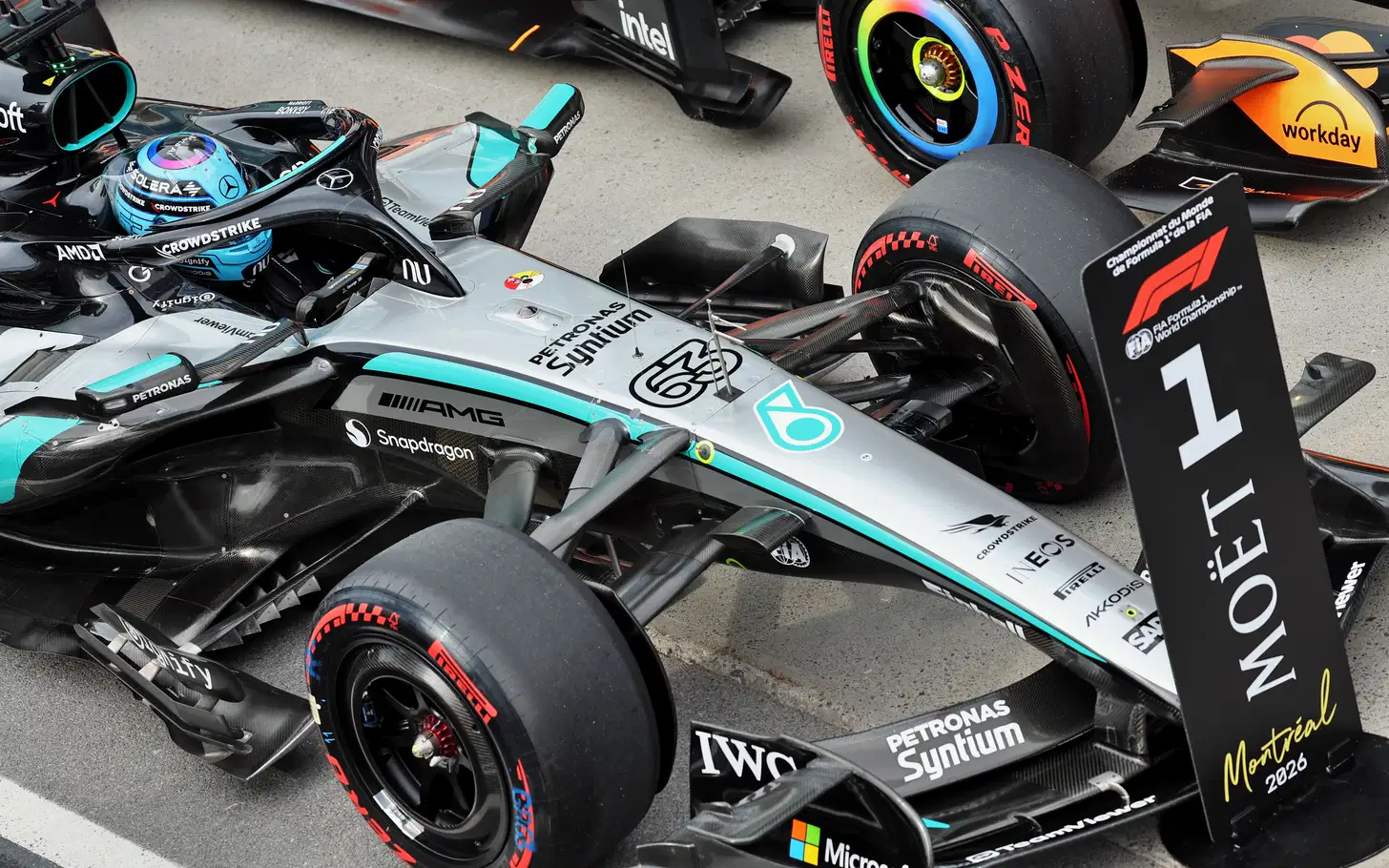
Formula 1’s latest technical controversy has taken another dramatic turn after the FIA officially moved to close a suspected Mercedes engine loophole ahead of the 2026 Monaco Grand Prix. The decision has become one of the biggest talking points in the paddock as teams prepare for one of the most iconic races on the calendar.
The Monaco Grand Prix will now become the first event held under the revised technical rules, with the FIA introducing stricter checks on engine compression ratios. The rule change comes after weeks of debate and speculation surrounding Mercedes’ dominant start to the 2026 season.
Mercedes has enjoyed a remarkable opening to the campaign, winning every race so far and building a significant advantage in both championships. Much of that success has been credited to the team’s impressive understanding of the new power-unit regulations introduced this season. However, rival manufacturers began questioning whether Mercedes had discovered a grey area within the regulations that allowed them to gain additional engine performance.
At the center of the dispute was the engine compression ratio. Under the 2026 Formula 1 regulations, the permitted compression ratio had been reduced from 18:1 to 16:1. This parameter plays a major role in combustion efficiency and overall engine performance, meaning even a slight increase can produce valuable gains in power and speed.
The controversy emerged because the FIA’s original testing procedures only measured the compression ratio while the engine was cold and sitting in the pit lane. Rivals suspected that Mercedes had engineered its power unit in a way that allowed the ratio to expand beyond the legal limit once the engine reached full operating temperature on track.
Reports suggested Mercedes may have used heat-sensitive materials within the engine that expanded during racing conditions, effectively allowing the combustion ratio to rise to levels closer to 18:1 despite the official 16:1 limit. While there was never any public confirmation from Mercedes, the rumors quickly spread across the paddock and created growing frustration among competing manufacturers.
Ferrari, Honda, Audi, and Red Bull-Ford were all believed to have raised concerns with the FIA. Eventually, motorsport’s governing body decided action was necessary. Instead of waiting until later in the season as originally planned, the FIA accelerated the introduction of revised testing methods.
Beginning June 1, the FIA will no longer rely solely on cold-condition checks. Engines will also be tested at approximately 130 degrees Celsius, ensuring the compression ratio remains within the permitted limits during actual operating conditions. This means the loophole Mercedes was suspected of exploiting has effectively been eliminated.
The timing of the change is significant because Monaco now becomes the first Grand Prix weekend to operate under the revised system. The streets of Monte Carlo are already famous for rewarding precision, confidence, and qualifying performance, but now there is additional intrigue surrounding whether Mercedes will maintain its overwhelming pace advantage.
Some analysts believe the impact could be relatively minor, while others think it may dramatically reduce Mercedes’ superiority. Since the start of the season, the Silver Arrows have looked untouchable, with their drivers consistently controlling races and delivering dominant qualifying performances.
The rule adjustment has therefore fueled speculation that rival teams could finally close the gap. Ferrari in particular is viewed as a major threat around Monaco due to its strong low-speed performance and mechanical grip. Several drivers have already hinted that the Scuderia could become the team to beat on the narrow streets of the principality.
Mercedes team principal Fred Vasseur, however, downplayed suggestions that the rule clarification alone would suddenly transform the competitive order. He pointed toward Formula 1’s Additional Development and Upgrade Opportunities system, which allows teams trailing behind to bring extra engine improvements during the year.
Under the current rules, manufacturers that remain within two percent of the leading engine are granted one upgrade opportunity, while those further behind receive two. This mechanism was introduced to prevent one supplier from dominating the sport for an extended period.
Even with the FIA intervention, many within the paddock still admire the engineering creativity Mercedes allegedly demonstrated. Formula 1 has a long history of teams identifying loopholes within complex regulations, and some observers argued that Mercedes merely interpreted the rules more intelligently than its competitors.
Others, however, felt the situation violated the spirit of the regulations. While the original wording may not have explicitly forbidden the approach, rivals believed the intent of the rules was clearly to cap the compression ratio at 16:1 under all circumstances.
The FIA’s decision effectively ends that debate. By introducing hot-condition testing, the governing body has ensured the engine’s behavior remains compliant both in the garage and while racing at full speed.
Interestingly, this is not the only technical trick recently targeted by the FIA. Earlier in the season, both Mercedes and Red Bull were accused of exploiting another loophole involving the MGU-K energy deployment system during qualifying laps. That tactic reportedly allowed drivers to maintain maximum electrical power output for longer than intended by the regulations.
The FIA also moved quickly to stop that practice after concerns were raised about fairness and safety. These repeated interventions underline how aggressively teams are searching for competitive advantages under Formula 1’s sweeping 2026 regulation overhaul.
Meanwhile, another Monaco-related rule change has quietly disappeared altogether. Last season, the FIA experimented with a mandatory two-pit-stop strategy in an attempt to make the Monaco Grand Prix more entertaining and unpredictable.
The rule was introduced because Monaco races had increasingly become processional events where overtaking was nearly impossible. Organizers hoped forcing teams into two pit stops would create strategic variation and produce more exciting races.
However, the experiment did not deliver the desired results. Teams instead manipulated the race strategically, with some drivers deliberately slowing the field to create pit windows for teammates. The tactic frustrated many fans and drivers alike.
As a result, the FIA quietly removed the two-stop mandate from this year’s sporting regulations. Monaco will therefore return to its traditional format, placing even greater emphasis on qualifying and track position.
That only increases attention on the new engine rule changes because qualifying performance is often decisive in Monte Carlo. If Mercedes loses even a fraction of its pace advantage, Ferrari, McLaren, and Red Bull may suddenly find themselves with a genuine opportunity to challenge for victory.
The Monaco Grand Prix has always been one of Formula 1’s most unpredictable and prestigious events, but this year’s race carries even greater significance. It will serve as the first real test of whether the FIA’s crackdown on suspected loopholes can alter the competitive balance at the front of the field.
Fans, teams, and analysts will all be watching closely to see whether Mercedes continues its dominant streak or whether the revised regulations finally open the door for a new challenger to emerge in the championship battle.