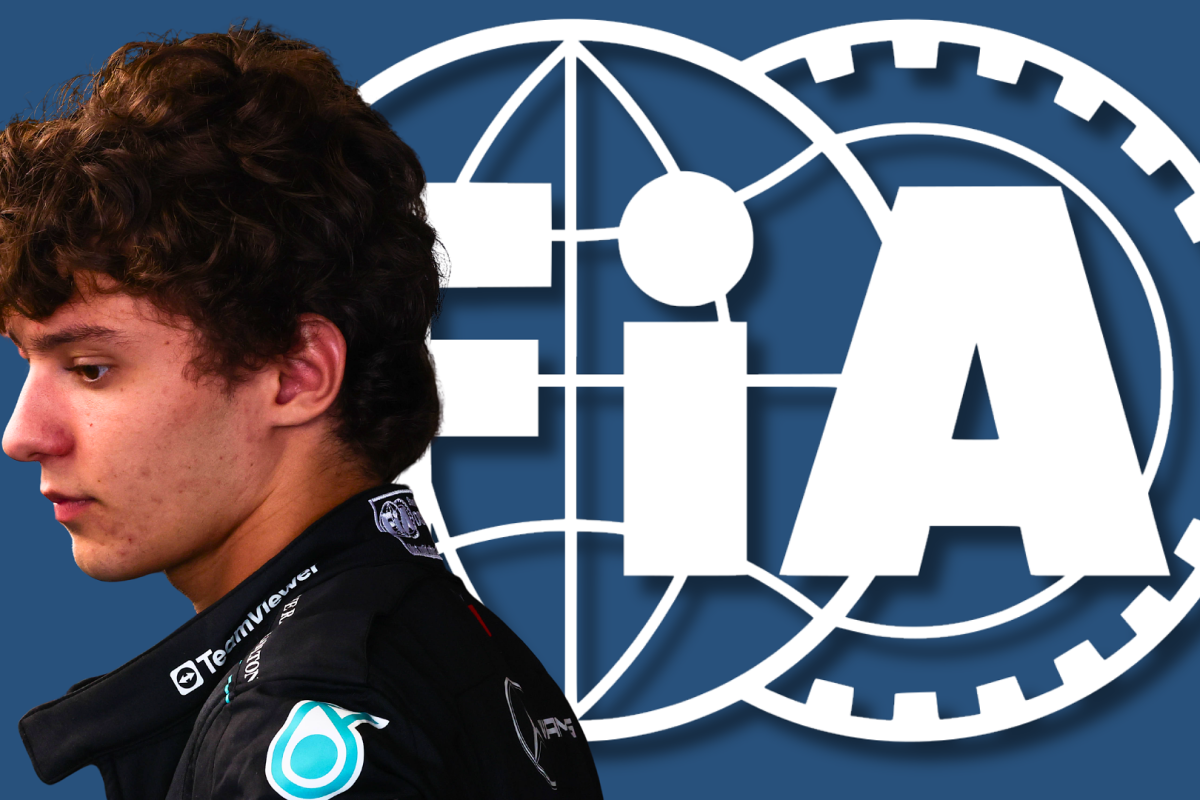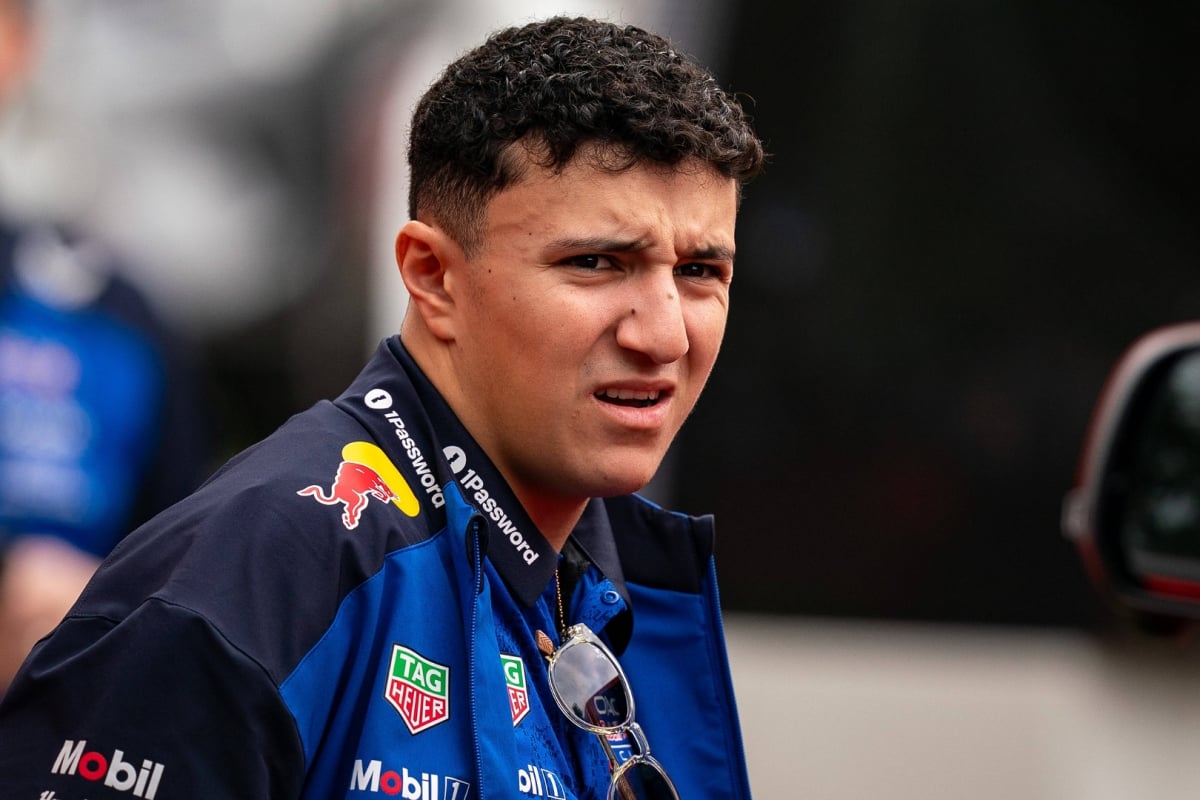
Formula One has once again delivered pre-race drama, with Isack Hadjar officially disqualified from qualifying for the Miami Grand Prix after his Red Bull Racing car failed post-session technical inspections. The ruling, confirmed by the FIA on Sunday morning, means the young French driver loses his original top-10 grid position and will instead start from the very back of the field.
Hadjar had initially produced an impressive performance in qualifying, securing ninth place on the grid at the Miami International Autodrome. It was another strong showing from the rookie, who has steadily built a reputation this season for his pace and composure under pressure. However, as is standard procedure in Formula 1, his car underwent detailed scrutineering after the session. During those inspections, FIA officials discovered that a section of the floor assembly on his RB22 did not comply with the sport’s strict technical regulations.
Specifically, the floor plank on Hadjar’s car was found to extend beyond the maximum dimensions permitted by the FIA. Reports indicate that the component protruded by approximately two millimetres on both sides—an extremely small measurement in everyday terms, but one that is absolutely critical in Formula 1, where regulations are enforced with microscopic precision. In a sport where thousandths of a second can separate competitors, even a two-millimetre discrepancy is enough to trigger severe consequences.
Formula 1’s technical regulations are deliberately uncompromising. Whether a breach provides a competitive advantage or not is often irrelevant. The rules are written in black and white, and any car found outside the permitted tolerances is considered illegal. That principle ensures fairness across the grid and maintains the integrity of the championship. In Hadjar’s case, the stewards determined that the non-compliant floor rendered his car in breach of the regulations, leaving disqualification as the only appropriate penalty.
Red Bull representatives attended a hearing with FIA stewards following the discovery. Crucially, the team did not challenge the measurements or dispute the findings. Instead, Red Bull acknowledged the error and accepted responsibility for the infringement. The team reportedly described the issue as an unintentional mistake, rather than a deliberate attempt to exploit the regulations. They also emphasized that the irregularity offered no meaningful performance gain.
Despite that explanation, the FIA’s hands were effectively tied. Formula 1’s technical framework allows little room for interpretation in such matters. A car either complies with the regulations or it does not. Because Hadjar’s RB22 failed that test, his qualifying result was automatically struck from the record.
The disqualification is a particularly bitter blow for Hadjar, who had worked hard to extract performance from a car that he admitted had been difficult to handle throughout the weekend. Miami’s unique track characteristics—low grip, high temperatures, and a lack of flowing corners—have challenged many drivers, especially rookies. Hadjar had spoken openly about struggling to find confidence in the upgraded Red Bull package, even while acknowledging its raw pace.
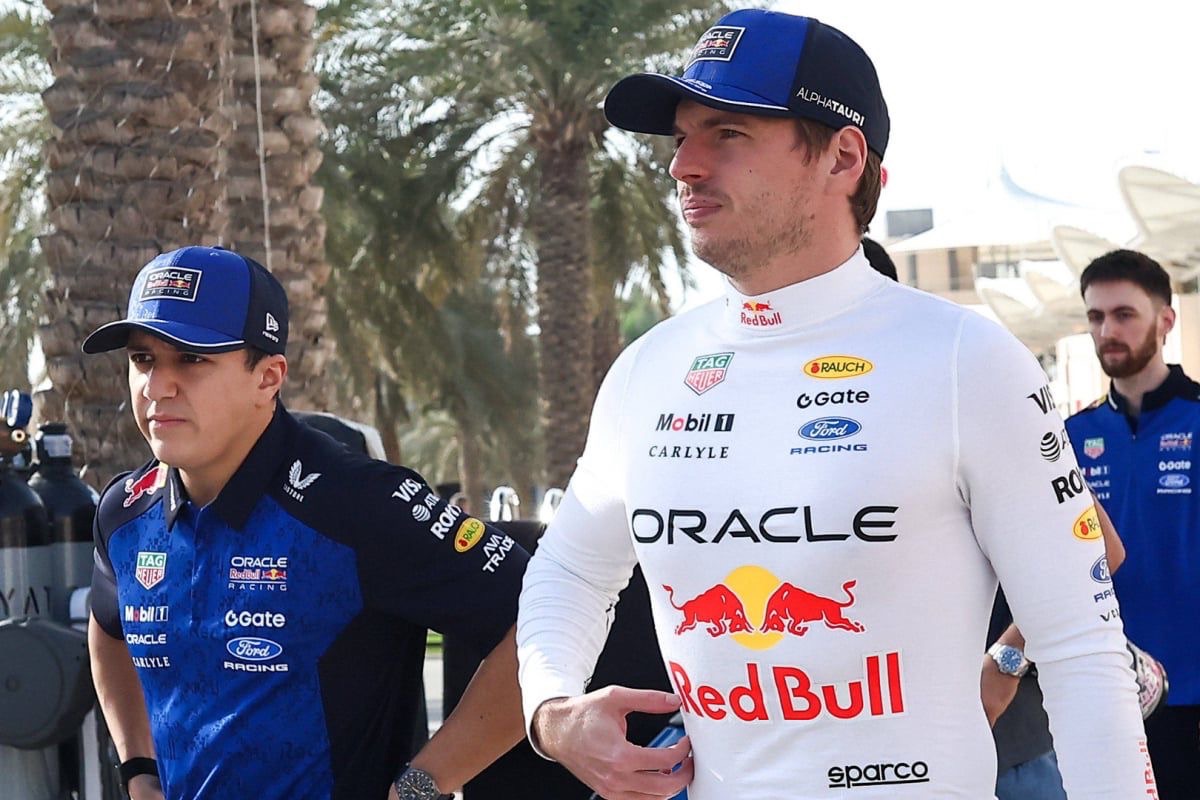
He noted after qualifying that the car felt fast but extremely tricky to drive. While he believed he had made substantial progress compared to earlier sessions, he was still unable to match the ease and confidence displayed by teammate Max Verstappen. Hadjar also mentioned issues with straight-line speed, which further complicated his efforts around the demanding Miami circuit.
Ironically, the upgraded floor that formed part of Red Bull’s latest development package was intended to improve performance. Verstappen appeared to benefit significantly from the updates, qualifying on the front row alongside polesitter Kimi Antonelli. For Hadjar, however, the same upgrade package ultimately became the source of his downfall.
Although disqualified from qualifying, Hadjar has still been permitted to start the Grand Prix at the stewards’ discretion. Under FIA regulations, drivers excluded from qualifying can be allowed to race if their lap times during the session were within the required 107 percent threshold. That condition was comfortably met, meaning Hadjar remains eligible to compete. However, instead of starting from ninth, he will line up at the rear of the grid.
His demotion naturally promotes the drivers behind him. Pierre Gasly moves into ninth place on the revised starting grid, while Nico Hülkenberg advances into the top ten. Others further down the order also gain a valuable position, which could prove significant in what is expected to be a highly competitive race.
For Red Bull, the incident is an embarrassing setback during a weekend that had otherwise shown promising signs. The team introduced several upgrades in Miami as part of its effort to close the gap to its rivals. Verstappen’s front-row start demonstrated the potential of those changes, but Hadjar’s exclusion serves as a costly reminder of how fine the margins are in modern Formula 1.
The timing could hardly be worse. With severe weather threatening the Miami area, race organizers have already brought the Grand Prix start forward by three hours to avoid the worst of the forecast thunderstorms. Unpredictable conditions could make overtaking opportunities more plentiful, offering Hadjar some hope of recovery. Still, climbing from the back of the grid on a circuit where track position is crucial will be a formidable challenge.
For the young Red Bull driver, the setback is undoubtedly frustrating, but it also presents an opportunity. Starting last will force him into an aggressive recovery drive, and strong racecraft could help salvage points. Such situations often reveal a driver’s resilience and maturity—qualities Hadjar has already shown glimpses of during his rookie campaign.
Ultimately, this episode underscores Formula 1’s relentless attention to detail. In no other sport can a matter of mere millimetres have such dramatic consequences. Yet that is precisely what makes the championship so exacting. Success depends not only on speed and talent but also on absolute technical perfection.
Hadjar’s disqualification may have erased an excellent qualifying result, but it has not erased the pace he demonstrated. If he can channel that speed into a determined recovery drive, Miami may yet offer redemption. For now, however, the FIA’s verdict stands: his qualifying result is gone, his grid slot is lost, and his Grand Prix challenge will begin from the very back.