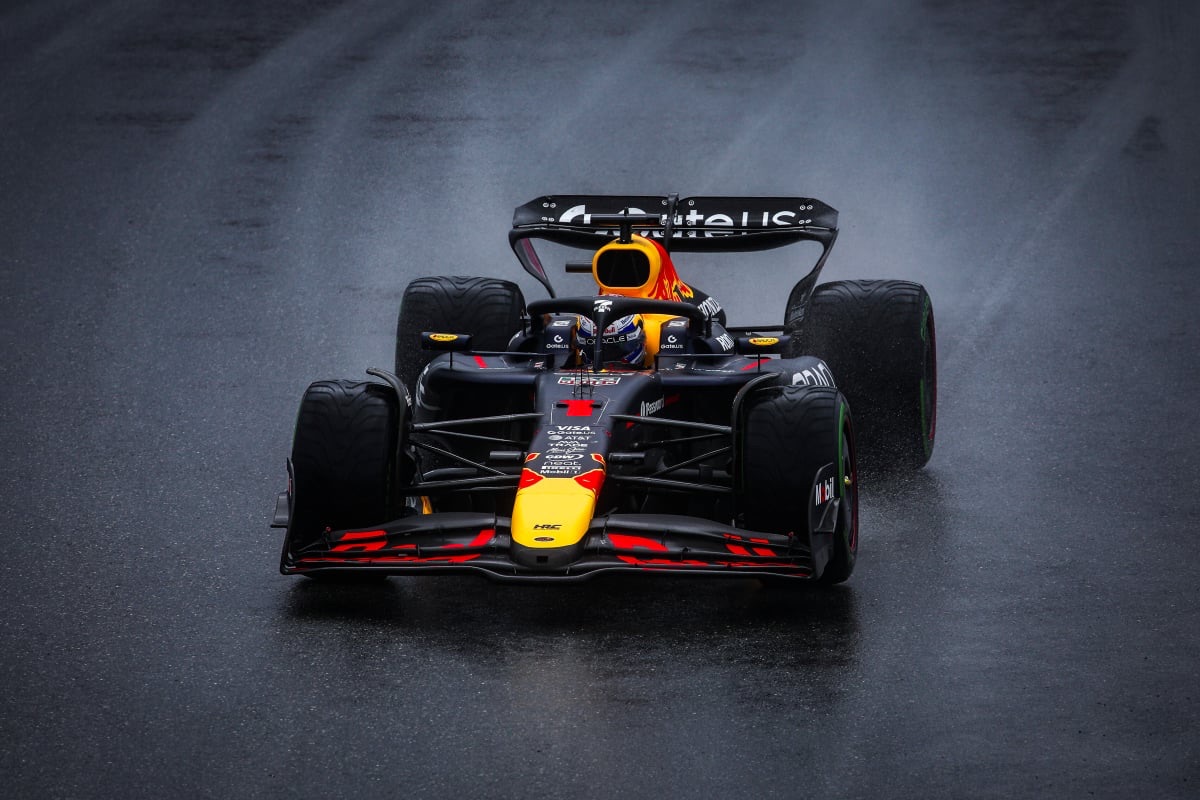
The Miami Grand Prix is set for a weather-affected Sunday as Formula 1 returns to action in Florida after a five-week break in the 2026 calendar.
Teams and drivers have enjoyed hot, sunny conditions at the Miami International Autodrome through Friday and Saturday. But that’s set to change for race day. In an uncommon move, the FIA has brought the Grand Prix start forward by three hours in an attempt to avoid potential lightning delays later in the afternoon.
Sunday’s main race will now begin at 1pm local time ET, which is 6pm BST. The decision was made to try and get the 57-lap Grand Prix completed before thunderstorms are expected to hit the area.
Latest Weather Outlook for Race Day
Despite the earlier start, a completely dry race isn’t guaranteed. Temperatures are forecast to be around 27°C when the lights go out in the early afternoon, but rain remains a threat.
Current radar data suggests the storm system that could still impact a 1pm start has weakened slightly and should clear the circuit area shortly after 1pm ET. There is still a risk of rain from the northern edge of that cell, plus another larger but less intense system approaching from the southwest. However, a repeat of the dramatic storms seen earlier on Sunday morning now looks unlikely.
Even with the reduced threat, changing conditions will create big headaches for teams. After two full days of dry running in practice, Sprint Qualifying, and the Sprint race, teams have limited wet-weather data. That makes decisions on tyre choice, setup, and pit stop timing much harder.
The biggest concern remains lightning. If electrical storms are detected near the circuit, race control could be forced to throw a red flag and suspend the race until the threat passes. Moving the start forward was designed to avoid that scenario, but forecasts still show thundery conditions and possible lightning around 4pm local time.
That leaves a narrow window to get the full 57 laps completed. If delays hit, there’s a risk the Grand Prix could be shortened or even abandoned if conditions don’t improve.
Strategy Headaches for Teams
The potential for rain completely changes the complexion of the weekend. Friday and Saturday ran in hot, dry conditions, meaning all setup work, long runs, and Sprint data were gathered on a warm, dry track.
If Sunday turns wet, that data becomes far less relevant. Teams will have to rely on instinct and real-time weather radar rather than hard numbers from practice. Choosing between intermediates and full wets, deciding when to pit, and managing tyre temperatures will be critical.
A wet race could also shake up the order. Drivers who struggled in the dry Sprint might find new opportunities, while those at the front could be vulnerable if they get strategy calls wrong.
Fans Could Be in for Chaos
For fans, the uncertainty adds drama to an already packed sprint weekend. Miami’s street circuit is tricky in the dry, with walls close and limited runoff. Add rain into the mix, and the chance of safety cars, red flags, or mistakes increases significantly.
The FIA’s decision to move the start shows how seriously they’re taking the weather threat. Lightning in Florida is common at this time of year, and safety protocols mean racing cannot continue if electrical storms are nearby.
Even if the heaviest rain misses the circuit, a damp track at the start or showers during the race could transform the Grand Prix. With Kimi Antonelli on pole and Max Verstappen alongside, the front row will be desperate for a clean getaway if conditions are mixed.
As it stands, the race is set to go ahead at 1pm ET. But teams, drivers, and fans will all be watching the skies. After two days of sunshine, Miami looks ready to deliver a wet and wild end to the weekend.