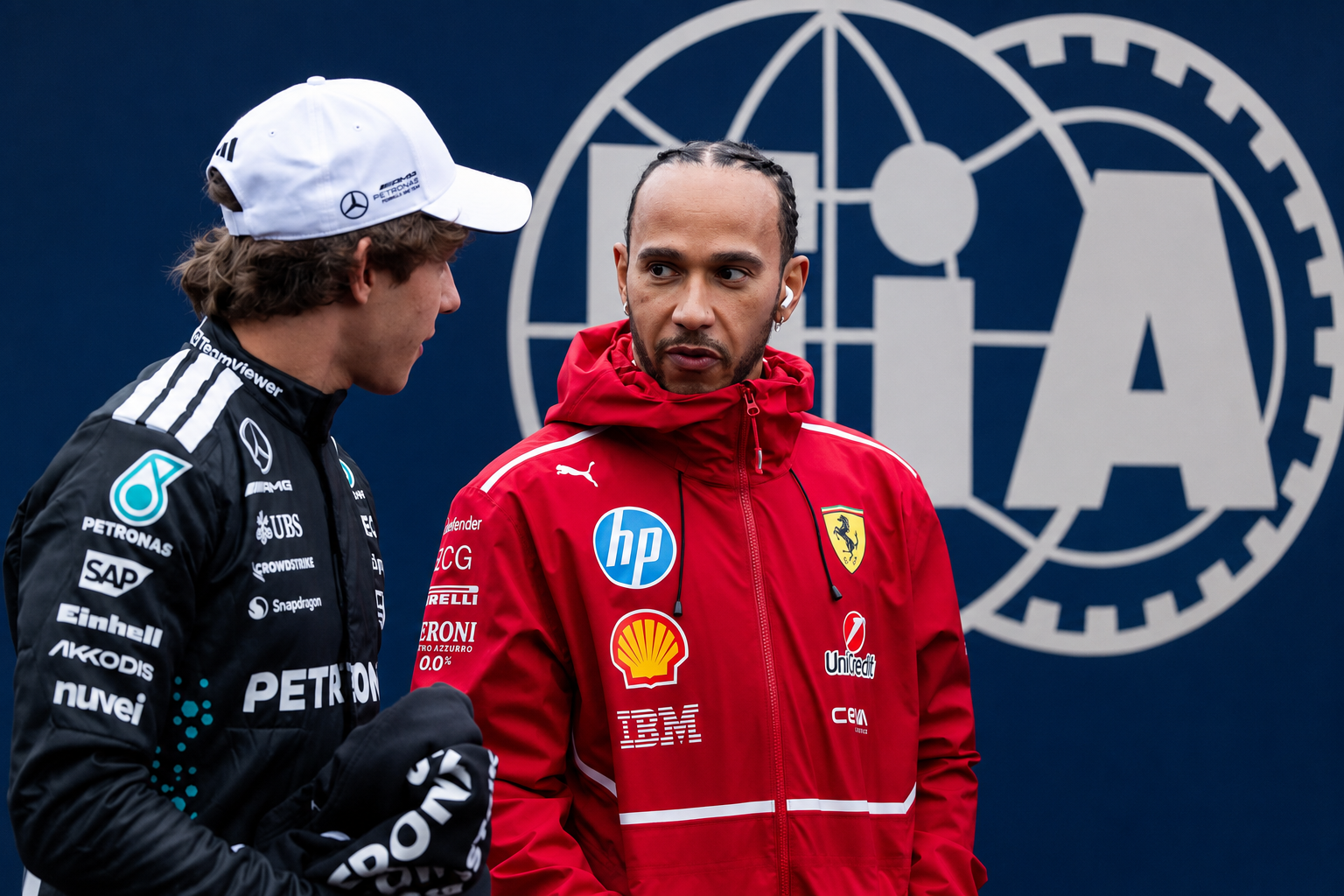
The opening practice session for the 2026 Formula 1 Austrian Grand Prix provided fans with an exciting first glimpse of the competitive order at the Red Bull Ring, with Mercedes setting the pace in a session that featured interruptions, technical problems, and encouraging performances from several young drivers.
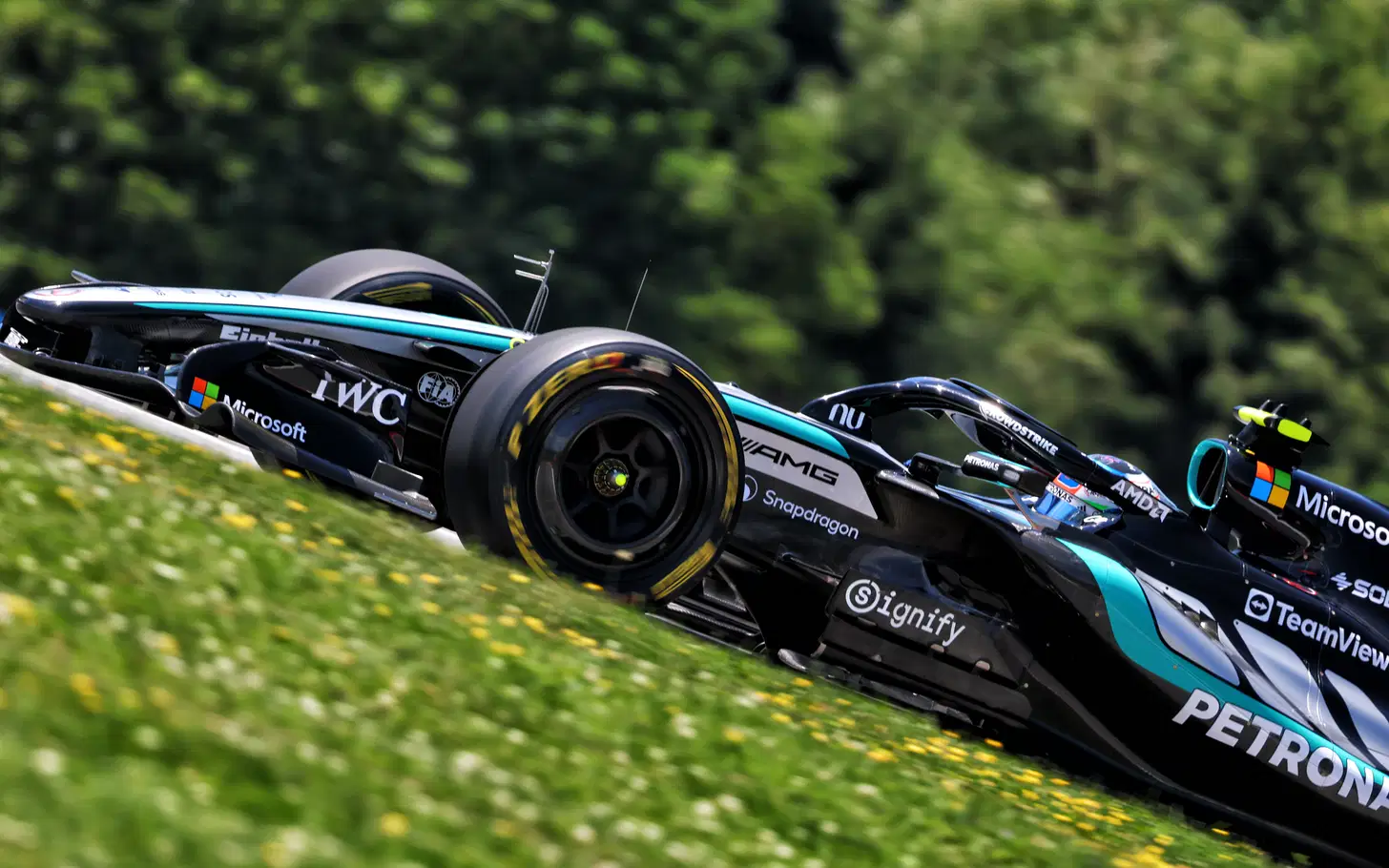
Championship leader Kimi Antonelli delivered another impressive display by finishing at the top of the timing sheets. The young Mercedes star continued his remarkable form this season by producing the fastest lap of the one-hour practice session, narrowly edging out his teammate George Russell to complete a dominant one-two finish for the Silver Arrows. Antonelli’s quickest effort of 1:07.796 demonstrated that Mercedes have arrived in Austria with a very competitive package as they look to strengthen their grip on both the Drivers’ and Constructors’ Championships.
George Russell was only four hundredths of a second slower than Antonelli, highlighting just how evenly matched the Mercedes drivers were throughout the session. Their pace suggested that the team has adapted perfectly to the high-speed characteristics of the Red Bull Ring, a circuit where precision and confidence under braking are essential. The close gap between the two teammates also promises an intriguing internal battle as the weekend progresses.
McLaren’s Oscar Piastri emerged as Mercedes’ closest challenger by securing third position. Although he finished just over one-tenth of a second behind Antonelli’s benchmark, the Australian showed that McLaren remains firmly in the fight despite acknowledging before the weekend that the team still requires further upgrades to consistently match Mercedes’ pace. Piastri completed several competitive laps and looked comfortable throughout the session, giving McLaren reason for optimism heading into qualifying.
Reigning Austrian Grand Prix winner Lando Norris endured a more complicated practice. The British driver experienced technical issues during the early stages of the session, limiting his running and reducing the amount of valuable data his team could gather. Despite those setbacks, Norris managed to recover well enough to finish seventh, suggesting that McLaren still has additional pace to unlock once the reliability concerns are addressed.
Max Verstappen also encountered a difficult beginning to the weekend. Red Bull struggled with technical problems during the opening half of FP1, restricting the Dutchman’s track time. Nevertheless, Verstappen showcased his trademark resilience by eventually climbing to fourth position. Considering the limited running and interruptions, finishing less than three-tenths behind Antonelli was an encouraging result for both the four-time world champion and his team.
Lewis Hamilton continued Ferrari’s solid recent form by recording the fifth-fastest time. Fresh from his breakthrough victory for Ferrari earlier this season, the seven-time world champion once again demonstrated consistent speed and appeared comfortable behind the wheel. Ferrari will likely be encouraged by Hamilton’s performance, especially as the team continues its pursuit of Mercedes in both championship standings.
Ferrari also used the session to fulfil one of Formula 1’s mandatory rookie practice requirements. Highly rated academy driver Dino Beganovic replaced Charles Leclerc for the opening practice session and made an immediate impression. Despite driving one of Formula 1’s most demanding cars for limited track time, Beganovic finished ninth overall, collecting valuable experience while also providing Ferrari with useful technical feedback.
One of the standout performances came from Racing Bulls rookie Arvid Lindblad, who secured an impressive sixth place. The young driver continued to build his growing reputation by comfortably placing ahead of several experienced Formula 1 competitors. His pace highlighted the progress he has made since joining the championship and demonstrated Racing Bulls’ competitiveness around the Austrian circuit.
Williams also enjoyed an encouraging session, with Franco Colapinto finishing eighth after putting together a series of consistent laps. The Argentine driver looked increasingly confident as the session developed and helped place Williams firmly inside the top ten during the opening practice.
Oliver Bearman delivered another composed performance for Haas by taking tenth place, while Audi’s Nico Hulkenberg narrowly missed out on the top ten in eleventh. Both drivers completed productive sessions that should provide their respective teams with valuable setup information before the remainder of the weekend.
The practice session itself was not without drama. A red flag interrupted proceedings late in the hour after Sergio Perez became involved in an incident that forced race officials to temporarily halt the action. The stoppage disrupted several teams’ planned long-run programmes, leaving engineers with less data than originally expected ahead of the crucial second practice session.
Several teams also dedicated part of the session to testing new aerodynamic components and experimental setup changes. With Austria’s unique layout featuring only a handful of corners but several long acceleration zones, engineers focused heavily on balancing straight-line speed with cornering performance. Finding that compromise will be essential as teams prepare for qualifying and Sunday’s Grand Prix.
Mercedes’ commanding one-two result reinforced the team’s status as the benchmark heading into the remainder of the weekend. Antonelli’s championship lead has been built on remarkable consistency, and his pace in Austria suggested he could once again be the driver to beat. Russell’s equally impressive performance further strengthened Mercedes’ confidence as both cars consistently featured at the top of the timing screens.
Behind Mercedes, the battle appeared incredibly close. McLaren, Ferrari, and Red Bull all demonstrated flashes of strong pace despite experiencing various setbacks. Verstappen’s recovery after technical problems underlined Red Bull’s potential, while Hamilton’s steady performance indicated Ferrari could remain firmly involved in the fight for podium positions. McLaren also showed encouraging speed through Piastri despite Norris losing valuable running time.
The rookie drivers also left a positive impression. Beganovic, Lindblad and several other young talents used the opportunity to showcase their abilities against Formula 1’s established stars, proving once again that the next generation of drivers is ready to compete at the highest level.
As teams now analyse the extensive data gathered from FP1, attention shifts toward the remaining practice sessions and qualifying. Mercedes currently holds the advantage, but with Red Bull, Ferrari and McLaren expected to make significant overnight adjustments, the competitive order could still change dramatically before the grid is decided.
Free Practice 1 ultimately provided an entertaining opening chapter to the Austrian Grand Prix weekend. Antonelli’s pace, Mercedes’ dominance, Verstappen’s recovery, Hamilton’s consistency, and several standout rookie performances ensured fans were treated to an exciting start, setting the stage for what promises to be another highly competitive Formula 1 weekend at the Red Bull Ring. The close margins between the leading teams suggest that qualifying and the race itself could be fiercely contested, with every tenth of a second likely to prove decisive.