Verstappen and Norris Encounter Setbacks as Mercedes Dominate Action During Red-Flag Interrupted Session
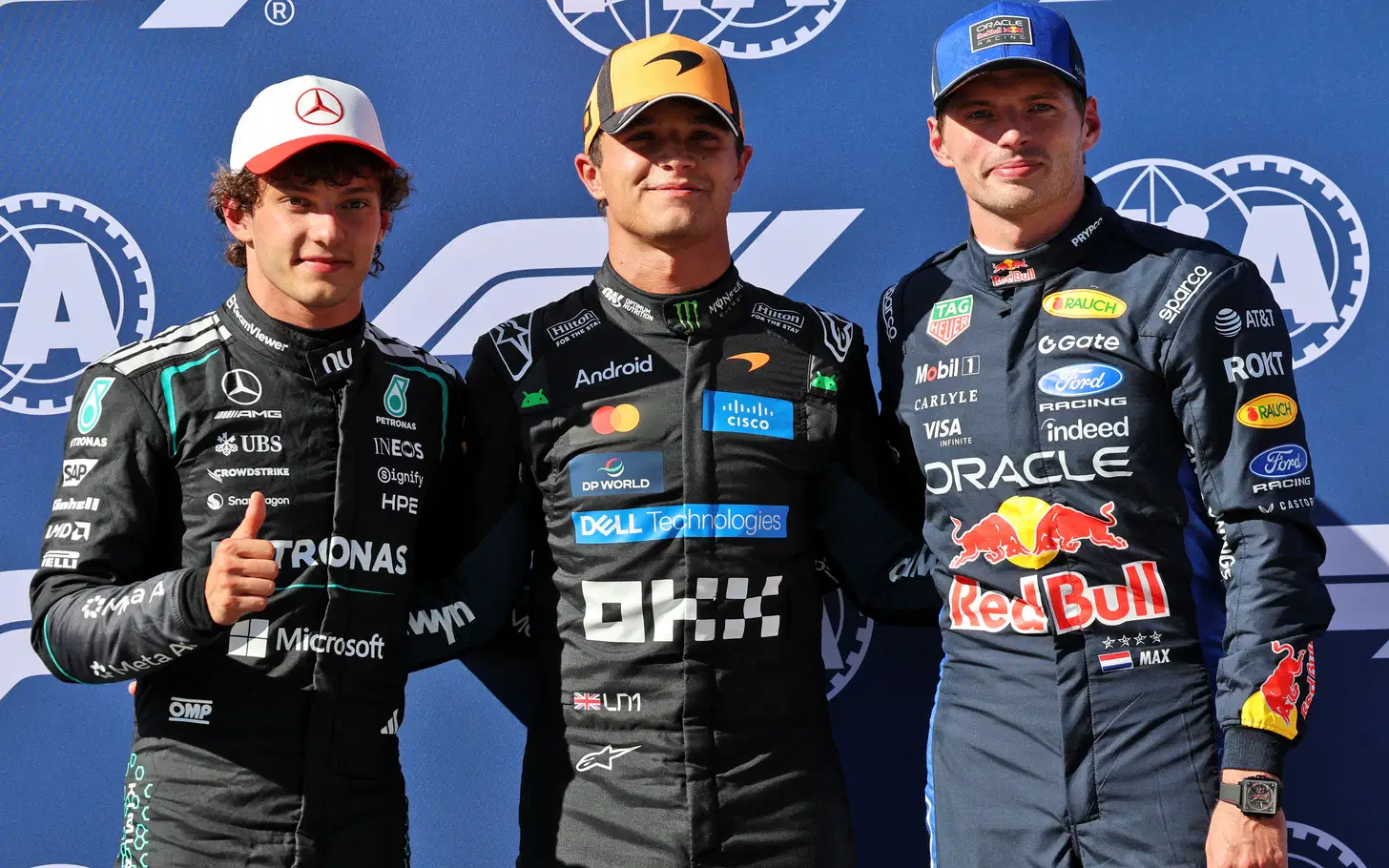
Mercedes emerged as the standout team during a dramatic Formula One practice session that was repeatedly disrupted by a red flag, while reigning world champion Max Verstappen and McLaren star Lando Norris both endured frustrating outings after encountering separate problems on track.
The session, held ahead of the Austrian Grand Prix weekend, provided an early glimpse into the competitive order, with Mercedes displaying impressive pace and consistency. George Russell and rising star Kimi Antonelli topped the timesheets for the Silver Arrows, leaving rival teams searching for answers as preparation for qualifying intensified. Their performance reinforced growing belief that Mercedes could once again be a serious contender for victory after showing encouraging form in recent races.
While Mercedes enjoyed a productive afternoon, the same could not be said for Red Bull and McLaren. Max Verstappen struggled with technical difficulties that prevented him from completing his planned running programme. The Dutchman spent valuable time in the garage while Red Bull engineers worked to identify the source of the problem, limiting his ability to gather crucial data on race pace and tyre performance.
Verstappen’s difficulties arrived at an unfortunate time, as every lap is essential during a Grand Prix weekend. Teams rely heavily on practice sessions to evaluate different tyre compounds, aerodynamic configurations, fuel loads, and race simulations. Missing significant track time can leave a driver at a disadvantage heading into qualifying, particularly at circuits where finding the perfect setup requires extensive fine-tuning.
Lando Norris also experienced a difficult session after McLaren encountered issues that interrupted the British driver’s programme. The reigning world champion was unable to maximize his running as the team investigated the problem affecting his car. Engineers immediately began examining telemetry and mechanical systems in an effort to resolve the issue before the next on-track session.
For McLaren, the setback came after several weekends of encouraging progress. The Woking-based team has consistently challenged at the front throughout the season, making any interruption to its preparations particularly frustrating. Norris, who has developed a reputation for extracting maximum performance from difficult situations, remained focused despite the unexpected obstacle.
Adding to the drama was a red flag that temporarily halted the session. Race control suspended running after an on-track incident required marshals to recover a stranded car and ensure the circuit was safe before allowing drivers to continue. The interruption disrupted long-run programmes across the field, forcing teams to revise their carefully planned schedules.
Red flags often have a significant impact during practice because teams work according to strict timelines. Engineers carefully divide sessions between qualifying simulations, race pace evaluations, aerodynamic tests, and tyre analysis. When a session is stopped unexpectedly, difficult decisions must be made regarding which programme to prioritize once the track reopens.
Mercedes handled those challenges exceptionally well. George Russell once again demonstrated excellent pace by consistently producing competitive lap times throughout the session. His teammate, Kimi Antonelli, continued his remarkable rookie campaign by matching the speed shown by the experienced Briton. Together, the pair completed a substantial amount of running while maintaining impressive consistency across different tyre compounds.
The performance highlighted the progress Mercedes has made throughout the season. Following the introduction of Formula One’s latest technical regulations, the Silver Arrows have steadily developed one of the strongest packages on the grid. Their car appeared well-balanced through both high-speed corners and slower technical sections, giving drivers the confidence to push close to the limit.
Russell praised the team’s preparation after the session, noting that the car responded well to setup changes and delivered predictable handling characteristics. Antonelli also looked comfortable behind the wheel, further strengthening his growing reputation as one of Formula One’s brightest young talents.
In contrast, Red Bull’s engineers faced a race against time to solve Verstappen’s issues before qualifying. Technical problems during practice can create uncertainty because teams often have limited opportunities to verify repairs before competitive sessions begin. Although Red Bull has repeatedly demonstrated its ability to recover from difficult Fridays, every lost lap represents valuable information that cannot easily be replaced.
McLaren similarly focused on diagnosing Norris’ problem while maintaining confidence that the issue could be resolved before qualifying. The team emphasized that collecting data remained a priority despite the shortened programme, with engineers analyzing every available piece of information gathered before the interruption.
The practice session also offered an early indication of the competitive battle likely to unfold during the remainder of the weekend. Ferrari continued to show respectable pace, while several midfield teams produced encouraging performances that suggested another closely contested qualifying session could be on the cards.
As Formula One enters a new technical era, reliability has become an increasingly important factor. Teams are operating with highly sophisticated hybrid power units and complex energy recovery systems, meaning even relatively small mechanical or electrical faults can significantly disrupt performance. Recent races have demonstrated that reliability can prove just as decisive as outright speed in determining championship outcomes.
Despite the setbacks experienced by Verstappen and Norris, neither driver appeared overly concerned. Both Red Bull and McLaren have established strong engineering operations capable of responding quickly to unexpected problems. With additional practice opportunities still available, both teams remain optimistic about returning to full competitiveness before qualifying begins.
For Mercedes, however, the session represented another important confidence boost. Consecutive strong performances suggest the Brackley-based outfit has found a competitive direction that allows both Russell and Antonelli to consistently challenge near the front of the field. If that pace carries into qualifying and the race itself, Mercedes could once again find itself in contention for pole position and victory.
Attention will now shift to the remaining practice sessions, where Red Bull and McLaren will aim to recover lost ground while Mercedes attempts to maintain its advantage. The outcome of those sessions could ultimately determine the balance of power heading into qualifying and Sunday’s Grand Prix.
With Verstappen eager to bounce back from technical frustrations, Norris determined to maximize McLaren’s potential, and Mercedes looking increasingly capable of challenging for top honours, the stage is set for another fascinating battle as the Formula One weekend continues.