The controversy surrounding the penalty handed to Max Verstappen at the 2026 Miami Grand Prix has sparked intense criticism, with many observers branding the decision by the Fédération Internationale de l’Automobile (FIA) as inconsistent, overly lenient, and even “pathetic.” The incident has once again reignited debates about stewarding standards in modern Formula 1, particularly in a season already filled with regulatory confusion and contentious rulings.
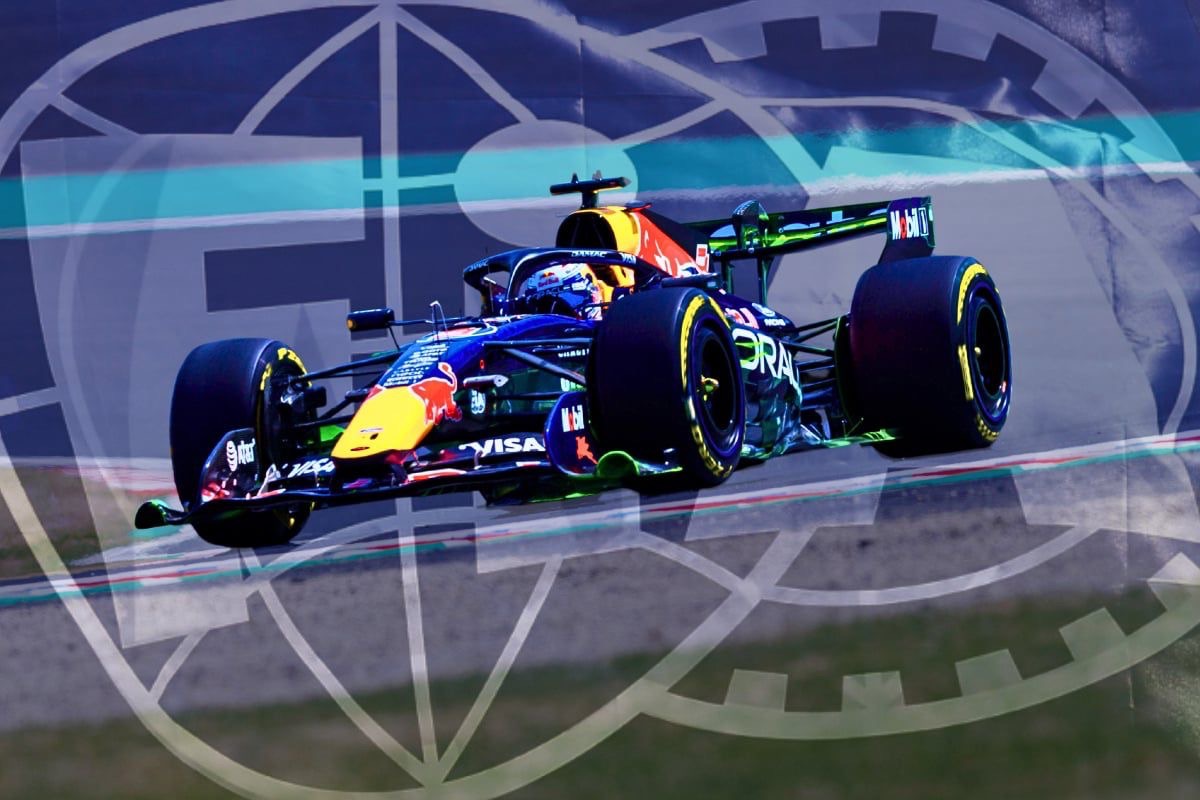
During what was already a chaotic and unpredictable race weekend in Miami, Verstappen found himself at the center of scrutiny following a breach of pit lane regulations. The Red Bull driver crossed the pit exit line during a crucial phase of the race, an action that is typically penalised due to the potential safety risks it poses. After reviewing the incident, race stewards opted to impose a five-second time penalty on the reigning world champion. While this punishment was technically in line with existing regulations, the reaction from fans, pundits, and sections of the paddock suggested that the issue went far beyond the rulebook itself.
Critics argued that the penalty did not adequately reflect the seriousness of the infringement. Crossing the pit exit line is generally treated as a clear violation because it can endanger other drivers rejoining the track at high speed. In this case, however, the relatively mild sanction allowed Verstappen to maintain a strong finishing position, ultimately classified in fifth place despite the time addition.
What intensified the backlash was the broader context of the race, where other drivers received significantly harsher punishments for different infractions. Notably, Ferrari’s Charles Leclerc was handed a far more severe 20-second penalty for repeated track limit violations after going off the circuit and gaining an advantage. This stark contrast in penalties led many to question whether the FIA was applying its rules consistently, or if certain decisions were being made on a more subjective basis.
The disparity between these penalties became a focal point for criticism. Observers pointed out that while Leclerc’s infringement involved gaining an advantage over multiple laps, Verstappen’s breach involved a safety-related rule—arguably more serious in nature. Yet, the consequences for each driver differed dramatically. This inconsistency fueled claims that the governing body lacks a clear and uniform standard for adjudicating incidents, which in turn undermines the credibility of the sport.
Adding to the controversy was the already tense atmosphere surrounding the 2026 Formula 1 season. The introduction of new technical regulations has led to unpredictable racing dynamics, with drivers frequently voicing concerns about the difficulty of managing closing speeds and defending positions. Some competitors have described the racing conditions as chaotic and even “random,” suggesting that the rules have not yet achieved their intended balance. In such an environment, the expectation for clear and consistent officiating becomes even more critical—making perceived inconsistencies all the more glaring.
The Miami Grand Prix itself was filled with drama beyond Verstappen’s penalty. Changing weather conditions forced organizers to adjust the race start time, while multiple on-track incidents and strategic battles created a complex and often confusing narrative. Amid all this, stewarding decisions played a pivotal role in shaping the final outcome, further amplifying scrutiny on the FIA’s judgment.
For Verstappen, the penalty ultimately had limited impact on his race result. Thanks in part to penalties applied to other drivers, he retained his position in the top five, salvaging valuable championship points. However, the debate surrounding the decision has overshadowed his performance, shifting attention away from the racing itself and toward the governance of the sport.
This is not the first time the FIA has faced criticism over its handling of race incidents, and it is unlikely to be the last. Over the years, Formula 1 has struggled with maintaining consistent stewarding standards, particularly as the sport has grown more complex and competitive. The Miami controversy serves as another example of how even relatively small decisions can have significant repercussions for the sport’s image and credibility.
Many fans and analysts are now calling for greater transparency in how penalties are determined. Suggestions include clearer guidelines, more detailed explanations from stewards, and possibly even structural changes to how race officials are appointed and trained. The goal, according to critics, is to ensure that all drivers are judged by the same standards, regardless of their status or the circumstances of the race.
Ultimately, the uproar over Verstappen’s penalty highlights a deeper issue within Formula 1: the challenge of balancing strict rule enforcement with the dynamic and often unpredictable nature of racing. While penalties are an essential part of maintaining fairness and safety, their effectiveness depends heavily on consistency and clarity—qualities that many believe were lacking in Miami.
As the season progresses, the FIA will likely face increased pressure to address these concerns and restore confidence in its decision-making processes. Whether through reforms, improved communication, or stricter adherence to guidelines, the governing body must demonstrate that it can uphold the integrity of the sport.
For now, however, the Miami Grand Prix will be remembered not just for its on-track action, but for the controversy that followed—a controversy that has once again placed the FIA under the spotlight and reignited long-standing debates about fairness, consistency, and accountability in Formula 1.