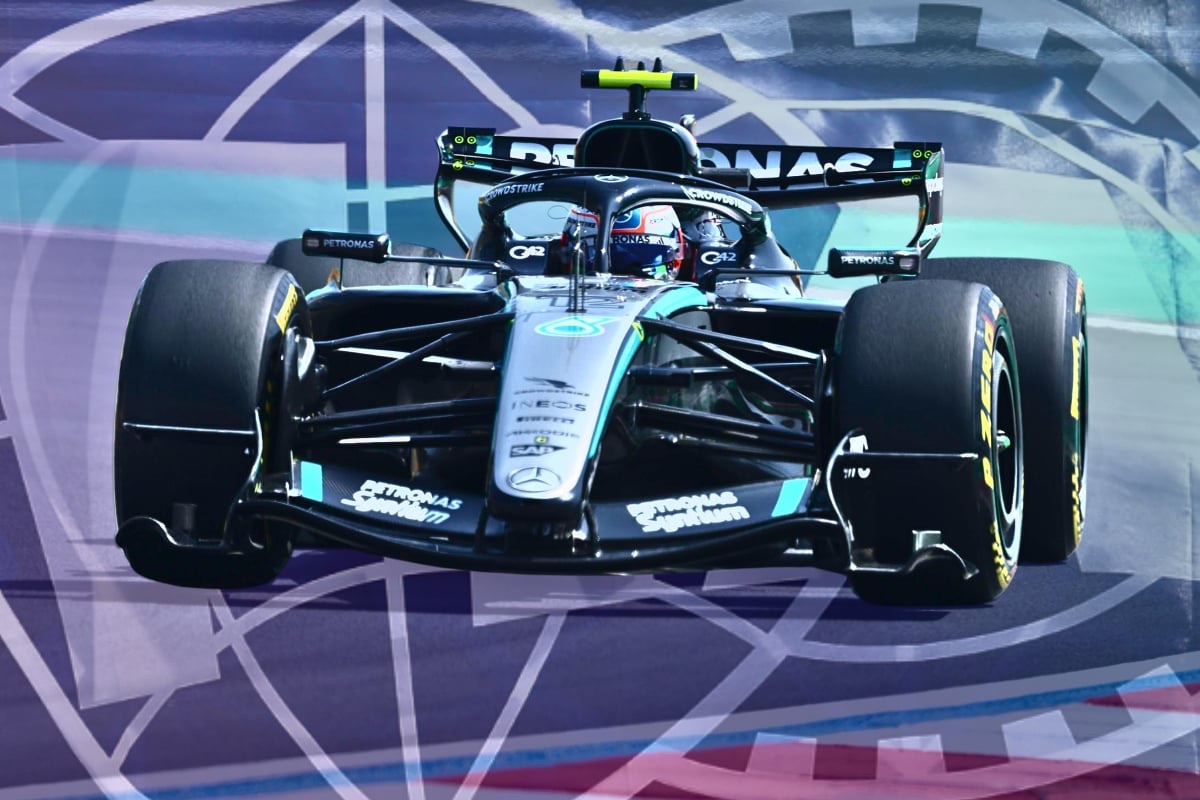
Kimi Antonelli experienced a late setback to his Miami Grand Prix Sprint weekend after a post-race penalty significantly altered the final classification.
The young Mercedes driver, who currently sits at the top of the drivers’ standings in the Formula 1 season, had initially secured a strong fourth-place finish. It was another impressive display from the rookie, who once again demonstrated composure and pace against more experienced competitors. Notably, he crossed the line ahead of his teammate, George Russell, reinforcing his status as a serious title contender.
However, the final outcome of the Sprint was revised after the race when stewards conducted a review of Antonelli’s performance. Officials determined that he had exceeded track limits multiple times during the event, breaching regulations that require drivers to keep at least a portion of their car within the defined white lines of the circuit. As a result, Antonelli was handed a five-second time penalty, which was added to his total race time.
This penalty dropped him from fourth place down to sixth in the updated results. The adjustment allowed Russell and reigning world champion Max Verstappen to each gain a position, benefiting directly from Antonelli’s misfortune. While the change may appear minor on paper, it carried meaningful consequences in the context of a highly competitive championship battle.
The roots of the penalty can be traced back to a series of track limits violations throughout the Sprint. Antonelli had already been shown the black-and-white flag on lap 12, a formal warning issued to drivers who are close to exceeding the permitted number of infringements. Despite receiving this caution, he went on to run beyond track limits once again on the final lap of the race. This marked his fourth offence, which automatically triggered a penalty under FIA sporting regulations.
Such infractions are taken seriously in modern Formula 1, where strict enforcement of track limits ensures fairness and consistency across the grid. Even slight misjudgments can carry significant repercussions, as Antonelli ultimately discovered. His loss of two positions in the Sprint may prove costly over time, particularly in a season where every point can influence the final championship outcome.
From a team perspective, the result was mixed for Mercedes. While Russell’s promotion in the standings offered some consolation, Antonelli’s drop reduced the team’s overall points return from the Sprint. It also served as a reminder of how critical precision and discipline are in today’s highly competitive environment.
Looking forward, Antonelli will need to refine his approach to track limits management if he hopes to maintain his lead in the standings. With the championship fight expected to remain tight, avoiding unnecessary penalties could be just as important as outright speed.