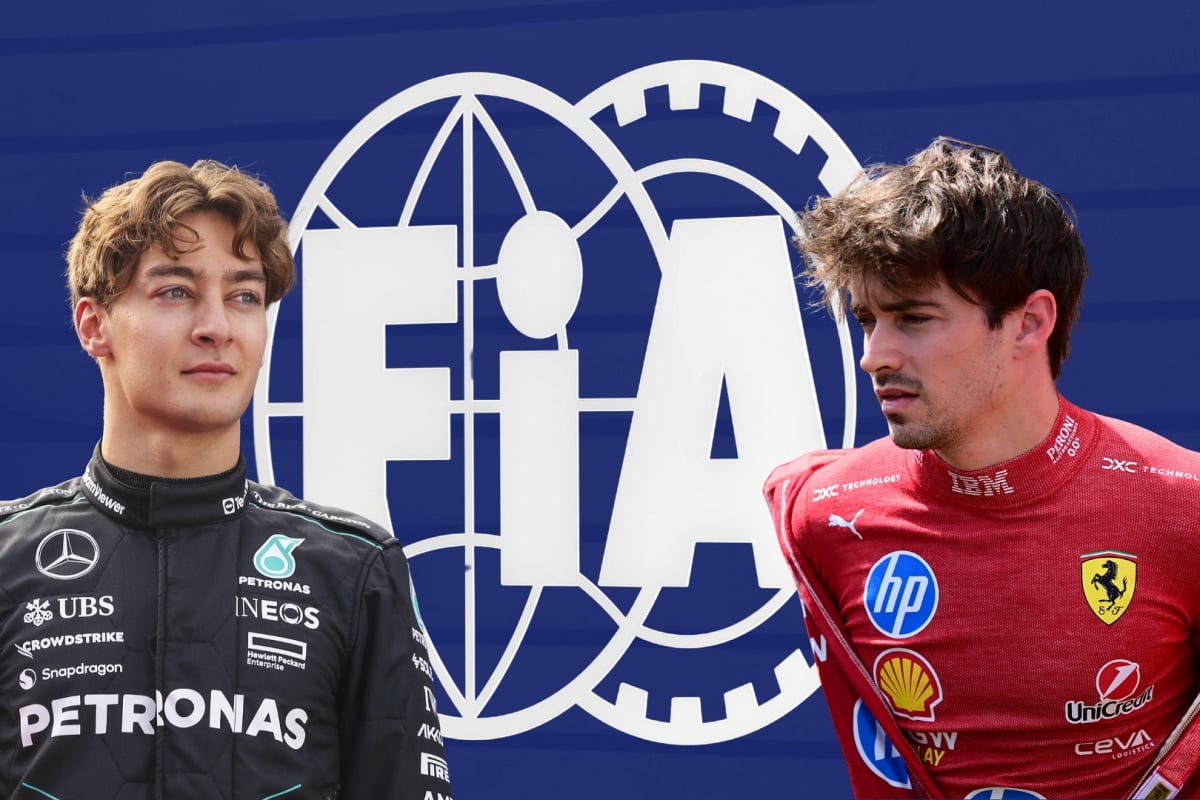
The FIA confirmed after an eventful qualifying session for the 2026 Austrian Grand Prix that nine Formula 1 drivers had lap times deleted following incidents involving yellow flag conditions at the Red Bull Ring. Although the ruling initially caused confusion among teams, drivers, and fans, the deleted laps ultimately had no effect on the official starting order for Sunday’s race.
The drama unfolded during the closing moments of Q3, when the battle for pole position reached its climax. Ferrari’s Charles Leclerc looked set to claim the fastest time after producing an impressive lap, while Mercedes driver George Russell was completing what would become the quickest lap of the session. However, everything changed seconds later when Max Verstappen suffered a high-speed crash at Turn 9 after losing control of his Red Bull.
The accident immediately brought out yellow flags, creating uncertainty for several drivers who were either finishing flying laps or returning to the pits. Verstappen’s damaged car remained close to the racing line, prompting marshals to respond quickly while race control monitored the situation.
Russell had already crossed the finish line to secure pole position before reaching the accident scene on his in-lap. Initially, only a single yellow flag was displayed, meaning drivers were required to reduce speed and remain prepared for hazards ahead. Russell lifted off the throttle accordingly before continuing around the circuit.
Moments later, double yellow flags were introduced as marshals worked around Verstappen’s stranded Red Bull. Because Russell and several other drivers passed through that section during their in-laps after the double yellows were displayed, the FIA later deleted those laps from the timing sheets.
This sequence of events sparked widespread confusion, especially after reports emerged suggesting Russell’s lap had been deleted. Many fans questioned whether his pole position was in danger, while Ferrari briefly appeared hopeful that Leclerc might inherit the top spot on the grid.
However, the FIA quickly clarified the situation. The deleted lap was not Russell’s pole-setting effort but rather his in-lap after completing the flying lap that secured the fastest time. Since in-laps do not count toward qualifying positions, the deletion had no influence on the final results.
The governing body later confirmed that nine of the ten drivers who participated in Q3 had in-laps deleted for passing through the double-yellow marshal sector. The only exception was Verstappen, whose qualifying session had already ended after crashing into the barriers.
As a result, every other driver in the top ten—including Russell, Charles Leclerc, Lewis Hamilton, Kimi Antonelli, Lando Norris, Oscar Piastri, Isack Hadjar, Liam Lawson, and Arvid Lindblad—received deleted in-laps for the same reason.
Because none of the deleted laps were competitive flying laps, the official qualifying classification remained unchanged.
The confusion also led to speculation that Russell could face a stewards’ investigation over his conduct during the yellow flag incident. Those concerns were eventually dismissed after officials reviewed telemetry, onboard footage, and timing data.
Mercedes team principal Toto Wolff explained that Russell had complied fully with the regulations. According to Wolff, Russell reacted correctly to the single yellow flag by lifting significantly before Turn 9, sacrificing valuable time while maintaining control of the car.
Telemetry reportedly showed that Russell lifted for approximately 100 metres, costing him around one-and-a-half tenths of a second. Despite losing time, his lap remained comfortably fast enough to secure pole position ahead of Leclerc and Hamilton.
Wolff praised his driver’s judgment, insisting there was never any doubt that Russell had respected the yellow flag regulations.
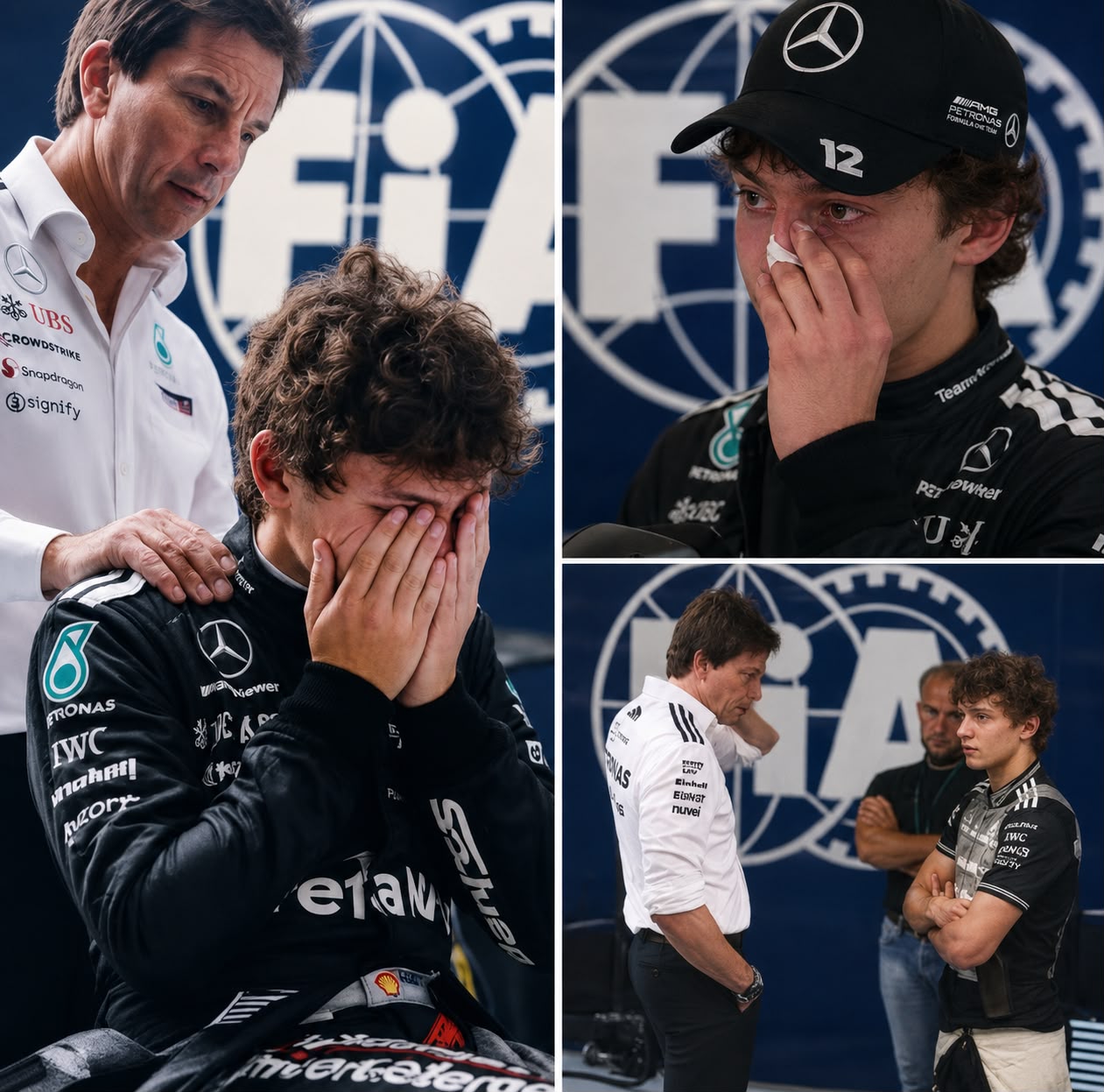
Meanwhile, teammate Kimi Antonelli experienced a different outcome. Believing that double yellow flags had already been deployed, the young Mercedes driver backed off much more aggressively than necessary during his final attempt. That decision effectively ended his chances of challenging for pole, leaving him fourth on the grid.
Antonelli later admitted he believed the situation required a complete abandonment of his lap, only to discover afterward that the initial warning had been a single yellow.
The incident highlighted just how quickly circumstances can change during qualifying, particularly in the final minutes when multiple cars are attempting decisive laps simultaneously.
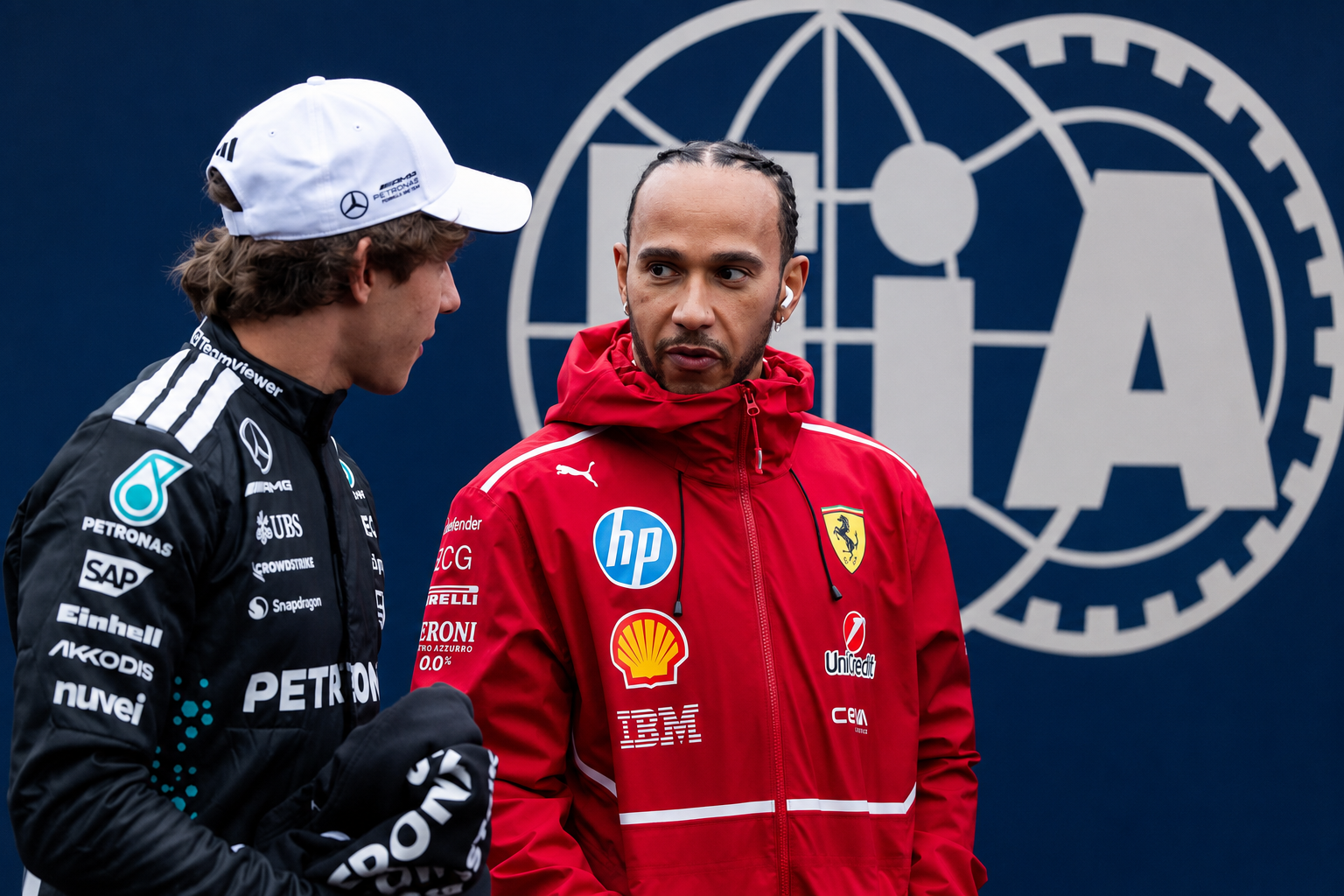
For Ferrari, Leclerc and Hamilton produced one of their strongest qualifying performances of the season, locking out second and third positions behind Russell. Although Leclerc briefly believed he had secured pole after Verstappen’s crash interrupted the closing moments, Russell’s earlier lap ultimately proved unbeatable.
Verstappen’s accident was especially disappointing considering he had shown competitive pace throughout qualifying and looked capable of fighting for the front row. Instead, the Dutchman was forced to settle for fifth after failing to complete his final flying lap.
Fortunately, Verstappen escaped the heavy impact without injury, although the crash brought an abrupt end to an otherwise thrilling qualifying session.
Following the FIA’s confirmation regarding the deleted laps, attention quickly shifted toward Sunday’s Austrian Grand Prix. With Russell starting from pole position alongside Leclerc, Mercedes and Ferrari appear set for an intense battle into the opening corner, while Hamilton and Antonelli will also hope to challenge for victory.
Despite the initial confusion surrounding the deleted laps, the FIA’s explanation confirmed that the qualifying order had been determined fairly and that every affected driver had only lost an in-lap rather than a competitive timed effort.
In the end, the unusual ruling served mainly as a reminder of how complex Formula 1’s qualifying regulations can become when accidents occur during crucial moments. Although nine drivers were officially listed as having laps deleted, the decision was purely procedural and had no bearing on the grid.
Russell therefore retained his hard-earned pole position, while the rest of the top ten kept their original starting places, ensuring the Austrian Grand Prix grid remained exactly as it stood when qualifying ended.