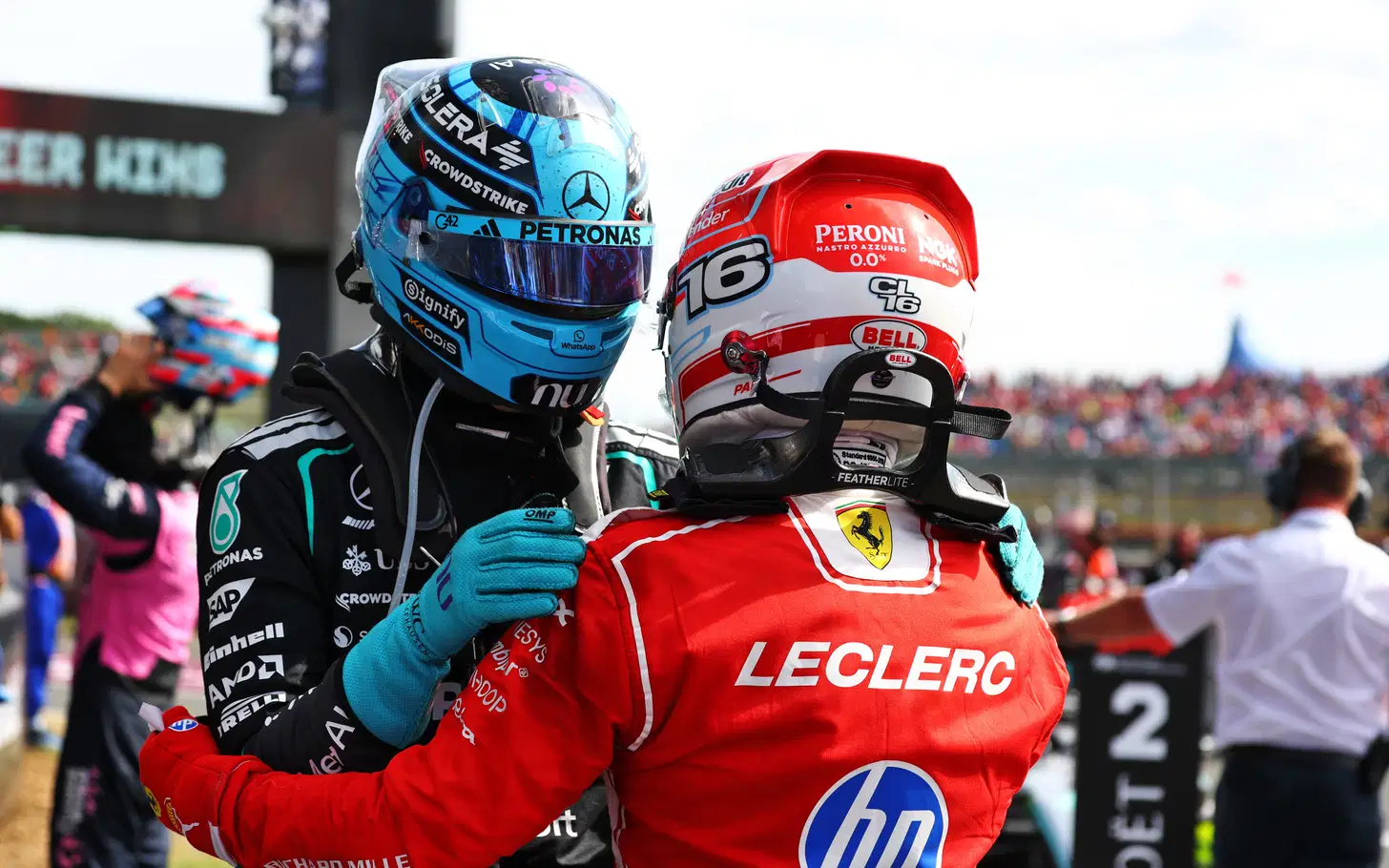
George Russell admitted that a slice of good fortune played a significant role in helping him secure a podium finish at the British Grand Prix after what proved to be a dramatic and unpredictable afternoon at Silverstone.
The Mercedes driver endured a race filled with changing conditions, strategic uncertainty, and intense competition from rivals, but managed to recover strongly to finish among the top three despite facing several challenges throughout the event.
Speaking after the race, Russell acknowledged that circumstances unfolded in a way that ultimately worked in his favor. While he was pleased with the result, he conceded that luck had a hand in helping him stand on the podium after a weekend that had not looked especially promising from the outset.
The British driver had started the race knowing that overtaking opportunities would be difficult against a highly competitive field. Mercedes had shown encouraging pace during certain stages of the weekend, but they were not widely considered the outright favorites to challenge for victory against the leading contenders.
As the race got underway, Russell focused on maintaining a consistent rhythm while avoiding unnecessary risks in the opening laps. The early stages featured fierce battles throughout the field, with several drivers fighting aggressively for track position. Rather than forcing ambitious overtaking attempts, Russell concentrated on preserving his tires and remaining close enough to capitalize on any opportunities that might arise later in the race.
Silverstone’s famously unpredictable weather soon became one of the defining factors of the afternoon. Conditions evolved rapidly, forcing teams to make difficult decisions regarding tire strategy. Choosing the correct moment to switch compounds became essential, with every lap presenting new information as the circuit changed from wet to dry and back again in different sectors.
Mercedes found themselves evaluating multiple strategic options as the race developed. Russell stayed in constant communication with his race engineer, providing detailed feedback about grip levels and the behavior of the car under the changing conditions. Those conversations proved invaluable as the team sought to make the best possible decisions at crucial moments.
Several rivals experienced setbacks as the race unfolded. Some drivers struggled with tire degradation, while others lost valuable time after making pit stops that failed to coincide with the optimum crossover point between tire compounds. Incidents elsewhere on the circuit also reshuffled the running order, creating fresh opportunities for drivers who managed to stay out of trouble.
Russell remained calm throughout the chaos, carefully balancing speed with caution. Rather than pushing beyond the limits of adhesion on a constantly evolving track, he adopted a measured approach that allowed him to avoid costly mistakes while steadily moving into stronger positions.
One of the decisive moments came during the strategic phase of the race when Mercedes made an important call regarding Russell’s tire choice. While there was naturally an element of uncertainty surrounding every decision, the team’s timing ultimately proved beneficial, allowing Russell to gain valuable track position over several competitors.
After climbing into podium contention, Russell still had significant work to do. The closing laps demanded complete concentration as rivals applied relentless pressure from behind. At the same time, changing grip levels continued to challenge drivers across the circuit, making even routine corners difficult to negotiate with confidence.
Russell responded impressively by delivering a composed and disciplined performance during the final stages. He resisted the temptation to overdrive the car and instead focused on maximizing consistency, ensuring he remained within striking distance of those ahead while protecting his own position from pursuing rivals.
Following the race, Russell was quick to recognize that the final result reflected more than just outright pace. He openly admitted that fortune had smiled on his side at key moments during the Grand Prix, particularly as circumstances unfolded that benefited his overall race strategy.
The Mercedes driver explained that success in Formula 1 often depends on far more than raw speed alone. Weather conditions, safety cars, incidents involving competitors, tire degradation, and split-second strategic decisions can all dramatically influence the outcome of a race. On this occasion, Russell felt that several of those variables aligned in his favor.
Despite acknowledging his good fortune, Russell emphasized that the team also deserved significant credit for executing a clean race under extremely demanding circumstances. Mercedes reacted effectively to changing situations, avoided major strategic errors, and provided him with a car capable of competing near the front throughout the afternoon.
The podium represented an encouraging reward for Mercedes after a season that has featured both highs and frustrations. While the team continues its pursuit of regular victories, strong finishes such as this demonstrate that they remain capable of capitalizing whenever opportunities present themselves.
Russell praised the entire Mercedes organization for remaining focused despite the pressure created by the constantly changing race conditions. He highlighted the work performed by engineers, strategists, mechanics, and everyone back at the factory, noting that successful results are only possible through the collective effort of the entire team.
The British Grand Prix always carries special significance for Russell given that Silverstone is effectively his home race. Racing in front of thousands of passionate British supporters added extra motivation throughout the weekend, making the podium finish even more satisfying.
The atmosphere around Silverstone was electric from the opening practice sessions through to the race itself, with enormous crowds creating one of Formula 1’s most iconic environments. Russell expressed his appreciation for the incredible support he received from the fans, acknowledging that their encouragement provided an additional boost during the demanding race.
While pleased with the outcome, Russell also remained realistic about Mercedes’ overall competitive position. He acknowledged that there are still areas where the team must improve if they are to consistently challenge for victories against their strongest rivals over the remainder of the championship.
The result nevertheless provides valuable momentum heading into the next races on the Formula 1 calendar. Strong performances not only increase confidence within the team but also reinforce belief that further podiums—and potentially race victories—remain achievable if development continues in the right direction.
Russell’s mature assessment after the race reflected both satisfaction and perspective. Rather than claiming the podium was purely the result of superior pace, he candidly admitted that racing often requires favorable circumstances in addition to strong execution.
His comments also highlighted one of Formula 1’s defining characteristics: even the fastest drivers and teams sometimes depend on timing and fortune to achieve the best possible results. Success frequently comes from being prepared to seize unexpected opportunities when they arise, and Russell believed Mercedes managed to do exactly that at Silverstone.
Ultimately, the British Grand Prix proved to be another reminder that Formula 1 rewards resilience as much as outright performance. Through disciplined driving, smart strategy, dependable teamwork, and a measure of good luck, George Russell transformed a complicated and unpredictable race into a valuable podium finish that delighted the home crowd and strengthened Mercedes’ confidence for the battles that lie ahead.