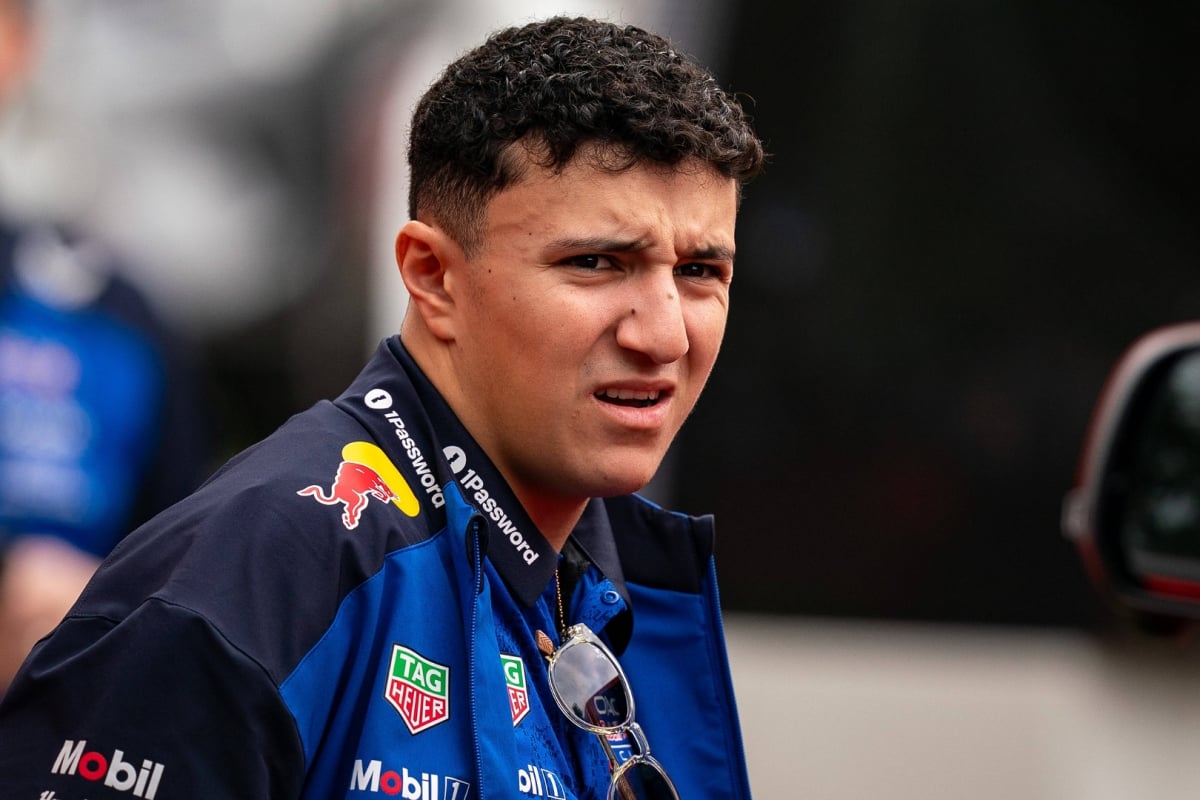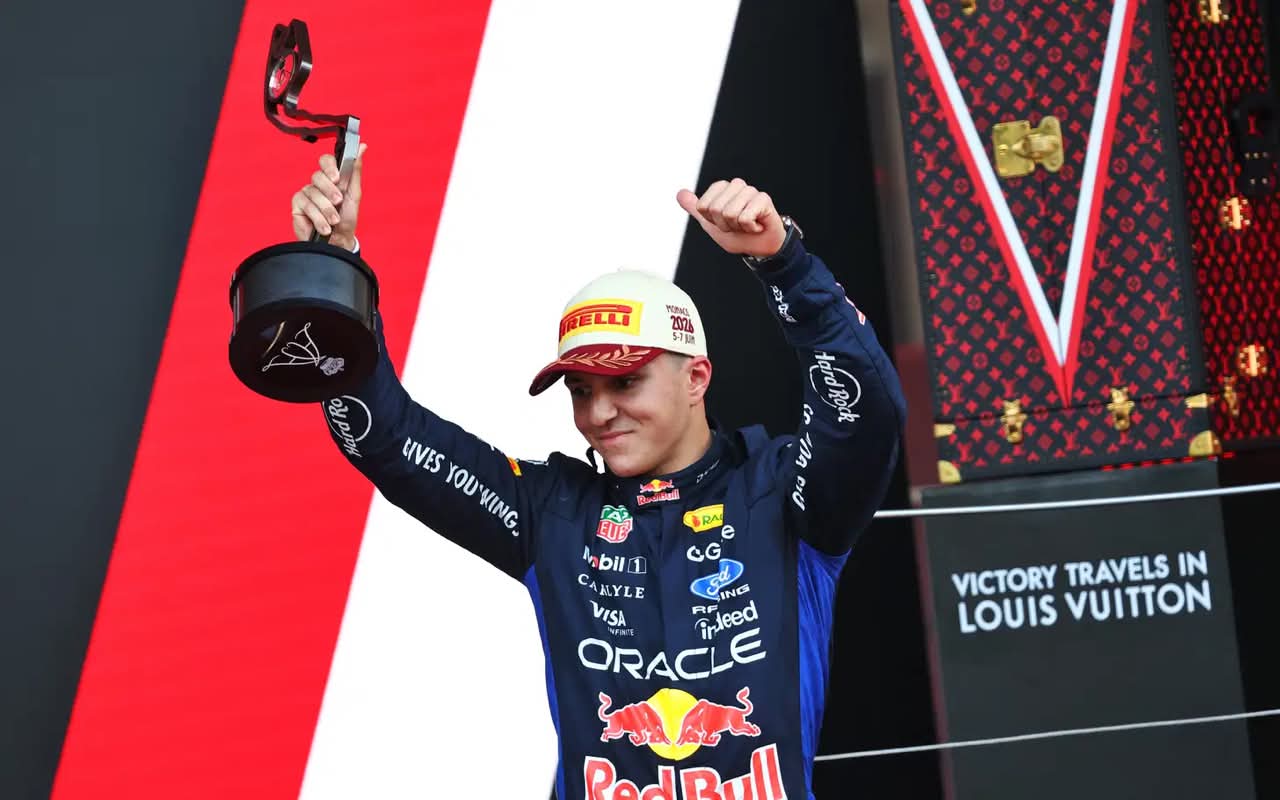

Isack Hadjar’s journey to achieving a long-awaited Formula 1 podium finish was far from straightforward, as the young driver openly admitted that fear and uncertainty within the Red Bull system played a significant role in shaping his mindset before his breakthrough success. His candid reflections shed light on the immense pressure young drivers face when competing under one of the most demanding talent development programs in motorsport.
Before stepping onto the podium, Hadjar had already endured a turbulent start to his Formula 1 career. Having been promoted through the Red Bull Junior Team—a pathway known for its ruthlessness as much as its prestige—he was acutely aware that opportunities could disappear as quickly as they arrive. The expectations placed upon him were enormous, especially given Red Bull’s history of making swift decisions regarding driver performance. This reality created an atmosphere of constant evaluation, where every race, lap, and even minor mistake could influence his future.
Hadjar himself acknowledged that this environment brought a certain level of anxiety. The fear of not meeting expectations, or worse, being replaced, lingered in the background as he navigated his early races. For a young driver still adapting to the intensity and complexity of Formula 1, that pressure was both a motivator and a burden. It pushed him to extract maximum performance from himself, but it also meant that confidence was sometimes fragile.
The situation was made even more challenging by the natural learning curve that comes with competing at the highest level of motorsport. Transitioning from junior categories such as Formula 2 into Formula 1 is a monumental leap, requiring not only technical skill but also mental resilience. Hadjar had already shown promise in his junior career, finishing as a runner-up in Formula 2, which earned him his promotion. However, translating that success into Formula 1 results proved to be a different challenge altogether.
Early setbacks only intensified the pressure he felt. Like many rookies, Hadjar encountered moments where things did not go according to plan—incidents, performance inconsistencies, and the steep demands of adapting to a new car and team environment. These experiences contributed to his sense of vulnerability within the Red Bull structure. Knowing the team’s reputation for high standards, he feared that any prolonged dip in performance could jeopardize his position.
Despite these concerns, Hadjar remained determined to prove his worth. He worked closely with his engineers and team members to improve his understanding of the car and refine his racecraft. Gradually, he began to find more consistency and confidence, even if results did not immediately reflect his progress. His perseverance during this period was crucial, as it laid the groundwork for his eventual success.
The breakthrough finally came during a race that tested him both physically and mentally. Throughout the event, Hadjar faced numerous challenges, including technical issues that made driving particularly difficult. At one point, he struggled with significant drivability problems, which are especially punishing on tight and unforgiving circuits like Monaco. Despite these obstacles, he managed to stay composed and continue pushing forward.
What made his achievement even more remarkable was the context in which it occurred. The race itself was far from straightforward, featuring interruptions and moments of uncertainty. At one stage, a red flag caused a lengthy delay, adding another layer of tension to an already demanding situation. During this pause, there was even an investigation involving his team, which left Hadjar waiting anxiously about whether his result would stand.
Through all of this, he demonstrated resilience and focus. When the race resumed, Hadjar continued to fight, carefully managing his car despite the ongoing issues. His ability to maintain composure under such pressure highlighted his growing maturity as a driver. By the end of the race, his efforts were rewarded with a hard-earned podium finish—a moment that marked a significant milestone in his career.
Reflecting on the experience, Hadjar described the race as one of the toughest he had ever faced. The combination of physical demands, technical difficulties, and emotional stress made it feel like an endurance test. Yet, it was precisely this challenge that made the result so satisfying. Overcoming adversity not only validated his abilities but also helped silence the doubts that had lingered in his mind.
The podium finish also served as a turning point in how he viewed his place within the Red Bull system. While the pressure had not disappeared, his success proved that he could deliver results even in difficult circumstances. This achievement likely strengthened his confidence and reinforced his belief that he belonged at the top level of the sport.
Hadjar’s story is a reminder of the psychological challenges that accompany elite competition. Talent alone is not enough; drivers must also navigate pressure, expectations, and moments of self-doubt. In his case, the fear he felt before his breakthrough did not hold him back—instead, it became part of the journey that shaped his development.
Looking ahead, this milestone could be the foundation for even greater achievements. With increased confidence and experience, Hadjar now has the opportunity to build on his success and establish himself as a consistent contender in Formula 1. His ability to overcome early struggles suggests that he possesses not only the skill but also the resilience needed to thrive in such a demanding environment.
Ultimately, Hadjar’s podium was more than just a strong race result—it was a statement. It showed that despite the intense pressure of the Red Bull system and his own internal doubts, he has the capability to rise to the occasion. For a young driver still at the beginning of his career, that realization could prove invaluable as he continues his journey in Formula 1.