
Lando Norris Urges McLaren to Investigate Costly Monaco Setback After Frustrating Practice Session
McLaren’s preparations for the Monaco Grand Prix suffered a significant setback after reigning Formula One World Champion Lando Norris was forced to cut short his running during Friday’s second practice session due to a technical problem. The unexpected issue not only robbed the British driver of valuable track time but also raised concerns within the team ahead of one of the most demanding qualifying sessions of the season.
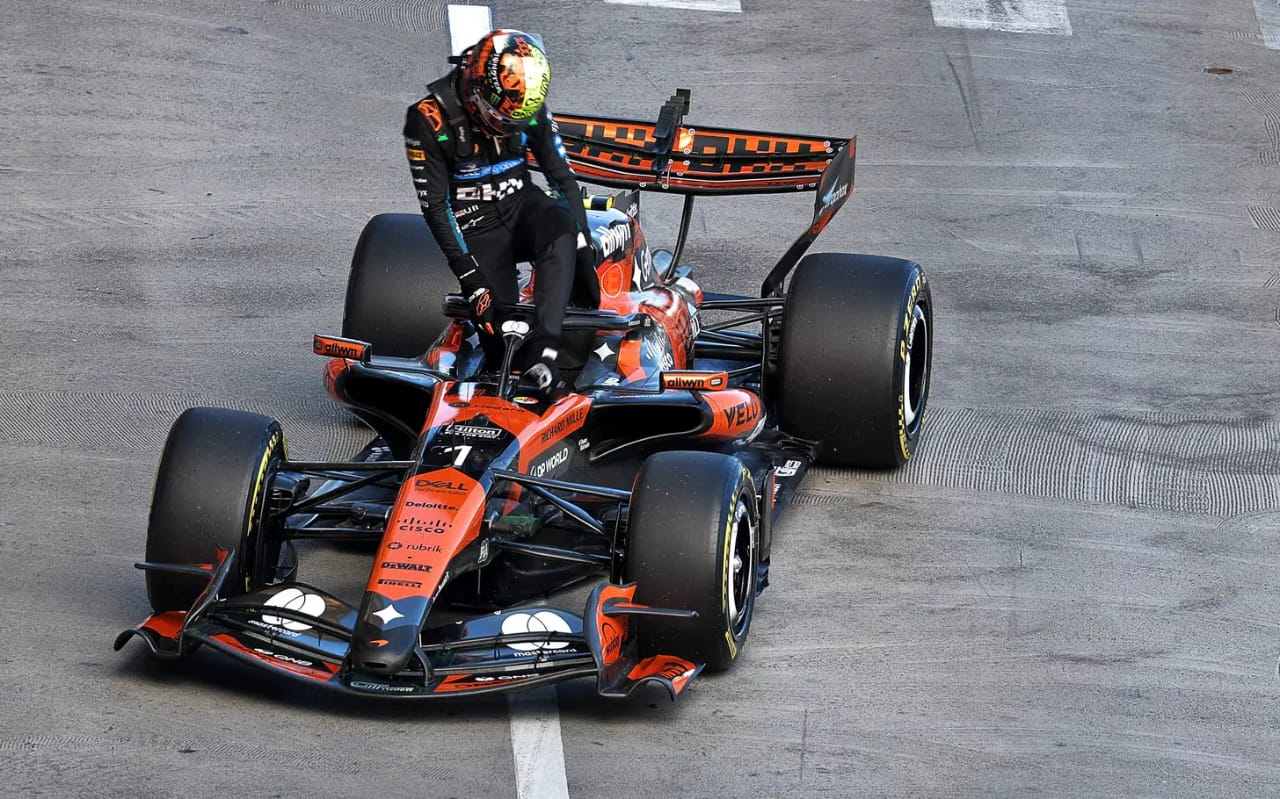
The incident occurred during the second free practice session around the streets of Monte Carlo when Norris suddenly lost power and was forced to bring his McLaren to a halt. Early indications pointed to an electrical or battery-related failure, leaving the team with important questions to answer as they prepared for the remainder of the race weekend. Following the session, Norris openly called on McLaren to conduct a thorough investigation into the cause of the failure, emphasizing the importance of understanding exactly what went wrong.
For any Formula One driver, losing track time is frustrating. In Monaco, however, the consequences can be even more severe. The narrow and unforgiving street circuit demands absolute precision, and every lap completed during practice contributes to a driver’s confidence and understanding of the track conditions. Missing valuable running time can therefore have a direct impact on qualifying performance, which is often considered the most important session of the weekend in Monaco.
Speaking after the session, Norris admitted that it had been a difficult day for both himself and the team. He acknowledged that McLaren had struggled for outright pace throughout Friday’s running and that there was still considerable work to be done to improve the car before qualifying. While the lack of speed was already a concern, the unexpected mechanical failure only compounded the team’s difficulties.
According to Norris, the shutdown happened without warning, leaving him unable to continue. He explained that the car simply switched off, making it impossible to return to the pits under its own power. Such a sudden failure naturally raises questions about reliability, and Norris stressed that understanding the root cause would be crucial to ensuring the issue does not reappear later in the weekend.
The timing of the breakdown could hardly have been worse. Monaco is widely regarded as one of the most challenging circuits on the Formula One calendar, where drivers rely heavily on practice sessions to build confidence around the tight barriers and rapidly changing grip levels. Every lap is valuable, and every interruption can leave drivers playing catch-up.
For Norris, the frustration was evident. Beyond the mechanical problem itself, he recognized that McLaren appeared to be lacking the pace needed to challenge the frontrunners. Ferrari, Mercedes, and Red Bull all showed encouraging signs during practice, while McLaren found itself further down the order than expected. As a result, the team faces an uphill battle to improve its competitiveness before qualifying begins.
The incident also came during what should have been a celebratory weekend for the Woking-based team. McLaren arrived in Monaco marking its 1,000th Formula One Grand Prix, a landmark achievement shared only with Ferrari. To commemorate the occasion, the team unveiled a special orange-themed livery intended to honor its rich racing heritage. Unfortunately, the milestone celebrations were overshadowed by a difficult opening day on track.
Norris was not the only McLaren driver experiencing difficulties. Teammate Oscar Piastri also reported challenges with the car’s performance and admitted that the team had work to do if it hoped to improve its position. While Piastri managed to complete more laps than Norris, neither driver appeared satisfied with the overall pace of the car during practice.
McLaren’s technical leadership quickly acknowledged the problems. Senior team figures confirmed that engineers were already examining the data collected from Norris’s car in an effort to identify the precise cause of the shutdown. Initial assessments suggested an electrical issue, although a complete diagnosis was still underway. Engineers were expected to work late into the evening analyzing telemetry and component data to ensure that the fault could be resolved before the next session.
Chief Technical Officer Rob Marshall admitted that the team had several areas requiring attention. In addition to investigating the electrical failure, McLaren also needed to understand why the car appeared to be struggling for performance. Factors such as tyre behavior, setup choices, and temperature management were all being examined as potential contributors to the lack of pace.
The challenge facing McLaren is significant because Monaco offers limited opportunities to recover from mistakes. Overtaking is notoriously difficult around the circuit, making qualifying position critically important. A poor grid slot can severely limit a driver’s chances of achieving a strong race result, regardless of race pace. Consequently, every hour of preparation before qualifying carries enormous importance.
Norris acknowledged this reality when discussing the situation. Although he remained determined to help the team improve overnight, he admitted that closing the gap to the leading teams would not be easy. Based on Friday’s performance, he suggested that competing at the very front could prove difficult unless McLaren discovered meaningful improvements before Saturday.
Despite the disappointment, the British driver remained focused on finding solutions rather than assigning blame. His request for an investigation reflected a desire to learn from the incident and prevent a repeat occurrence. In Formula One, reliability can be just as important as speed, and championship campaigns are often influenced by how effectively teams respond to setbacks.
McLaren has faced reliability concerns before and has generally shown an ability to react quickly and effectively. The team’s engineers now face the task of ensuring that Norris’s problem was an isolated incident rather than a symptom of a deeper issue within the car’s systems. Their findings could prove crucial not only for Monaco but for the remainder of the season.
As qualifying approaches, all eyes will be on whether McLaren can recover from its troubled start to the weekend. The team remains one of Formula One’s most successful organizations and has demonstrated resilience throughout its history. However, Monaco offers little margin for error, and Norris’s costly loss of track time may prove to be one of the defining stories of the weekend.
For now, McLaren’s priority is clear: uncover the exact cause of the failure, restore confidence in the car, and find the performance necessary to challenge its rivals. Whether the team can achieve those objectives before qualifying remains to be seen, but Norris has made one thing certain—he wants answers, and he wants them quickly.