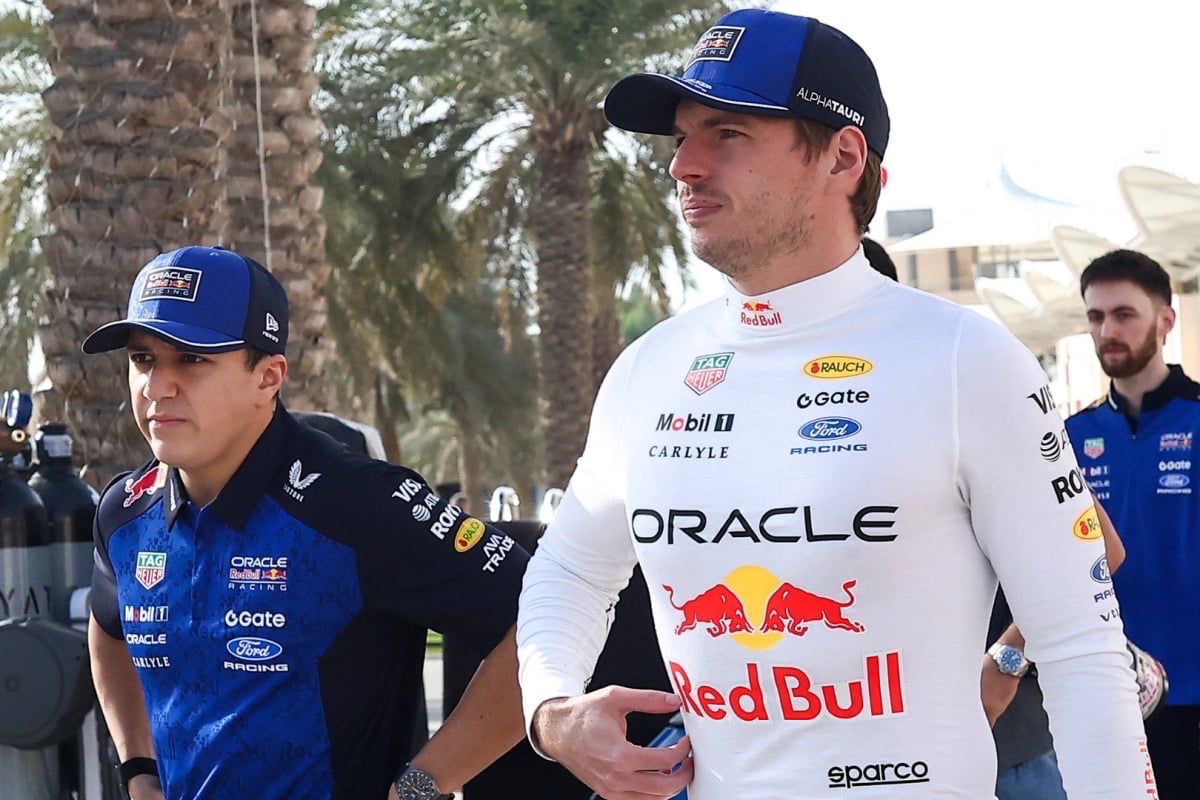
A resurfaced Formula 1 story involving Max Verstappen and Red Bull Racing has once again captured widespread attention, highlighting a dramatic driver switch that ultimately reshaped the trajectory of the sport.
Although the headline may suggest a recent development, the situation actually refers to a significant moment from earlier in Verstappen’s career—one that continues to be viewed as one of the most surprising and consequential decisions in modern Formula 1 history. The so-called “shock driver swap” was not a sudden, isolated move, but rather the culmination of a long-term plan by Red Bull to fast-track Verstappen into a top seat.
The origins of this move can be traced back to when Verstappen first joined Red Bull’s junior program. Long before his promotion to the main team, the Dutch driver had already been identified as an extraordinary talent with immense potential. Red Bull, known for its aggressive driver development strategy, saw in Verstappen a future world champion and began preparing him for a rapid ascent through the ranks.
Initially, Verstappen was placed with the junior team, then known as Toro Rosso, where he quickly made a name for himself. Despite being one of the youngest drivers in Formula 1 history, he displayed remarkable confidence, speed, and racecraft. His performances caught the attention of senior Red Bull management, who began considering a bold and unprecedented move.
That move came in 2016, when Red Bull made the controversial decision to swap Verstappen with Russian driver Daniil Kvyat ahead of the Spanish Grand Prix. Daniil Kvyat was demoted back to the junior team, while Verstappen was promoted to the main Red Bull Racing lineup alongside Daniel Ricciardo. The decision shocked many within the paddock, as mid-season driver changes of this magnitude are rare in Formula 1.
At the time, Kvyat had faced criticism for a series of on-track incidents, which likely influenced Red Bull’s decision. However, the abruptness of the swap raised eyebrows, with many questioning whether Verstappen was ready for such a high-pressure role so early in his career.
What followed, however, justified Red Bull’s gamble almost immediately. In his very first race for the senior team at the Spanish Grand Prix, Verstappen delivered a sensational performance, going on to win the race and become the youngest race winner in Formula 1 history. This remarkable achievement not only silenced critics but also cemented his status as one of the sport’s brightest stars.
Looking back, this driver swap is now regarded as a defining moment in Formula 1. It marked the beginning of Verstappen’s rise to dominance and demonstrated Red Bull’s willingness to take bold, high-risk decisions in pursuit of success. Over the years, Verstappen has gone on to win multiple world championships and establish himself as one of the leading figures in the sport.
The renewed attention on this “shock swap” comes at a time when Verstappen’s current situation is once again under scrutiny. In the 2026 season, Red Bull has not enjoyed the same level of dominance as in previous years, with rivals closing the performance gap. Verstappen himself has been vocal about his frustrations with both the car and the sport’s new regulations, which he has repeatedly criticized as overly complex and detrimental to racing.
Despite these challenges, Verstappen remains a central figure in Formula 1, and any discussion involving his career—past or present—inevitably draws significant interest. The throwback to his dramatic promotion serves as a reminder of how quickly fortunes can change in the sport and how pivotal decisions can have long-lasting effects.
The story also underscores Red Bull’s unique approach to driver management. Unlike many other teams, Red Bull has consistently demonstrated a willingness to make bold and sometimes controversial decisions regarding its driver lineup. This strategy has produced mixed results over the years, but in Verstappen’s case, it proved to be a masterstroke.
It is worth noting that the dynamics within Red Bull have always been highly competitive. Drivers are expected to perform at the highest level, and underperformance can lead to swift changes. This environment creates both opportunities and pressure, as young drivers are given the chance to shine but must also deliver results immediately.
In Verstappen’s case, he not only met expectations but exceeded them. His rapid rise through the ranks and immediate success with the senior team set a new benchmark for what young drivers could achieve in Formula 1. It also reinforced Red Bull’s reputation as a team that prioritizes talent and performance above all else.
As the 2026 season continues, the legacy of that shock driver swap remains highly relevant. It serves as a reminder of Verstappen’s journey from a promising rookie to a dominant force in the sport, as well as the pivotal role played by Red Bull in shaping his career.
Ultimately, while the headline may suggest a new controversy, the story is more about revisiting a historic moment that defined an era. The decision to promote Verstappen was not just a bold gamble—it was a turning point that changed the landscape of Formula 1 and set the stage for one of the most successful careers in the sport’s history.