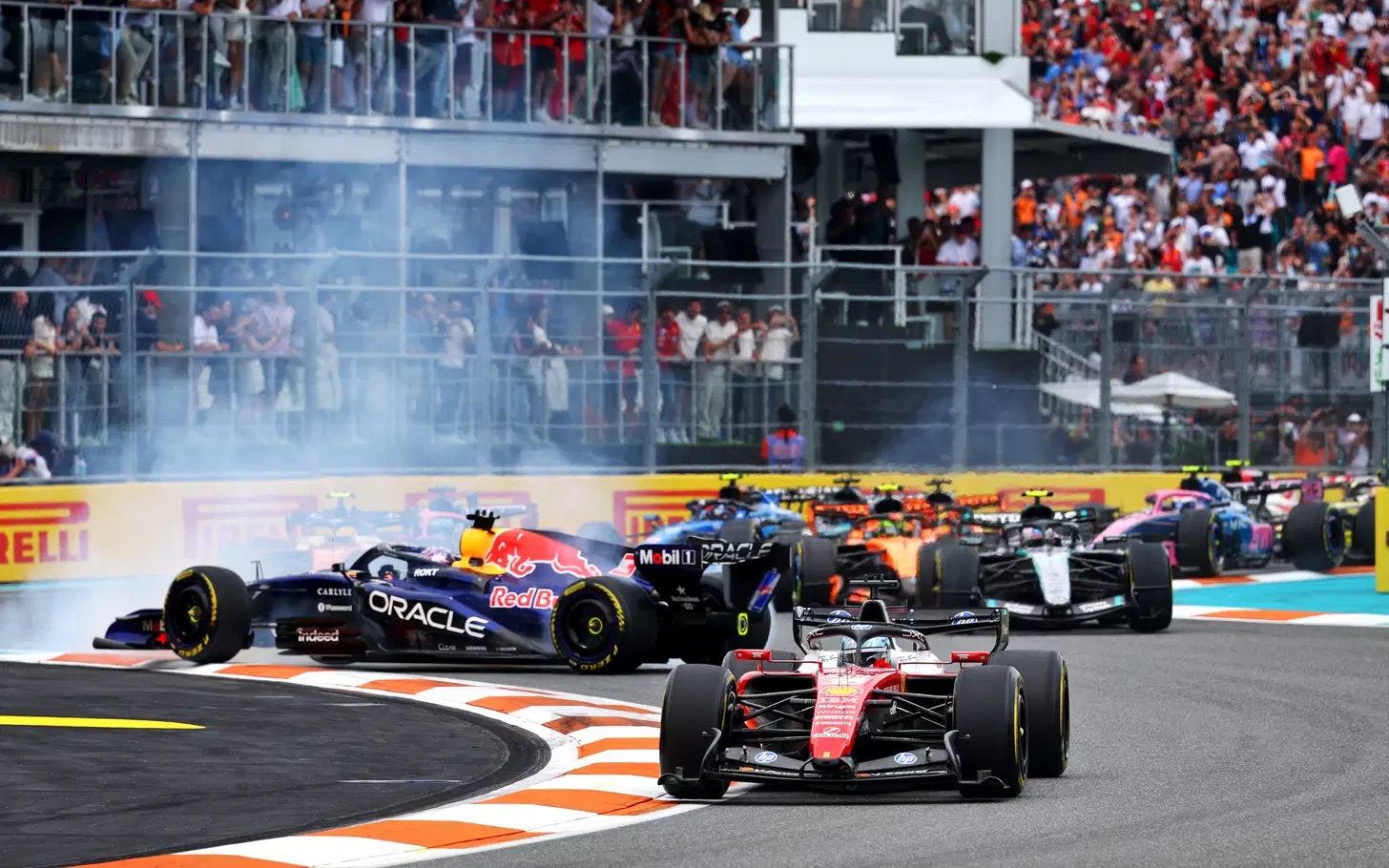
The Miami Grand Prix proved to be a dramatic and unpredictable contest for Red Bull Racing, as an early incident involving Max Verstappen forced the team into making a bold and potentially risky strategic call that shaped the remainder of their race.
Verstappen began the race in a strong position, lining up near the front of the grid and appearing well placed to challenge for victory. However, the opening moments of the race quickly turned chaotic. As the cars surged into the first sequence of corners, Verstappen initially lost the lead to Ferrari rival Charles Leclerc, who managed to seize the advantage at the first turn. This early setback was compounded moments later when Verstappen found himself under pressure heading into the next corner.
In the tight and highly competitive environment of the opening lap, Verstappen was squeezed on the inside line as multiple cars jostled for position. With limited space and little room for error, the Dutch driver lost control of his car and spun at high speed. The incident was not only visually dramatic but also hugely consequential, as it caused him to drop significantly down the order, effectively undoing his strong starting position within seconds.
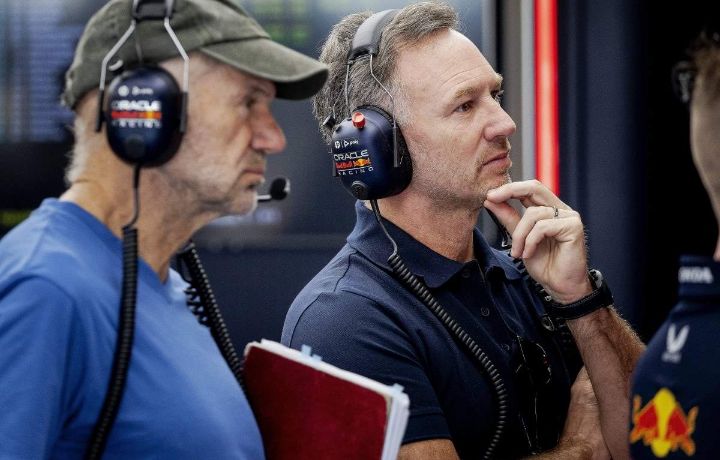
This unexpected development immediately forced Red Bull into a difficult situation. A driver who had been expected to fight at the front was suddenly mired in traffic, surrounded by slower cars and facing the challenge of recovering lost ground. According to team principal Laurent Mekies, the team had little choice but to rethink its approach and adopt a more aggressive and unconventional race strategy.
Instead of sticking to a standard, conservative plan, Red Bull opted to take what Mekies described as a “risk” in order to salvage the race. This decision was driven by the understanding that remaining on a typical strategy would likely result in a mediocre finish, given Verstappen’s compromised track position. To have any chance of regaining competitive standing, the team needed to gamble on alternative tactics that could potentially yield a better outcome.
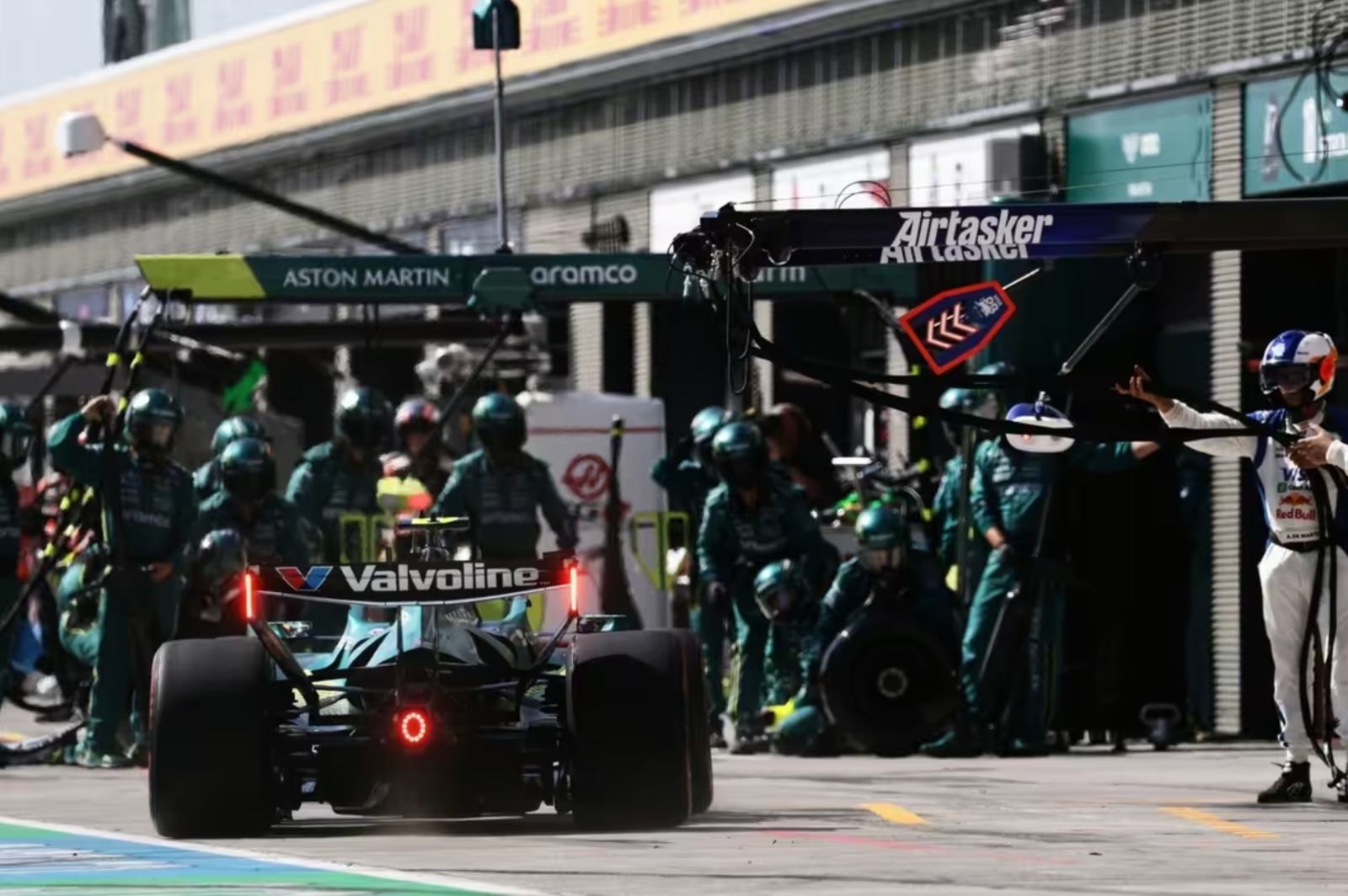
Such strategic risks in Formula 1 often involve decisions around tyre selection, pit stop timing, and race pace management. By deviating from the expected approach, teams aim to exploit opportunities such as safety car periods, track evolution, or differing tyre performance windows. However, these gambles come with inherent uncertainty, as they can either significantly improve a driver’s position or leave them even further disadvantaged if circumstances do not unfold favorably.
For Red Bull, the situation was made even more complex by the nature of the Miami circuit and the competitive field. Overtaking is not always straightforward, and recovering positions after an early setback requires both strong pace and strategic precision. Verstappen’s spin meant that he had to navigate through traffic while also managing tyre wear and maintaining consistent performance.
The incident also highlighted the fine margins that define Formula 1 racing. Even a small loss of control at high speed can have major consequences, turning a race-winning opportunity into a recovery drive. In Verstappen’s case, the spin demonstrated how quickly fortunes can change, particularly in the chaotic opening laps when cars are tightly packed together.
Despite the setback, the response from Red Bull underlined the team’s adaptability and willingness to take calculated risks under pressure. Rather than accepting a diminished result, they actively sought to turn the situation around through bold decision-making. This approach reflects a broader philosophy within top-level motorsport, where teams must constantly balance risk and reward in pursuit of success.
The Miami Grand Prix episode also forms part of a wider narrative surrounding Red Bull’s recent challenges. The team has faced technical and performance-related issues earlier in the season, which have occasionally limited its ability to compete at the very front. These factors add further context to the significance of the Miami race, as the team continues to refine its car and regain its competitive edge.
In this context, Verstappen’s spin and the subsequent strategic gamble can be seen as both a setback and an opportunity. While the incident disrupted the race, it also provided a chance for Red Bull to demonstrate resilience and strategic creativity. Whether such risks ultimately pay off depends on a range of variables, many of which are beyond the team’s control.
Ultimately, the events of the Miami Grand Prix serve as a reminder of the unpredictable nature of Formula 1. Even the most dominant drivers and teams can be thrown off course by a single moment of misfortune. What defines success in such situations is not just raw speed, but the ability to respond effectively to adversity.
For Verstappen and Red Bull, the high-speed spin was undoubtedly a significant challenge, but it also showcased their determination to fight back. By embracing a riskier strategy, the team signaled its intent to remain competitive despite setbacks, highlighting the relentless and dynamic nature of the sport.
As the season progresses, moments like these could prove pivotal, influencing not only individual race results but also the broader championship battle. In a sport where every decision matters, the willingness to take calculated risks may ultimately be the difference between falling behind and staying in contention.