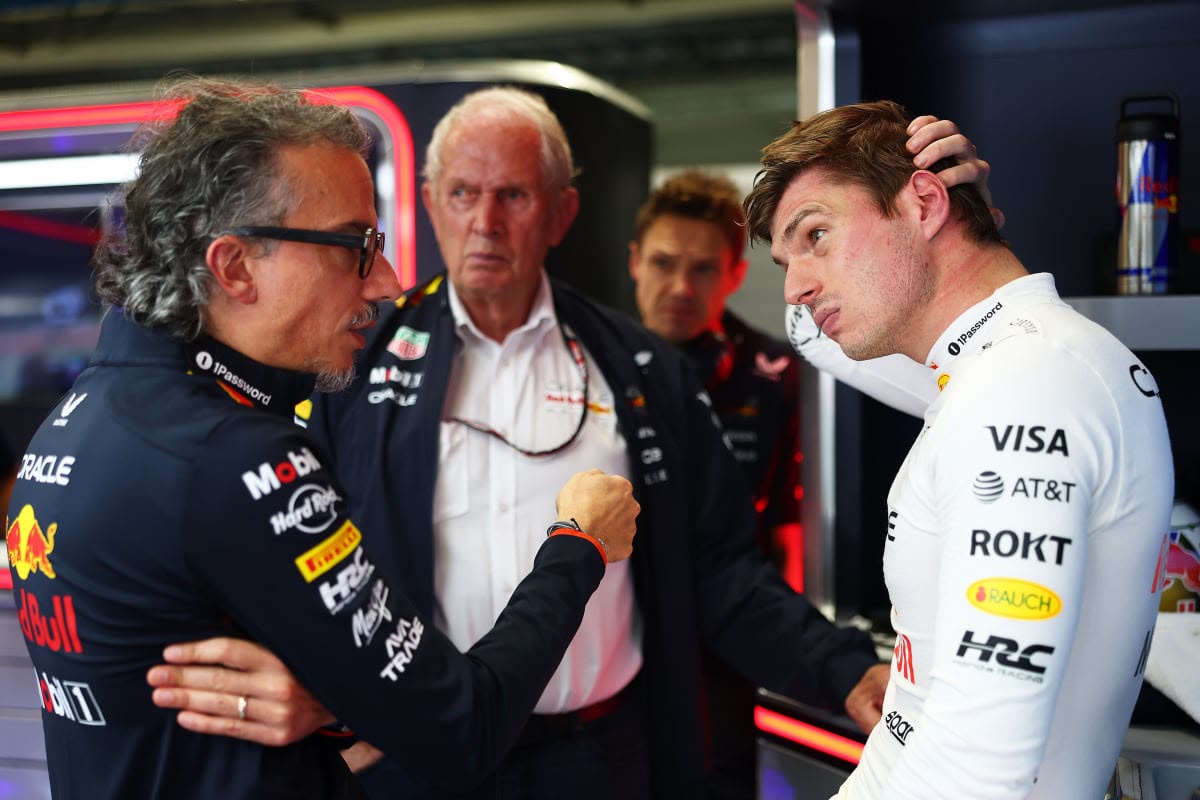

Recent developments in Formula 1 suggest that tensions between teams and governing bodies could once again take center stage, with Red Bull reportedly preparing to challenge decisions through an official protest to the FIA. This situation is unfolding alongside growing speculation surrounding the possible return of former Red Bull team principal Christian Horner to a prominent role within the sport, potentially involving a move connected to Mercedes or another leading team.
Red Bull has a long history of engaging in formal disputes with the FIA when it believes that technical or sporting regulations have been interpreted in a way that disadvantages the team. Over the years, the Milton Keynes-based outfit has not hesitated to file protests when rival teams introduce innovations or when race outcomes are influenced by contentious rulings. These protests are typically aimed at seeking clarification or overturning decisions that may impact championship standings or competitive fairness. For example, in previous seasons, Red Bull challenged Mercedes over controversial technical systems, highlighting the team’s willingness to push regulatory boundaries and defend its competitive position.
The current situation appears to follow a similar pattern, with Red Bull believed to be unhappy about a recent FIA-related matter. While the exact details of the dispute may still be emerging, the team’s readiness to escalate the issue into a formal protest signals that it considers the matter significant enough to warrant official review. Such actions are not uncommon in Formula 1, where even minor technical interpretations can have major consequences on performance and race results.
At the same time, the narrative is being further complicated by renewed attention on Christian Horner, one of the most influential figures in modern Formula 1 history. Horner, who led Red Bull Racing from its inception in 2005 until his departure in 2025, played a crucial role in transforming the team into a dominant force. Under his leadership, Red Bull secured multiple constructors’ and drivers’ championships, first during the era of Sebastian Vettel and later with Max Verstappen.
However, Horner’s tenure came to an abrupt end in 2025 after internal tensions, performance struggles, and broader controversies led to his dismissal. Despite his exit, his impact on the sport remains undeniable, and discussions about his return have persisted ever since. Reports indicate that Horner has been considering a comeback, and influential figures within the FIA have even expressed support for his re-entry into the Formula 1 paddock.
The possibility of Horner aligning with another major team—potentially even Mercedes—adds an extra layer of intrigue to the current situation. Mercedes, one of Red Bull’s fiercest rivals over the past decade, has often been at the center of regulatory disputes with the team. The idea of Horner returning in a role linked to such a rival organization would represent a dramatic shift in the competitive landscape and could reignite old rivalries in new ways.
It is also worth noting that Horner’s return is not guaranteed to be straightforward. Following his departure, he would likely have to observe a “gardening leave” period, a common practice in Formula 1 that prevents key personnel from immediately joining rival teams. Nonetheless, given that a significant amount of time has already passed since his exit, the possibility of him re-entering the sport in the near future appears increasingly realistic.
Meanwhile, Red Bull’s current leadership continues to navigate both on-track challenges and off-track controversies. The team remains one of the most competitive forces in Formula 1, but maintaining that position requires constant vigilance in a sport where regulations evolve rapidly. Any perceived inconsistency or unfair advantage gained by competitors can prompt swift action, including formal protests such as the one now being considered.
Historically, such protests have produced mixed results. In some cases, teams have successfully forced changes or penalties, while in others, the FIA has upheld its original decisions after thorough review. Regardless of the outcome, these disputes often contribute to the drama and unpredictability that define Formula 1, keeping fans and stakeholders engaged.
The broader context of these developments also reflects ongoing debates within the sport about governance, fairness, and competition. Issues such as technical innovation, team alliances, and regulatory interpretation continue to shape the direction of Formula 1. As teams push the limits of engineering and strategy, the FIA is tasked with ensuring that the rules are applied consistently and transparently.
In this environment, the potential return of a high-profile figure like Christian Horner could have significant implications. His experience, leadership style, and deep understanding of the sport make him a valuable asset to any team. At the same time, his comeback could intensify rivalries and influence how teams approach both competition and regulatory challenges.
Ultimately, the situation highlights the complex interplay between sporting performance, technical regulations, and individual personalities in Formula 1. Red Bull’s willingness to pursue an FIA protest underscores the team’s determination to protect its interests, while Horner’s possible return adds a compelling narrative that could reshape the competitive landscape.
As the story continues to unfold, all eyes will be on how the FIA responds to Red Bull’s actions and whether Horner’s anticipated comeback becomes a reality. Together, these developments promise to add another chapter to the ever-evolving drama of Formula 1, where competition extends far beyond the racetrack.