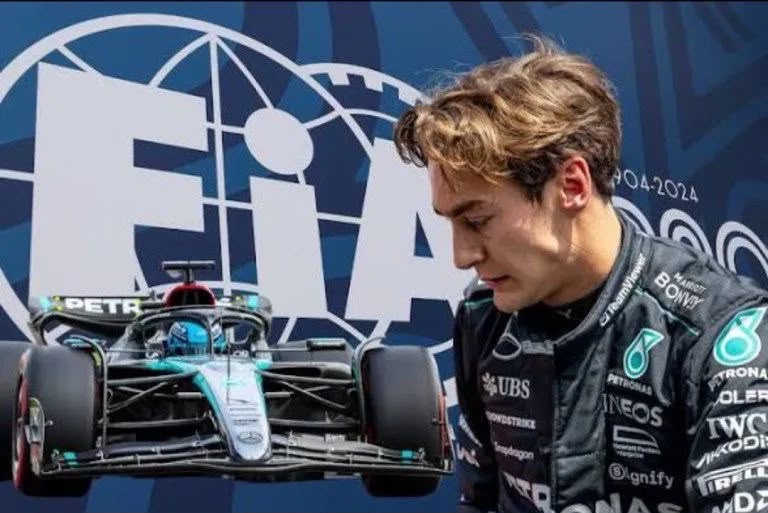

George Russell’s outspoken criticism of the Monaco Grand Prix has once again become a major talking point in Formula 1 after comments he made about the famous race resurfaced ahead of another visit to the streets of Monte Carlo. The Mercedes driver previously suggested that Formula 1 should consider radically changing the format of the event, arguing that modern racing at Monaco has become increasingly predictable and lacks the excitement expected from a championship battle.
Monaco has long been regarded as one of the crown jewels of Formula 1. The race carries a rich history dating back decades and remains one of the most prestigious victories a driver can achieve. However, despite its glamour, luxury, and iconic status, critics have frequently questioned whether the narrow street circuit can still produce exciting racing in the modern era. Larger Formula 1 cars, advanced aerodynamics, and the difficulty of overtaking have all contributed to growing concerns that qualifying often determines the outcome before the race even begins.
Russell’s frustration became particularly evident following a difficult Monaco weekend in 2025. Mercedes struggled throughout the event, and the British driver found himself trapped behind slower cars for long periods. Despite Formula 1 introducing a mandatory two-stop strategy experiment in an attempt to improve the spectacle, the race still failed to produce the level of excitement many fans and drivers had hoped for.
Speaking after the race, Russell questioned whether the traditional Monaco format still served its purpose. He argued that qualifying had effectively become the most important part of the weekend and suggested Formula 1 should consider embracing that reality rather than pretending the Sunday race remained the main attraction. His remarks quickly generated headlines across the motorsport world.
One of Russell’s most controversial suggestions was that Formula 1 should eliminate the conventional race altogether and instead create an event built around qualifying. He proposed a format that would place greater emphasis on one-lap speed, believing it would better showcase driver talent while providing fans with more unpredictable and exciting competition. According to Russell, Monaco’s unique characteristics make overtaking so difficult that the race itself often becomes little more than a procession.
The Mercedes driver was not alone in expressing concerns about Monaco. Over the years, numerous drivers, team principals, analysts, and fans have debated whether the circuit still deserves its place on the Formula 1 calendar. While many acknowledge its historical significance and unmatched atmosphere, others believe modern Formula 1 has outgrown the venue’s limitations. The difficulty of passing has become one of the most common criticisms directed at the race.
Russell’s comments resurfaced ahead of the 2026 Monaco Grand Prix, reigniting discussion about the future of the event. Motorsport observers revisited his remarks as Formula 1 prepared for another race weekend on the famous streets of Monte Carlo. The timing was particularly notable because many teams and drivers were once again discussing how difficult it remains to overtake at the circuit despite ongoing attempts to improve racing quality.
Not everyone agreed with Russell’s assessment. Former Formula 1 driver Riccardo Patrese publicly criticized the Mercedes star for what he considered disrespectful comments toward one of the sport’s most historic venues. Patrese argued that Monaco represents an essential part of Formula 1’s identity and should be respected regardless of the challenges associated with modern racing there. He emphasized that the event’s prestige extends beyond simple overtaking statistics and race entertainment metrics.
Supporters of Monaco often point out that the circuit presents a unique challenge unlike any other on the calendar. Drivers must navigate barriers that leave virtually no room for error while maintaining maximum concentration over an entire race distance. Qualifying laps around Monaco are frequently considered among the most demanding and spectacular performances in motorsport, with fractions of a second separating success from disaster.
Those who agree with Russell, however, argue that Formula 1 must prioritize competitive racing and fan engagement. They contend that while Monaco remains visually stunning and historically significant, the inability to consistently produce wheel-to-wheel battles undermines its value as a championship event. For these critics, tradition alone should not guarantee a permanent place on the calendar.
Formula 1’s leadership has already explored potential solutions. Various rule changes and strategic experiments have been tested in recent years in an effort to increase overtaking opportunities and create more unpredictable outcomes. Yet many observers believe the fundamental limitations of the circuit itself make substantial improvements difficult to achieve. The narrow layout and lack of long straights naturally restrict passing opportunities regardless of technical regulations.
For Russell, the debate is less about Monaco’s history and more about ensuring Formula 1 continues to evolve. His comments reflect a broader conversation within the sport about balancing tradition with the demands of modern competition. While some interpreted his remarks as an attack on a cherished institution, others viewed them as a legitimate attempt to encourage innovation and improve the racing product.
As the 2026 Monaco Grand Prix approaches, the discussion sparked by Russell’s remarks remains highly relevant. Whether Formula 1 eventually chooses to alter the event’s format, maintain the status quo, or explore entirely new ideas, Monaco continues to provoke strong opinions throughout the paddock. The race remains one of the most recognizable events in global motorsport, but it also stands at the center of an ongoing debate about what Formula 1 should look like in the future.
Ultimately, Russell’s controversial proposal has succeeded in one important respect: it has forced the sport to confront difficult questions about tradition, entertainment, and the future direction of Formula 1. Whether fans agree with him or not, his comments have ensured that the conversation surrounding Monaco’s place in the championship is unlikely to disappear anytime soon. As long as overtaking remains scarce and race outcomes continue to be heavily influenced by qualifying, discussions about reforming one of Formula 1’s most famous events will almost certainly continue.