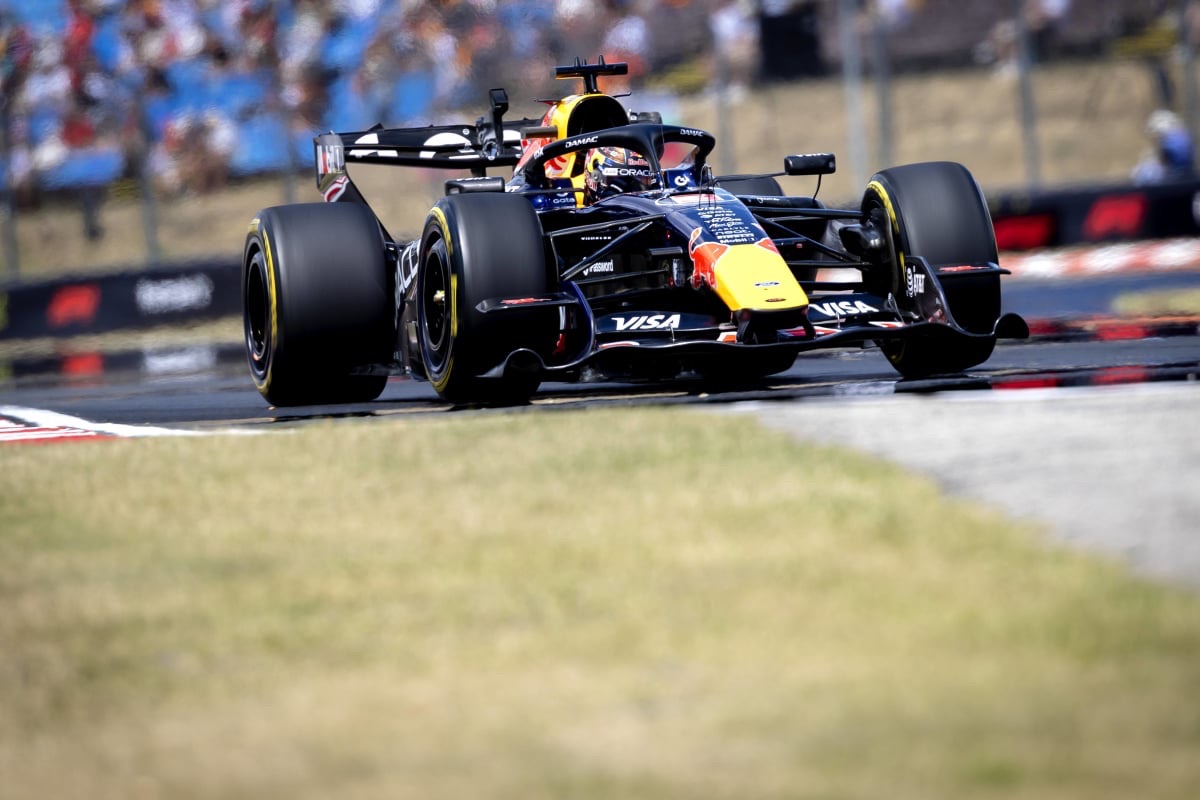
The FIA has officially confirmed the circuit configuration for the Italian Grand Prix at Monza, revealing four designated zones where Formula 1 drivers will be permitted to activate the new Straight Mode. The decision could have significant implications for the competitive order at one of the fastest circuits on the 2026 calendar, with Ferrari potentially positioned to benefit on home soil.
Monza is renowned for its long straights and low-downforce characteristics, making aerodynamic efficiency and straight-line speed crucial to success. This year, however, drivers will approach those sections under a new aerodynamic system that replaces the DRS technology used in previous seasons.
Straight Mode forms part of the latest Formula 1 technical regulations and represents a major development in the way cars manage aerodynamic drag. When activated, the system allows both the front and rear wings to adjust into a lower-drag configuration, helping cars achieve greater efficiency and speed along the circuit’s lengthy straights.
Unlike DRS, which was primarily used as an overtaking aid and could only be activated under specific conditions, Straight Mode is integrated into the car’s overall performance package. Drivers are permitted to use it in the designated sections regardless of the distance to the car ahead. That could make straight-line efficiency even more important at Monza, where every fraction of a second can have a major impact on lap time.
According to the FIA’s official circuit configuration, four separate sections of the historic Italian venue have been selected for Straight Mode activation.
The first zone covers the start-finish straight, giving drivers the opportunity to reduce aerodynamic drag as they accelerate away from the final corner and head toward the first chicane. The second zone is located between the exit of Curva Grande and the approach to Variante della Roggia, another section where maintaining high speed and minimizing drag will be essential.
The third activation area comes after the second Lesmo corner and continues toward the Variante Ascari. This part of the lap features another lengthy acceleration phase, allowing teams to exploit their cars’ power-unit performance while using the reduced-drag configuration.
The fourth and final zone runs from the exit of Ascari toward the Parabolica, now known as Alboreto. It provides another important opportunity for drivers to maximize straight-line speed before beginning the final corner sequence and completing the lap.
The four-zone configuration could particularly suit Ferrari, which will be under enormous pressure to deliver a strong performance at its home race. Monza traditionally places a premium on power-unit efficiency, aerodynamic balance and the ability to generate strong speed without compromising performance through the corners.
Ferrari’s engineers will therefore be closely focused on optimizing the interaction between the team’s aerodynamic package and Straight Mode. If the Italian team can extract maximum performance from the system while maintaining competitive cornering speed, it could give Ferrari an important advantage in front of its home supporters.
The introduction of Straight Mode adds another strategic and technical dimension to the Italian Grand Prix. With four major activation zones available, teams will have to find the right balance between low drag on the straights and sufficient downforce through Monza’s demanding corners.
As a result, the FIA’s latest confirmation could make straight-line efficiency one of the defining factors of the weekend—and potentially give Ferrari a major opportunity to shine at the Temple of Speed.