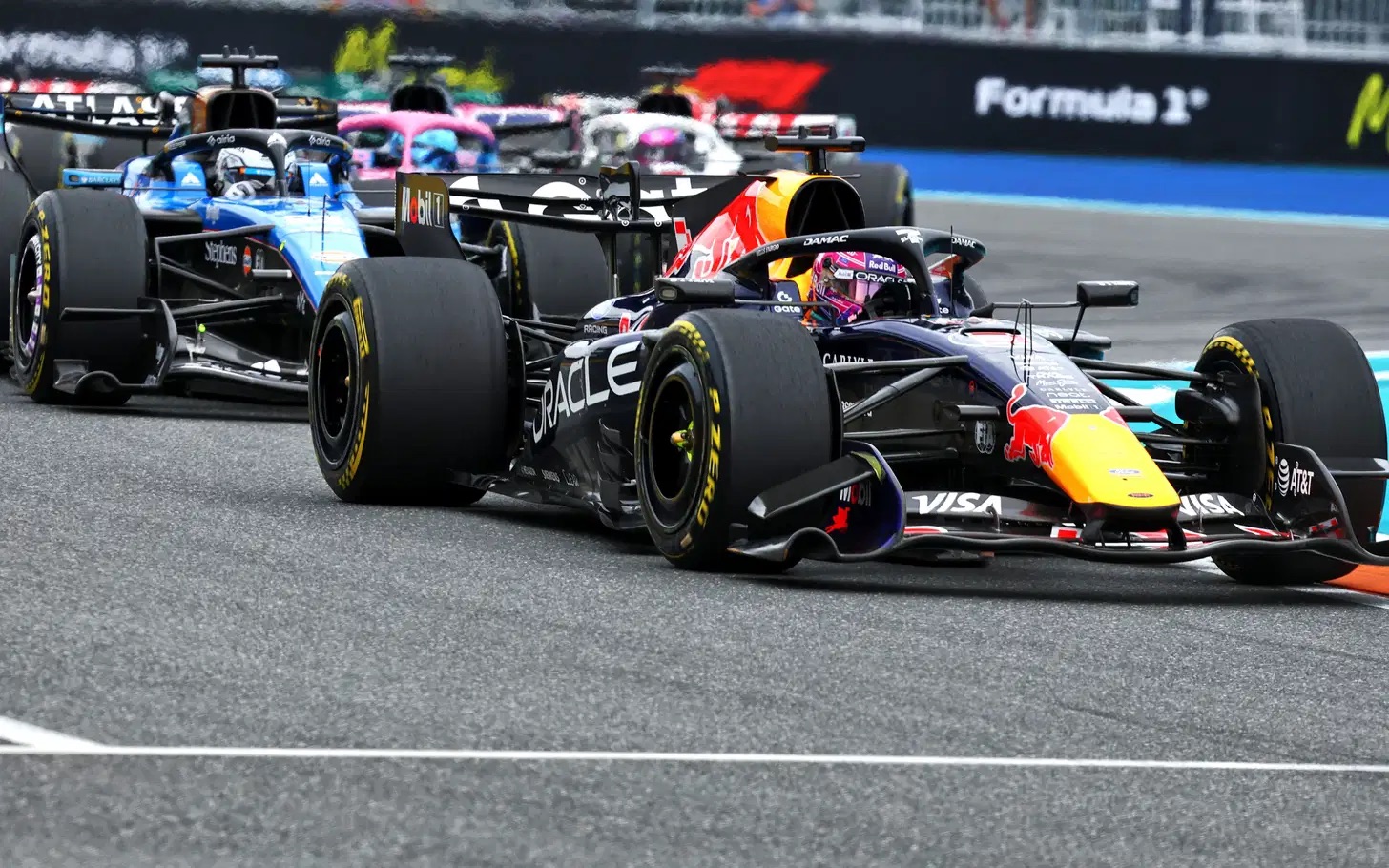
The aftermath of the Miami Grand Prix has thrust Max Verstappen into the spotlight, as the reigning world champion found himself at the center of a post-race controversy that nearly resulted in a far harsher penalty. What initially appeared to be just another challenging race weekend quickly evolved into a situation that drew intense scrutiny from FIA stewards.
Verstappen’s weekend in Miami was far from smooth. Despite beginning the race from a strong grid position, the Dutch driver struggled to assert control in what proved to be a highly unpredictable contest. The race itself was marked by multiple disruptions, including safety car periods, aggressive strategic gambles from teams, and several incidents that kept drivers under constant pressure. Within this chaotic environment, maintaining consistency and avoiding mistakes became increasingly difficult—even for a driver of Verstappen’s caliber.
The defining moment of the controversy occurred during a pit exit, where Verstappen was suspected of crossing the white line—an action that violates FIA sporting regulations. While such infringements are typically punished with time penalties, the circumstances surrounding this particular incident raised concerns about whether a more severe sanction, such as disqualification, could be warranted. As a result, the case was referred to the stewards for a detailed post-race review.
After carefully examining the evidence, the FIA confirmed that Verstappen had indeed breached the rules. However, instead of imposing the maximum penalty, officials opted for a five-second time penalty. This decision ultimately impacted the final race standings, dropping Verstappen down by one position and slightly diminishing what had otherwise been a determined recovery drive.
Although the outcome spared Verstappen from disqualification, it has reignited ongoing debates about consistency in stewarding decisions within Formula 1. Critics have pointed to past incidents where similar violations led to more severe consequences, arguing that the lack of uniformity undermines confidence in the regulatory system. On the other hand, some observers believe the punishment was fair, noting that Verstappen did not gain any lasting competitive advantage from the infringement.
The incident has further intensified discussions within the paddock, where regulatory enforcement has already been a sensitive topic throughout the current season. As teams continue to push technical and strategic boundaries, even minor infractions are being examined with increasing rigor, adding another layer of pressure to an already demanding sport.
Red Bull Racing responded to the decision with measured acceptance. While acknowledging that a rule breach had occurred, team representatives highlighted the fine margins drivers operate within during high-pressure race situations. They also expressed continued confidence in Verstappen’s abilities, emphasizing his resilience after a difficult opening phase of the race.
In the end, the Miami Grand Prix will stand as a race of both frustration and relief for Verstappen. While he managed to avoid the most severe punishment, the penalty underscores the precision required at the highest level of motorsport. With the championship battle growing increasingly competitive, even seemingly minor penalties can carry significant consequences—especially when the risk of disqualification is so close at hand.