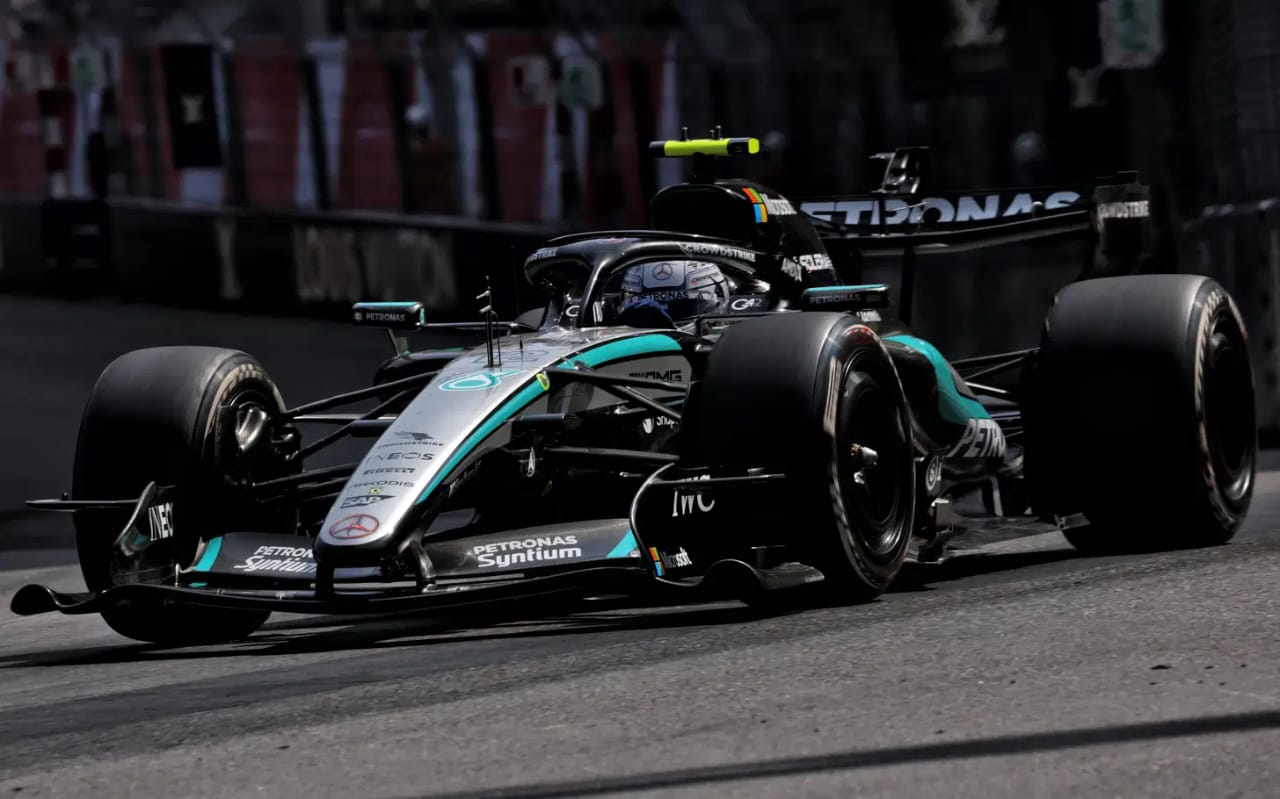

The final classification of the 2026 Formula 1 Monaco Grand Prix underwent significant revisions following a series of post-race penalties and steward decisions that reshaped the outcome beyond the chequered flag. What initially appeared to be a settled result quickly turned into a complex reshuffling of positions, highlighting once again how crucial regulatory compliance is in modern Formula 1.
At the front of the field, there was no change to the race winner. Mercedes’ young sensation Kimi Antonelli delivered a composed and dominant performance to secure yet another victory, continuing his remarkable run of form this season. His triumph in Monaco marked his fifth consecutive win, further strengthening his grip on the championship and extending his already commanding lead over his closest rivals.
Behind Antonelli, Lewis Hamilton maintained his second-place finish after a strong and consistent drive. Despite facing scrutiny during the race, including a penalty incident discussed in post-race interviews, Hamilton managed to retain his podium position. His performance ensured valuable championship points and reinforced his standing as one of Antonelli’s primary challengers this season.
The biggest talking point, however, revolved around the battle for the remaining top positions and the dramatic consequences of penalties issued after the race concluded. Isack Hadjar ultimately secured third place, benefiting from earlier penalties applied to rivals during the race. Although he had been under investigation for a potential infringement during a red-flag period, the stewards ruled that no further action was necessary. This decision confirmed his podium finish, marking a significant achievement in his Formula 1 career.
Further down the order, multiple drivers saw their results affected due to infractions ranging from pit lane speeding to track limits violations and incorrect positioning during race procedures. Among the most impactful penalties was the one handed to Sergio Perez. Initially classified in 10th position, Perez appeared to have secured a valuable point for Cadillac, which would have marked a milestone for the relatively new team. However, a post-race investigation revealed that he had committed a procedural violation during a restart following a red flag.
The stewards determined that Perez had positioned his car incorrectly on the grid, with part of the car outside the designated starting box. This breach, combined with an earlier mistake where he occupied the wrong grid slot at the race start, led to a 10-second time penalty. As a result, Perez was demoted significantly in the final standings, dropping out of the top ten and losing the point he had initially earned.
This penalty had a ripple effect on the overall classification. Most notably, Fernando Alonso was promoted into 10th place, thereby inheriting the final points-paying position. This promotion was particularly meaningful for Aston Martin, as it secured their first point of the 2026 season.
The Monaco Grand Prix is often known for its tight margins and limited overtaking opportunities, but this edition proved that off-track decisions can be just as decisive as on-track action. Several other penalties were issued throughout the race weekend, contributing to the chaotic nature of the event. Drivers such as Pierre Gasly received multiple time penalties for pit lane speeding, while others like Lance Stroll and Nico Hülkenberg were penalized for track limits violations and causing collisions, respectively.
The race itself was already filled with drama even before the post-race adjustments. A red flag interruption added complexity to race strategies, and the restart phase became a focal point for many of the subsequent investigations. In such high-pressure situations, even minor procedural errors can carry significant consequences, as demonstrated by Perez’s costly mistake.
Additionally, several drivers failed to finish the race, further shaking up the order and creating opportunities for others to move up the standings. The combination of retirements, penalties, and strategic gambles made the Monaco race one of the most unpredictable events of the season.
Despite the chaos, Antonelli’s performance stood out as a masterclass in control and consistency. Navigating the narrow streets of Monte Carlo without error, he capitalized on every opportunity while avoiding the pitfalls that ensnared many of his competitors. His growing dominance is now becoming a defining narrative of the 2026 season, with a substantial points lead that places him firmly in the title favorite position.
Meanwhile, the reshuffled results underline the importance of precision in Formula 1—not just in driving, but in adhering to the sport’s strict regulations. Teams and drivers must execute flawlessly across all aspects of a race weekend, as even a small oversight can undo an otherwise strong performance.
In conclusion, the adjusted results of the 2026 Monaco Grand Prix serve as a reminder that the story of a Formula 1 race does not always end at the finish line. Post-race penalties and steward reviews can significantly alter the outcome, impacting both individual drivers and team fortunes. From Antonelli’s continued dominance to Perez’s costly error and Alonso’s opportunistic gain, the final classification reflects a race defined as much by regulation as by racing skill.
The Monaco Grand Prix once again lived up to its reputation for unpredictability, delivering a dramatic and eventful chapter in the 2026 Formula 1 season—one that will be remembered not only for the action on the track but also for the decisive rulings made after it.