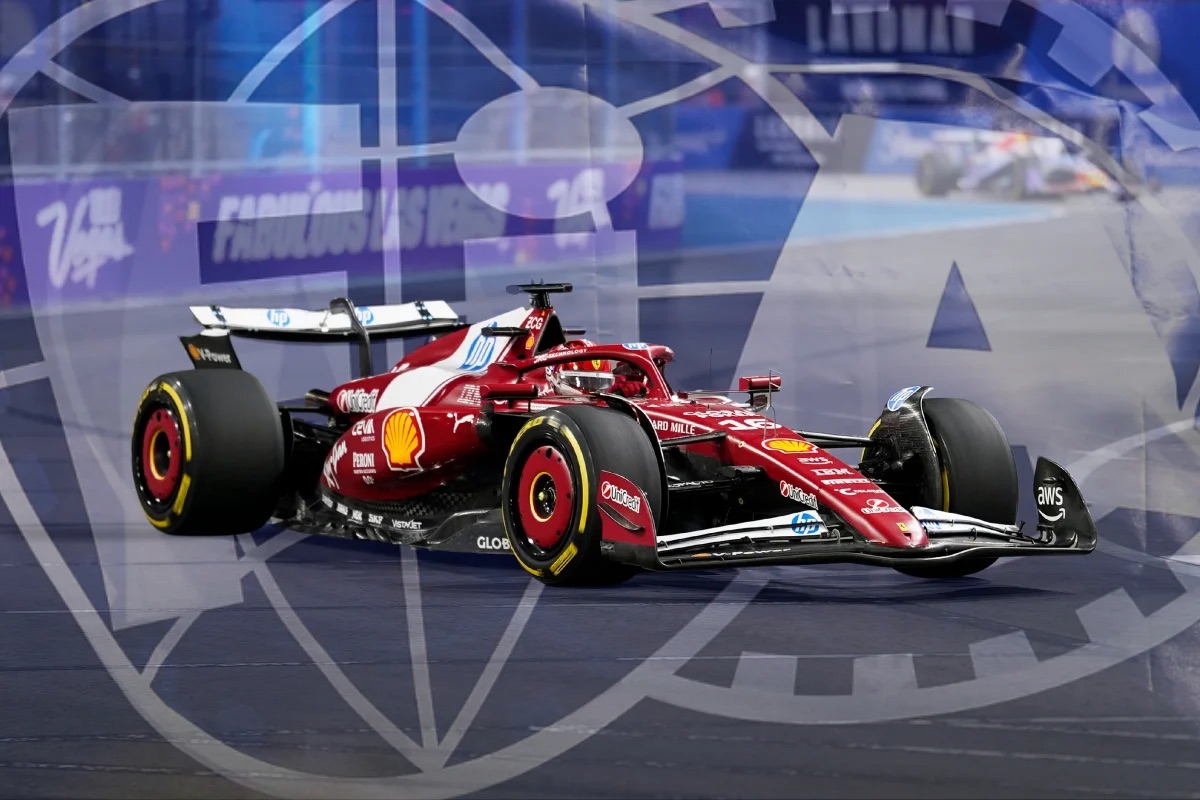
Charles Leclerc’s Miami Grand Prix ended in bitter disappointment after the Ferrari driver was handed a severe post-race penalty that dramatically altered the final classification. What had initially appeared to be a frustrating but salvageable race quickly turned into an even more painful outcome for both Leclerc and Ferrari, as the FIA intervened after the chequered flag.
Leclerc had been in the thick of the fight throughout the race and, for much of the afternoon, looked capable of securing a strong result. Ferrari arrived in Miami encouraged by the performance gains from a significant upgrade package, and there were moments when Leclerc appeared ready to capitalize. He ran competitively near the front and even looked like a potential podium contender as the race unfolded.
However, Formula 1 can be cruelly unforgiving, and Leclerc’s race took a dramatic turn in the closing stages. While battling hard and pushing to maintain his position, he lost control late in the event. The incident damaged his Ferrari, leaving him with a wounded car for the final stretch. From that point on, simply bringing the car home became a challenge.
The damage severely compromised the handling of the SF-26. Leclerc struggled to navigate corners cleanly, and his pace dropped significantly. Rivals quickly sensed vulnerability, and he came under intense pressure in the closing laps. Drivers behind began to close in as the Ferrari limped toward the finish line.
Despite his efforts, Leclerc was unable to keep all challengers at bay. He lost places on track as his compromised Ferrari became increasingly difficult to control. Even so, he crossed the line in sixth position, limiting what could have been an even greater loss after the late-race drama.
But the story did not end there.
After the race, the FIA stewards reviewed Leclerc’s actions during the final laps. Their investigation centered on multiple occasions where he left the track and, in the view of the officials, gained an advantage. Although Leclerc’s excursions were influenced by the damage to his car, the stewards determined that this did not justify repeatedly exceeding track limits in a manner that benefited his race.
Under Formula 1 regulations, leaving the track and gaining an advantage without a valid reason is a punishable offence. In Leclerc’s case, the stewards concluded that a drive-through penalty was warranted. Because the race had already ended by the time the decision was issued, that penalty was automatically converted into a 20-second time addition.
That conversion had major consequences.
Instead of retaining sixth place, Leclerc was dropped down the order to eighth in the final results. The penalty cost him valuable championship points and further compounded Ferrari’s frustration after what had already been a difficult conclusion to the race.
The revised classification also benefited several rivals. Lewis Hamilton, Leclerc’s Ferrari team-mate, moved up one place as a result. Other drivers behind Leclerc similarly gained positions, making the penalty especially costly in the broader championship context.
For Ferrari, the decision was another painful setback in a season that has already featured its share of highs and lows. The team had entered the Miami weekend with optimism, buoyed by new upgrades designed to improve the competitiveness of the SF-26. There were encouraging signs of progress, particularly in Leclerc’s pace during key stages of the weekend.
Yet once again, Ferrari left with mixed emotions. On one hand, the car showed improved performance and genuine potential. On the other, operational setbacks and race-day misfortune prevented the team from fully maximizing its opportunities.
Leclerc himself will undoubtedly be disappointed. Known for his relentless commitment and aggressive driving style, he was pushing hard in pursuit of a top finish when the late error occurred. While the spin itself was costly, the subsequent penalty turned a frustrating afternoon into a deeply disappointing one.
The incident also highlights the razor-thin margins in modern Formula 1. A single mistake, especially late in a race, can trigger a cascade of consequences. In Leclerc’s case, the initial error damaged his car, reduced his pace, exposed him to attacks, and ultimately led to regulatory scrutiny that further worsened his final result.
The FIA’s decision was based on the principle that all drivers must remain within track limits unless forced off or avoiding danger. Mechanical damage, while unfortunate, does not automatically exempt a driver from complying with those rules. The stewards judged that Leclerc had no sufficient justification for the repeated off-track moments that followed.
For the championship battle, every point matters. Dropping from sixth to eighth may seem minor at first glance, but over the course of a long season, such swings can prove significant. Ferrari, already striving to close the gap to its rivals, can ill afford to surrender points in this manner.
Miami was ultimately a race of what might have been for Leclerc. At various stages, he looked capable of challenging for a podium and perhaps even more. Instead, he left Florida with only four points instead of the stronger haul that once seemed within reach.
The outcome also underlined the resilience required in Formula 1. Even after suffering damage and losing positions, Leclerc fought to the finish. But in the end, the stewards’ ruling ensured that his efforts would not be enough to preserve his original finishing position.
As the season moves on, Ferrari can at least take encouragement from the apparent pace gains delivered by its latest upgrades. The raw speed appears to be improving, which could prove crucial in the races ahead. However, turning performance into results remains the team’s biggest challenge.
For Leclerc, the focus will quickly shift to the next round. Drivers at his level know that dwelling on setbacks is rarely productive. Still, Miami will sting. A race that promised so much ended with damage, lost positions, and a costly penalty.
In the final analysis, Leclerc’s Miami Grand Prix serves as a vivid reminder of Formula 1’s unforgiving nature. One late mistake can unravel an entire afternoon, and even after the finish line, the consequences may continue. For Ferrari and Leclerc, Miami was a missed opportunity—one that will surely fuel their determination in the races to come.