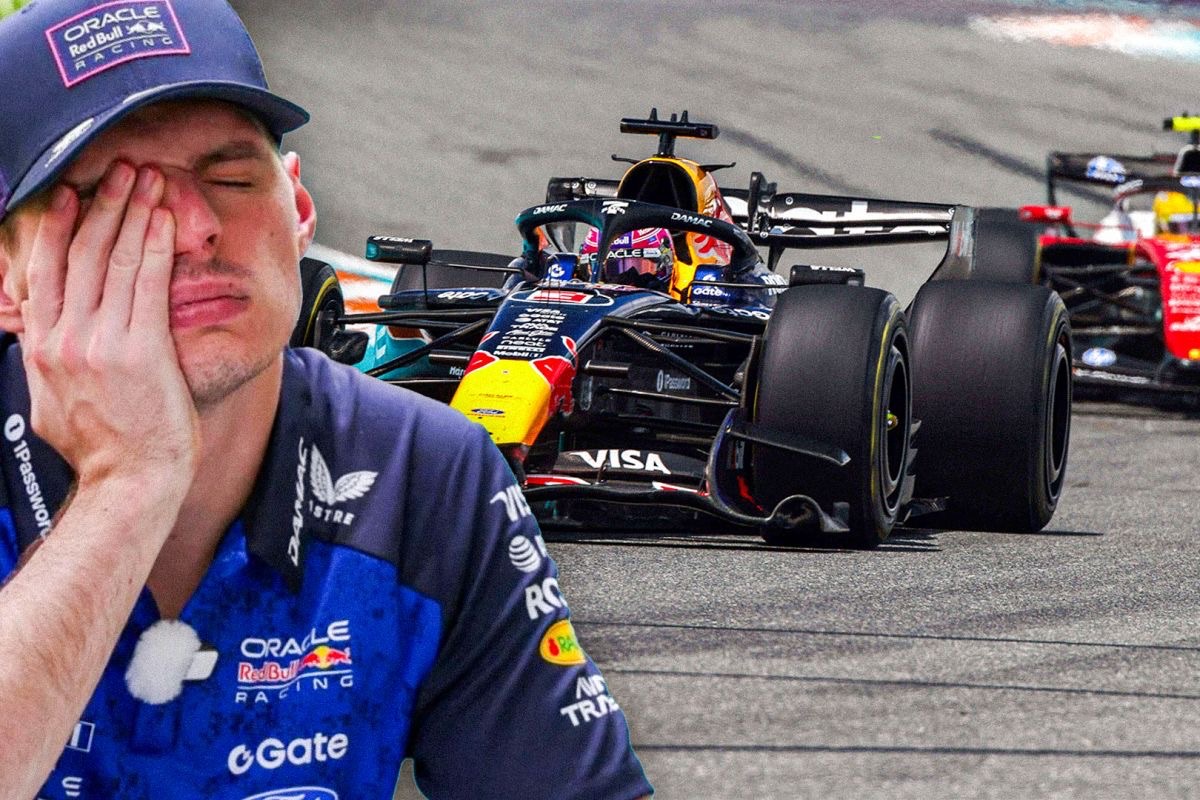
The aftermath of the Miami Grand Prix has sparked a wave of criticism directed at the FIA following its decision to penalize Red Bull driver Max Verstappen. The ruling, which came after a post-race investigation, has divided opinion across the Formula 1 paddock and among fans, with many questioning the consistency and fairness of the governing body’s approach to stewarding decisions.
During the race in Miami, Verstappen became the subject of scrutiny after an incident involving the pit lane exit. The Dutch driver, who had made an early stop under Safety Car conditions, was later investigated for potentially crossing the white line at the pit exit—a breach that is typically considered a straightforward violation of Formula 1 regulations.
Following a detailed review by the stewards, it was confirmed that Verstappen had indeed committed the infringement. As a result, the FIA handed him a five-second time penalty, which was added to his overall race time after the chequered flag.
Although such a penalty is standard for this type of offence, the timing and context of the decision have become a focal point of controversy. Critics argue that the delayed nature of the ruling—coming after the race had concluded—undermined the sporting clarity for both competitors and spectators. The lack of immediate action during the race meant that Verstappen’s on-track position was not directly affected in real time, raising questions about whether post-race penalties diminish the integrity of race-day competition.
Despite the sanction, Verstappen ultimately retained his finishing position due to other penalties handed out to rival drivers. In particular, Ferrari’s Charles Leclerc received a much heavier time penalty for separate incidents, which reshuffled the final classification and ensured that Verstappen’s result remained largely unchanged.
This outcome has only intensified the debate. Some observers have pointed out that the penalty had little practical impact, leading to suggestions that it was either too lenient or poorly timed. Others believe the FIA’s decision-making process lacks transparency, especially when multiple incidents are reviewed simultaneously and sanctions are issued after the race rather than during it.
Adding fuel to the controversy, several pundits and figures within the sport have openly criticized the FIA’s handling of the situation. Certain commentators have described the penalty as unnecessary or “pathetic,” arguing that it failed to reflect the broader context of the race.
From this perspective, the incident involving Verstappen was relatively minor and did not significantly influence the outcome of the race. As such, critics claim that penalizing the driver after the fact served little purpose other than to create confusion and controversy.
On the other hand, there are those who defend the FIA’s decision, emphasizing the importance of enforcing regulations consistently. Crossing the pit exit line is widely regarded as a clear violation because it can create unsafe situations when drivers rejoin the track. By applying the standard penalty, supporters argue, the FIA demonstrated its commitment to upholding the rules regardless of the circumstances or the driver involved.
However, even among those who agree with the penalty itself, there remains concern about how such decisions are communicated and implemented. The Miami Grand Prix was already a chaotic event, featuring multiple investigations involving several drivers, including George Russell and Charles Leclerc.
In such a complex race environment, the role of the stewards becomes even more critical. Many believe that clearer and quicker decisions would help avoid the kind of post-race confusion that overshadowed the Miami event.
The controversy also highlights a broader issue within Formula 1: the ongoing tension between strict rule enforcement and maintaining the spectacle of racing. Fans often express frustration when races are decided or influenced by penalties rather than on-track action. In Verstappen’s case, while the penalty did not ultimately change his finishing position, it still became a major talking point that dominated post-race discussions.
Furthermore, the incident adds to a growing list of debates surrounding FIA governance in recent seasons. The organization, which serves as the sport’s global governing body, is responsible for regulating competition and ensuring fairness across all events.
Yet, repeated controversies over stewarding decisions have led some to question whether the current system needs reform. Calls for greater consistency, improved communication, and even the introduction of more advanced technology to assist decision-making have become increasingly common.
For Verstappen, the penalty represents just one moment in what has been a challenging start to the season. Despite showing strong pace at times, he has faced a series of setbacks, including penalties and technical issues, that have hindered his championship campaign. Nevertheless, his performance in Miami—where he managed to secure a top-five finish despite the setback—demonstrates his resilience and competitiveness.
Looking ahead, the FIA will likely face continued scrutiny over how it handles similar incidents in future races. The governing body must strike a delicate balance between enforcing the rules and maintaining the credibility of the sport. Failure to do so risks further criticism from drivers, teams, and fans alike.
In conclusion, the penalty handed to Max Verstappen at the Miami Grand Prix has reignited debates about the FIA’s decision-making processes. While the infringement itself was relatively straightforward, the timing and impact of the penalty have raised important questions about consistency, transparency, and the overall management of Formula 1 races. As the season progresses, how the FIA responds to this criticism could play a significant role in shaping perceptions of fairness and integrity within the sport.