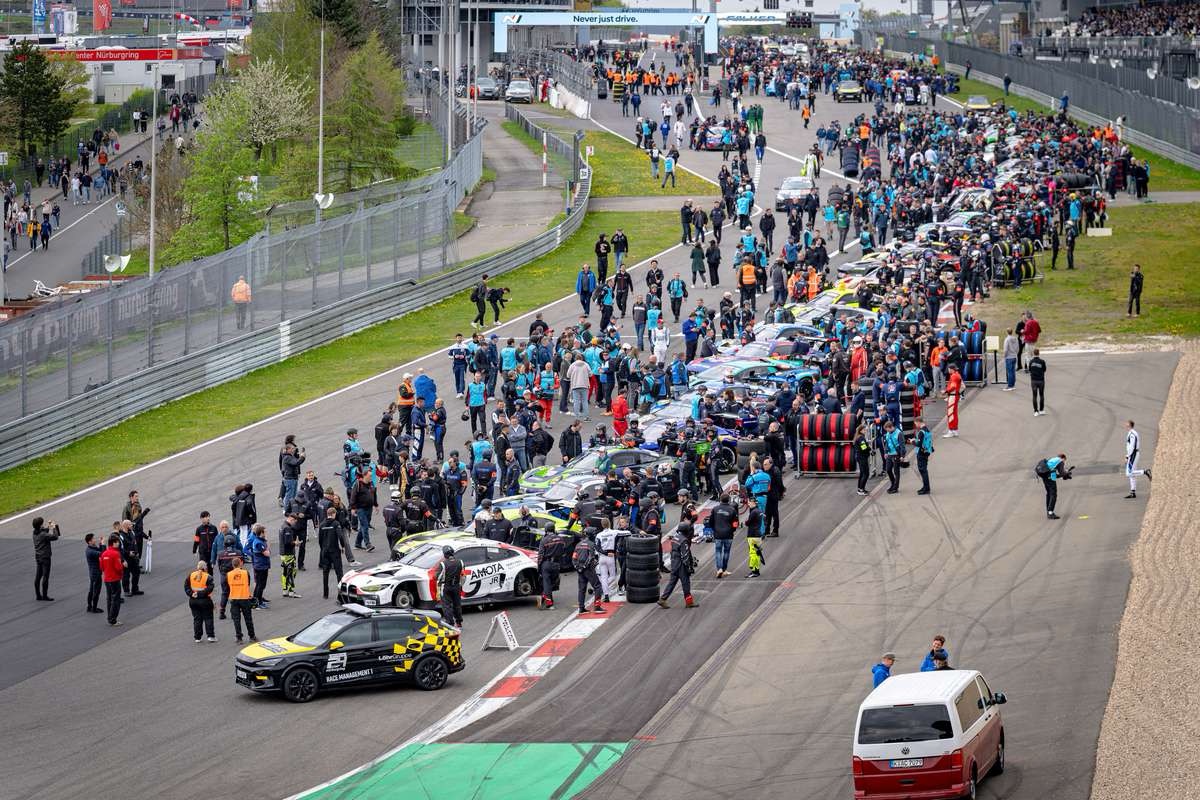
In the wake of a devastating accident that claimed the life of experienced racing driver Juha Miettinen, the Fédération Internationale de l’Automobile (FIA) has issued an official statement expressing deep sorrow and extending condolences to those affected by the tragedy. The fatal incident occurred during one of the qualifying races for the prestigious Nürburgring 24 Hours event, sending shockwaves throughout the global motorsport community.
According to reports, the accident unfolded during the early stages of the race, roughly 25 minutes after the session had begun. A multi-car collision involving as many as seven vehicles took place on the challenging Nordschleife circuit, a track widely known for its high speeds and technical difficulty. The severity of the crash prompted race officials to immediately halt proceedings, raising concerns among teams, drivers, and spectators alike.
Emergency response teams were dispatched to the scene without delay, working urgently to extract the drivers involved and provide critical medical attention. Despite their rapid intervention and sustained resuscitation efforts, Miettinen unfortunately succumbed to his injuries after being transported to the circuit’s medical centre. The loss marked a particularly somber moment for motorsport, especially given that fatal accidents at the Nürburgring during racing events have become relatively rare in recent years.
In its official communication, the FIA conveyed its sadness upon learning of the driver’s passing. The governing body emphasized its sympathy for Miettinen’s family, friends, and everyone connected to the event. The message reflected the collective grief felt across the racing world, underscoring the emotional impact such incidents have on the entire motorsport community.
The statement highlighted the FIA’s ongoing commitment to safety within motorsport, a principle that remains central to its operations. While the organization does not directly organize every racing event, it plays a crucial regulatory and oversight role, particularly in ensuring that safety standards are upheld across competitions. Incidents like this inevitably reignite discussions about the inherent dangers of racing and the constant need to evaluate and improve safety measures.
Further details revealed that Miettinen had been driving a BMW 325i at the time of the crash. The collision reportedly involved several vehicles coming together in quick succession, possibly triggered by hazardous track conditions. Some accounts suggested that fluid on the circuit may have contributed to the loss of control among drivers, though investigations into the precise cause are expected to continue.
The remaining drivers involved in the incident were also taken to medical facilities for precautionary checks. Fortunately, none of them were reported to have sustained life-threatening injuries, offering a small measure of relief amid an otherwise tragic situation.
In response to the incident, race organizers made the decision not to resume the session, prioritizing respect for the deceased and allowing time for a thorough investigation. Plans were also put in place to honor Miettinen’s memory, including a minute of silence before subsequent races. Such gestures reflect the deep sense of solidarity within motorsport, where competitors and teams often come together in moments of loss.
Tributes quickly began pouring in from across the racing world. Teams, manufacturers, and fellow drivers all expressed their condolences, acknowledging both the human cost of the tragedy and the passion that drives individuals to participate in the sport. Messages from major motorsport organizations echoed similar sentiments, emphasizing unity and support during a difficult time.
The incident also served as a stark reminder of the risks associated with motorsport, even in an era where technological advancements have significantly improved driver safety. While modern racing cars are equipped with advanced protective systems and circuits are designed with numerous safety features, the unpredictable nature of high-speed competition means that danger can never be entirely eliminated.
For many within the motorsport community, Miettinen’s death represents not only a personal loss but also a moment of reflection. Drivers often accept the risks involved in pursuing their passion, but events like this reinforce the importance of continuous vigilance and innovation in safety protocols. Governing bodies such as the FIA are expected to review the circumstances surrounding the crash and determine whether additional measures can be implemented to prevent similar incidents in the future.
The Nürburgring itself has long been regarded as one of the most challenging and iconic circuits in the world. Its combination of high-speed straights, sharp corners, and varying elevations makes it both revered and feared by drivers. While this reputation contributes to its legendary status, it also underscores the importance of maintaining the highest safety standards during events held at the venue.
As investigations continue, the focus remains on understanding the factors that led to the crash and ensuring that lessons are learned. Motorsport authorities, teams, and drivers alike will likely examine every aspect of the incident, from track conditions to vehicle performance, in an effort to enhance safety moving forward.
In the meantime, the racing community mourns the loss of a competitor who was deeply committed to the sport. The FIA’s statement, along with tributes from across the industry, reflects a shared sense of grief and respect for a life lost too soon.
Ultimately, this tragic event serves as a poignant reminder of both the beauty and the danger of motorsport. While the thrill of racing continues to captivate millions around the world, moments like these highlight the human cost that can sometimes accompany the pursuit of speed and competition.