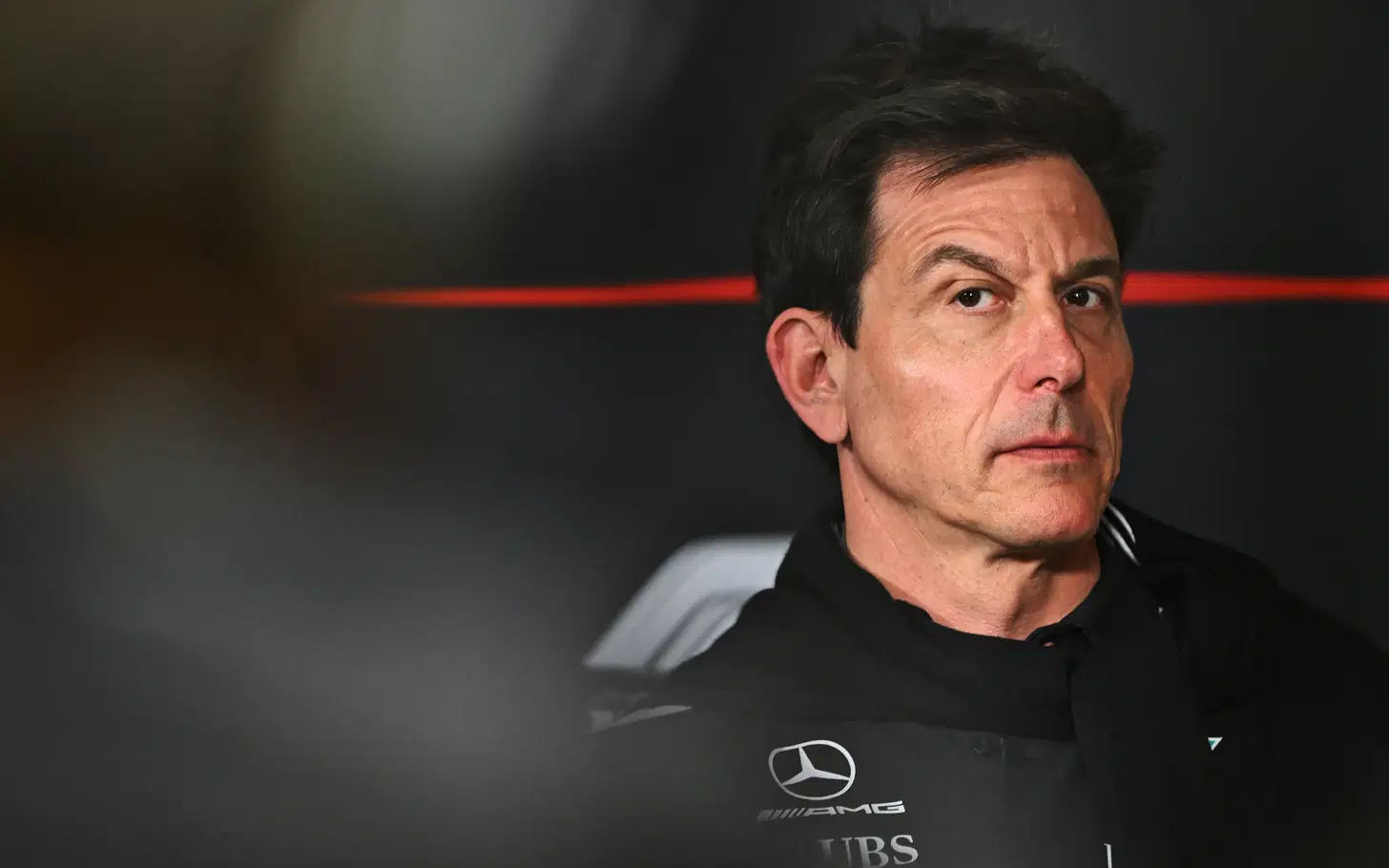
Mercedes team principal Toto Wolff has made it clear that the German manufacturer is open to major changes in Formula One’s future engine regulations, even as debate continues over the controversial 2026 power unit rules. His latest comments come during a period of growing criticism from drivers, teams, and fans regarding the sport’s new hybrid era, which has dramatically altered the racing style and technical balance across the grid.
The 2026 Formula One regulations introduced one of the biggest technical overhauls in modern F1 history. The new engines rely heavily on electrical power, with almost half of the total energy coming from hybrid battery systems. While the rules were originally designed to improve sustainability and attract major automotive manufacturers, they have also created widespread concerns about racing quality, energy management, and the overall spectacle of Formula One.
Despite Mercedes currently enjoying a competitive advantage under the new regulations, Wolff insisted that the team is not opposed to discussing future changes. Instead, he emphasized that Formula One must continue evolving in a way that balances innovation, entertainment, and relevance to modern automotive technology.
Speaking about the long-term future of Formula One engines, Wolff openly admitted that Mercedes would welcome a potential return to V8 engines in the coming years. He explained that high-revving V8 engines represent an important part of Mercedes’ motorsport heritage and remain strongly associated with the emotional appeal of Formula One.
According to Wolff, Mercedes has fond memories of the V8 era, which many fans still consider one of the greatest periods in Formula One history because of the sound, simplicity, and raw power of the engines. He described the V8 as a “real Mercedes engine,” highlighting its emotional and sporting value. However, he also warned that Formula One cannot simply abandon modern technological progress in favor of nostalgia alone.
Wolff stressed that any future engine formula must still maintain a connection to real-world automotive development. He argued that completely removing electrification could make Formula One appear outdated by the end of the decade. Instead, he suggested that the ideal solution would combine powerful combustion engines with a meaningful but simplified hybrid component.
The Mercedes boss even floated the idea of an extremely powerful future power unit capable of producing enormous horsepower figures through a mixture of combustion and electric energy. His vision involves preserving the excitement of traditional Formula One engines while ensuring manufacturers can continue using the sport as a platform for innovation and sustainability.
These comments arrive at a time when criticism of the current 2026 regulations continues to grow. Several drivers have expressed frustration about the heavy reliance on battery management during races. The new rules have forced drivers to spend significant portions of races conserving energy rather than pushing flat-out, leading some critics to argue that Formula One risks becoming overly artificial.
World champion drivers and leading teams have repeatedly complained that the current regulations place too much emphasis on “lift and coast” techniques, where drivers must reduce speed before corners in order to save battery power for straights. Critics believe this approach damages the aggressive, full-throttle racing style traditionally associated with Formula One.
Wolff acknowledged these concerns but maintained that Formula One should remain open-minded and flexible. He stated that Mercedes would never oppose adjustments designed to improve the quality of racing and make the sport more entertaining for fans. According to him, there is room to optimize the balance between electrical energy and combustion performance if the FIA and teams agree on sensible changes.
Earlier debates surrounding the 2026 engine rules also placed Mercedes at the center of controversy. Rival manufacturers reportedly feared that Mercedes had discovered a loophole involving engine compression ratios, potentially giving the team a major advantage before the new regulations were fully implemented. Wolff strongly defended Mercedes during those discussions and accused rival manufacturers of attempting to unite against the team and its customer outfits.
At one stage, Wolff criticized proposals for late rule changes, describing some discussions as “a joke.” He argued that altering regulations too aggressively after teams had already invested heavily in development would create instability and unnecessary political conflict within Formula One.
Nevertheless, the Austrian executive has consistently shown a willingness to compromise if changes genuinely benefit the sport. Even while opposing sudden mid-season alterations, he insisted Mercedes would still behave responsibly and support decisions that improve Formula One overall.
Another interesting aspect of the debate involves the relationship between Formula One and Formula E technology. Some critics believe the new hybrid-heavy regulations have pushed F1 too close to all-electric racing. Formula E founder Alejandro Agag even claimed that Wolff and Mercedes were major forces behind the shift toward stronger electrification in Formula One.
Agag argued that Mercedes attempted to bring lessons learned from Formula E directly into Formula One after leaving the electric racing series. According to him, the current regulations have created a middle ground where Formula One is no longer purely traditional combustion racing but also not fully electric.
Despite those claims, Wolff appears focused on finding a balance rather than fully embracing either extreme. He continues to defend technological progress but also recognizes the importance of maintaining the emotional identity of Formula One. His recent comments about V8 engines show that Mercedes is willing to support a future direction that restores some of the sport’s traditional characteristics while keeping a level of hybrid relevance.
The FIA has already hinted that future regulation changes could happen by 2030 or 2031, with discussions ongoing about simplified V8 engines using smaller hybrid systems. FIA president Mohammed Ben Sulayem has publicly suggested that a return to louder and simpler engines may become necessary to protect Formula One’s identity and fan appeal.
For now, Mercedes remains one of the strongest teams under the current rules, but Wolff insists that performance advantages should not prevent constructive debate about the future direction of the sport. He believes Formula One must continue evolving while also listening carefully to drivers, teams, and supporters.
Ultimately, Wolff’s stance reflects a broader challenge facing modern Formula One. The sport is attempting to balance sustainability, technological innovation, manufacturer involvement, and fan entertainment all at the same time. While the 2026 regulations may still evolve over the coming years, Mercedes appears ready to support future engine concepts that combine powerful racing engines with modern hybrid efficiency.
As the discussions continue, Wolff’s comments suggest that the future of Formula One could eventually feature a return to louder, more emotional engines without completely abandoning the technological progress that has shaped the sport’s modern era. Whether that future includes V8 power units, reduced electrification, or another revolutionary concept entirely, Mercedes clearly wants to remain at the center of Formula One’s next major transformation.