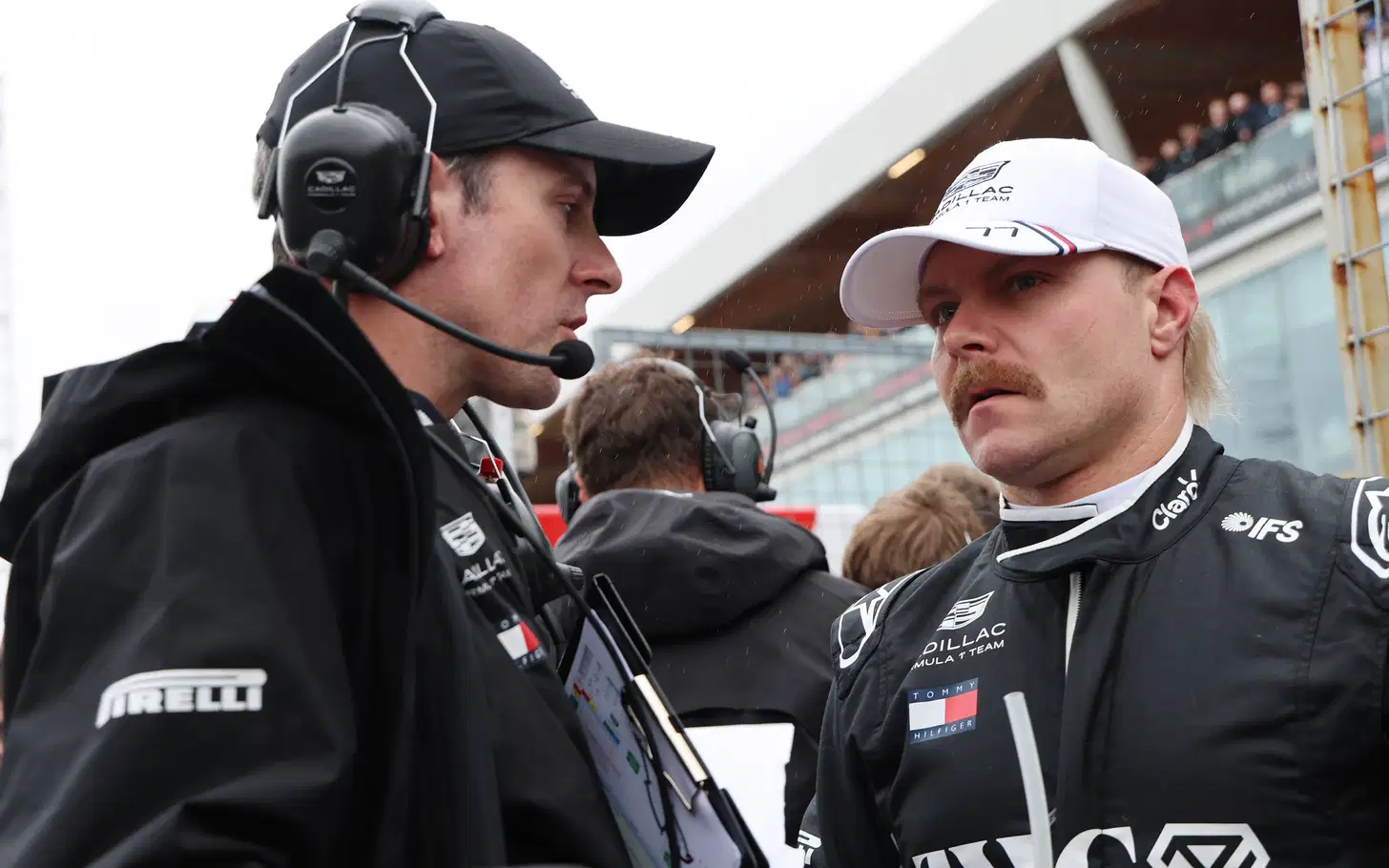

Valtteri Bottas has opened up about the difficult early phase of Cadillac’s Formula 1 journey, admitting the team’s new car is still far from where it needs to be competitively. However, despite the struggles, the Finnish driver insists he remains fully committed to the ambitious long-term project and understands the challenges that come with helping a brand-new team establish itself on the Formula 1 grid.
Cadillac entered the 2026 Formula 1 season carrying enormous expectations. Backed by General Motors and supported by a major American motorsport operation, the team arrived with bold ambitions and a determination to make a strong impression in its debut campaign. Yet, as many insiders predicted before the season began, transforming a new operation into a competitive F1 team is proving to be a massive undertaking.
After the opening races of the season, Cadillac has found itself fighting near the back of the field, often battling with Aston Martin and Haas rather than challenging the established midfield teams. While there have been occasional signs of promise, the overall performance of the MAC-26 has exposed several weaknesses that the team is still trying to understand and correct.
Bottas, who joined Cadillac after years of experience with Williams, Mercedes and Sauber, admitted that the current car is “not 100 percent” in several key areas. The 10-time Grand Prix winner explained that the car still lacks the consistency and balance required to compete regularly for points, especially across different track conditions and race weekends.
Rather than showing frustration, Bottas made it clear that he anticipated these difficulties before signing his contract. According to the Finnish driver, he knew from the very beginning that joining Cadillac would involve sacrifices, patience, and a willingness to endure difficult moments while the team develops its foundations.
“This is what I signed up for,” Bottas explained while discussing Cadillac’s difficult start to life in Formula 1. He stressed that success for a completely new team would never happen overnight, especially in the modern era of F1 where even small improvements require massive technical effort and precision engineering.
One of the biggest concerns Bottas identified involves the overall balance and drivability of the car. He pointed out that the MAC-26 struggles to generate confidence for the drivers in certain corners and track situations. While the exact technical details remain internal to the team, Bottas hinted that the package still lacks harmony between aerodynamic grip, mechanical balance, and tire management.
Those weaknesses have made it difficult for Cadillac to consistently challenge more experienced teams. In qualifying sessions especially, the team has often lacked the final burst of pace needed to progress comfortably through the sessions. Even when the car appears competitive during practice, maintaining that performance over an entire weekend has remained a major challenge.
Still, Bottas believes there are positive signs hidden beneath the disappointing results. He praised the work ethic inside the Cadillac garage and said the team is making progress in areas that are not immediately visible to the public. According to him, many improvements are happening behind the scenes, particularly in understanding the car’s behavior and refining operational procedures.
The experienced Finn also highlighted how important patience will be for a project of this scale. Unlike established teams that already possess years of infrastructure, data and refined development systems, Cadillac is building much of its Formula 1 identity from scratch. That naturally creates growing pains, especially when competing against organizations that have spent decades perfecting their operations.
Bottas’ role inside the team extends beyond simply driving the car. Cadillac recruited him largely because of his vast experience working with championship-winning machinery at Mercedes. The team hopes he can provide valuable technical feedback and help guide development during these crucial early stages.
Alongside Sergio Pérez, Bottas forms one of the most experienced driver pairings on the grid. Many observers believe Cadillac intentionally selected veteran drivers because of their technical knowledge and ability to help shape a new project.
The opening races have already demonstrated how demanding the challenge will be. Cadillac’s best result so far came in China, where Bottas managed to finish 13th. Although that result may appear modest compared to his past achievements with Mercedes, it represented a small but important milestone for a team still learning how to compete at the highest level.
The team has not stood still in response to its struggles. Recent races have seen Cadillac introduce several upgrades aimed at improving performance. Reports confirmed that updates to the front wing, floor, diffuser and rear suspension were added in an attempt to unlock more pace from the MAC-26.
However, Formula 1 development is rarely straightforward. Even when upgrades work in theory, extracting their full potential on track can take time. Teams must carefully correlate wind tunnel data, simulator findings and real-world track performance before fully understanding whether an update package has achieved its objectives.
For Bottas, the most important thing is that Cadillac continues moving in the right direction rather than expecting instant miracles. He repeatedly emphasized that morale inside the team remains positive despite the difficult results. Engineers, mechanics and strategists are all working intensely to accelerate progress.
The Finn’s calm attitude may partly come from the perspective gained throughout his long Formula 1 career. Having competed for both front-running and midfield teams, Bottas understands how unpredictable the sport can be. He knows that building a successful operation requires time, trust and stability.
His leadership has become especially valuable given the pressure surrounding Cadillac’s entry into Formula 1. As the first major American-backed team to join the grid in years, expectations from fans and media have been enormous. Every performance is heavily scrutinized, and comparisons with established teams are inevitable.
Yet Bottas appears determined not to let short-term setbacks distract from the broader vision. He continues to speak confidently about the future and insists the project has enormous potential once the team gains more experience and improves the car’s weaknesses.
There is also recognition within the paddock that new teams often require several seasons before becoming truly competitive. Even historically successful constructors endured painful beginnings before eventually establishing themselves as consistent challengers.
Cadillac’s leadership remains optimistic that the combination of strong financial backing, experienced personnel and continuous development will eventually push the team toward the midfield battle and beyond. Bottas appears fully aligned with that mission.
For now, however, reality remains difficult. The MAC-26 is still a work in progress, and Bottas’ admission that the car is “not 100 percent” reflects the honest situation facing the team. But rather than expressing disappointment, the Finnish driver seems focused on the long-term journey ahead.
As Formula 1’s demanding 2026 season continues, Cadillac’s progress will be watched closely across the paddock. Whether the team can transform its early struggles into future success remains one of the sport’s most fascinating storylines.
And for Bottas, the challenge itself may ultimately prove just as meaningful as the results. After years spent in established organizations, helping build an entirely new Formula 1 team from the ground up offers a very different kind of motivation — one based not only on winning races, but on creating something capable of lasting success in the years ahead.Based on reports from [RacingNews365](https://racingnews365.com/valtteri-bottas-delivers-cadillac-declaration-as-f1-weakness-identified?utm_source=chatgpt.com) and related Formula 1 coverage.