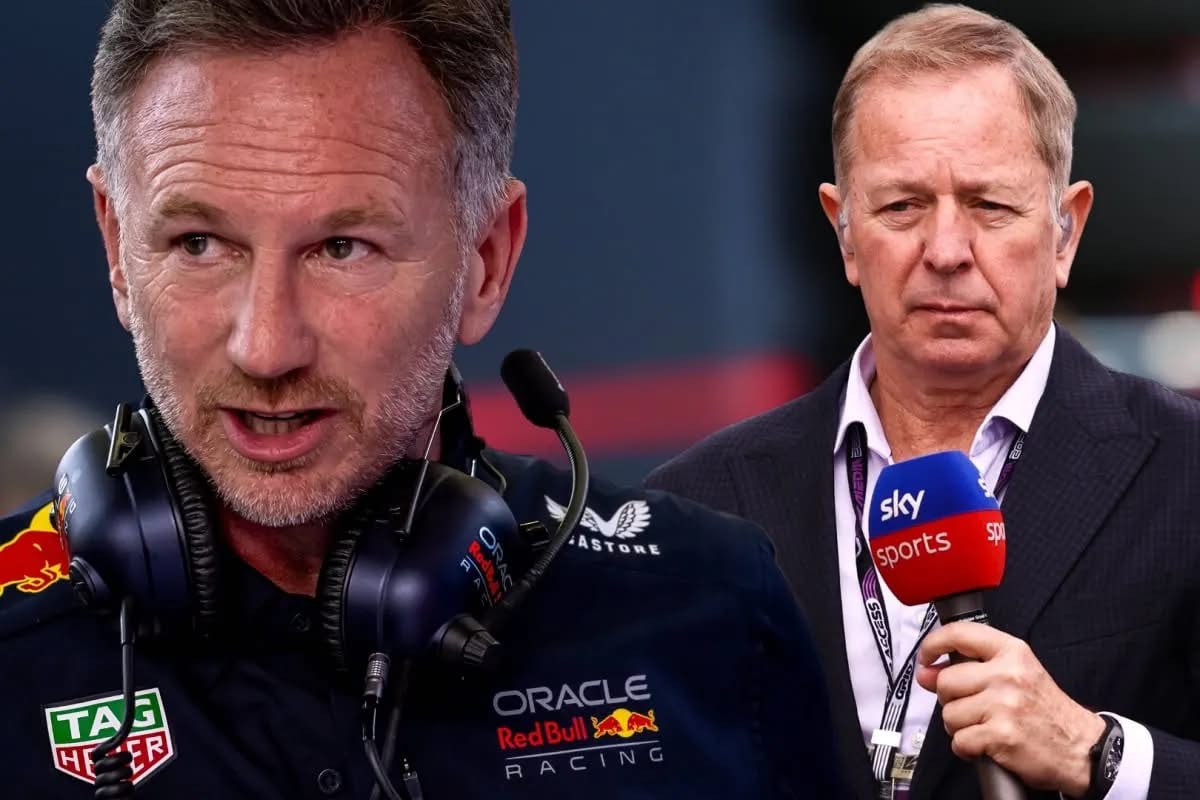

Recent developments in the Formula 1 paddock have once again brought the future of former Red Bull team principal Christian Horner into sharp focus, following comments attributed to veteran analyst and ex-driver Martin Brundle. The situation continues to generate widespread speculation, as fans and insiders alike attempt to piece together where Horner might resurface after his dramatic departure from Red Bull Racing.
Horner’s exit from the Milton Keynes-based team in 2025 marked the end of an era. Having led the outfit for two decades, he oversaw one of the most successful periods in modern Formula 1 history, guiding the team to multiple constructors’ and drivers’ championships. His tenure included dominant title runs with Sebastian Vettel and later with Max Verstappen, firmly cementing Red Bull as a powerhouse in the sport.
However, his sudden removal from the role shocked many within the paddock. Reports suggested internal tensions, power struggles, and ongoing instability within the Red Bull organization played a part in the decision. Brundle himself acknowledged that the situation was not entirely unexpected, hinting that issues behind the scenes had been brewing for some time.
Since that moment, attention has shifted toward what lies ahead for Horner. Despite being temporarily sidelined, he has remained a highly sought-after figure due to his experience, leadership qualities, and proven ability to build championship-winning teams. According to multiple reports, Horner has already explored various pathways back into Formula 1, including discussions with existing teams and even the possibility of becoming involved in ownership structures.
Martin Brundle, a respected voice in the sport and a long-time observer of its inner workings, has played a key role in shaping public understanding of Horner’s next steps. He has repeatedly emphasized that Horner is unlikely to return to the grid in a conventional or subordinate role. Instead, Brundle believes that any comeback would need to involve significant influence—potentially including equity or a shareholding in a team.
This perspective aligns with Horner’s reputation as a figure who thrives on control and long-term vision. After two decades of running one of Formula 1’s top teams, it would be difficult for him to slot into a lesser position without meaningful authority. Brundle has indicated that Horner himself has expressed a desire for such an arrangement, suggesting that he would only seriously consider opportunities where he has a stake in the operation.
One of the most talked-about possibilities has been a move to Aston Martin. The team, owned by billionaire Lawrence Stroll, has been aggressively building toward becoming a championship contender, attracting high-profile talent and investing heavily in infrastructure. Naturally, Horner’s name was linked with the project, fueling rumors of a potential partnership.
Yet, despite the speculation, that route now appears increasingly unlikely. Reports indicate that Aston Martin has ruled out bringing Horner into the fold, with internal dynamics and leadership decisions making such a move impractical. Brundle himself expressed skepticism about the likelihood of Horner joining the team, noting that the conditions required for such a deal may not align with Aston Martin’s current structure.
Complicating matters further is the presence of key figures within the team, including technical mastermind Adrian Newey, whose own role and influence could clash with Horner’s expectations. The delicate balance of power within any Formula 1 organization makes such high-level appointments particularly sensitive, and it appears Aston Martin has opted to maintain its existing leadership trajectory rather than introduce another dominant personality into the mix.
Beyond Aston Martin, other teams have also been linked with Horner, though none have publicly committed to pursuing him. Some reports suggest he has reached out to multiple team owners, exploring potential collaborations or investment opportunities. However, these discussions have yet to materialize into concrete agreements, highlighting the challenges of re-entering the sport at such a senior level.
Interestingly, alternative pathways have also been floated. There has been speculation about Horner considering involvement outside Formula 1, including a possible move into MotoGP or other motorsport categories. While such a transition would represent a significant shift, it underscores the breadth of opportunities available to someone with Horner’s profile and expertise.
Brundle has also touched on the idea of Horner playing a role in establishing a new team. However, this scenario presents its own set of obstacles. Existing teams are often resistant to expansion, particularly during periods of regulatory change and financial recalibration. With Formula 1 preparing for new rules and evolving commercial structures, the introduction of an additional team could face significant opposition from current stakeholders.
What remains clear is that Horner is unlikely to rush his return. Having achieved immense success and accumulated considerable experience, he is in a position to be selective about his next move. Whether that means waiting for the right opportunity within Formula 1 or exploring ventures beyond the sport, his future will likely be shaped by strategic considerations rather than urgency.
For Brundle, the situation reflects the broader dynamics of Formula 1, where leadership roles are as much about politics and relationships as they are about performance. His insights suggest that while Horner’s return is highly probable, the form it takes will depend on aligning the right circumstances—both financially and structurally.
In many ways, Horner’s story is emblematic of the ever-evolving nature of Formula 1. Even the most successful figures are not immune to sudden changes, and the balance of power within teams can shift rapidly. Yet, at the same time, the sport has a long history of comebacks, reinventions, and unexpected alliances.
As speculation continues, fans and analysts will be watching closely for any indication of Horner’s next move. Whether he returns to the pit wall with another team, takes on a broader executive role, or ventures into a different arena altogether, his presence is likely to remain influential in the world of motorsport.
Ultimately, Martin Brundle’s comments serve as both a reality check and a source of intrigue. They highlight the complexities surrounding Horner’s potential return while reinforcing the idea that any comeback will need to meet a very specific set of conditions. Until those conditions are met, the question of where—and how—Christian Horner will reappear remains one of the most compelling storylines in Formula 1 today.