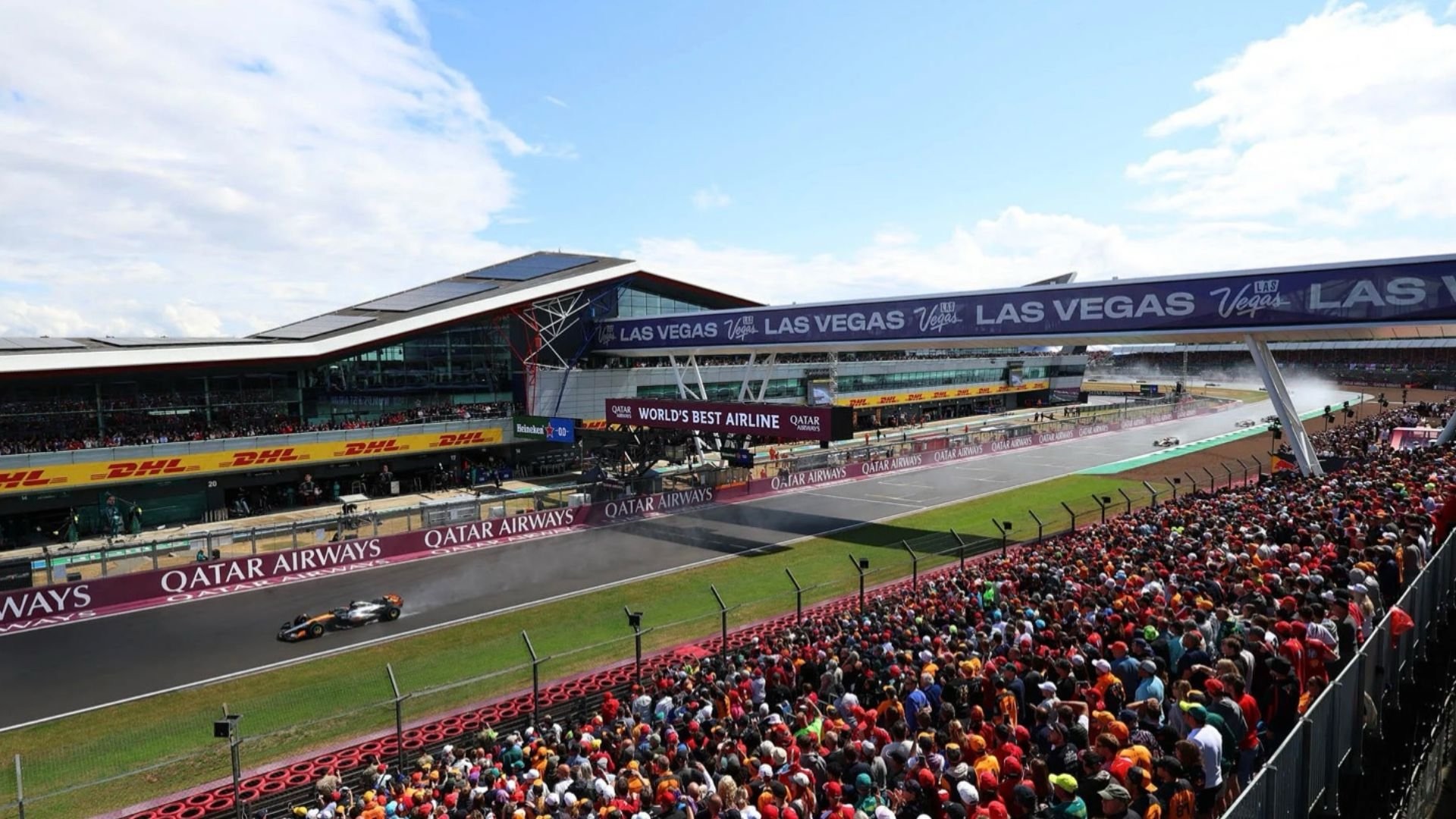
Silverstone has opened the door to hosting an additional Formula 1 race during the 2026 season as uncertainty continues to surround parts of the championship calendar.
The iconic British circuit, home of the British Grand Prix, has confirmed that it would be willing to step in and stage a second race if Formula 1 needs help later in the year. With several events on the schedule facing potential logistical concerns due to the ongoing global situation, Silverstone has positioned itself as a reliable backup option.
The track has done it before.
During the heavily disrupted 2020 season, when the COVID-19 pandemic forced major changes across the sporting world, Silverstone successfully hosted two consecutive Formula 1 races to help keep the championship on track. That experience proved the venue’s ability to react quickly under pressure, and now the circuit is prepared to do the same again if required.
Silverstone CEO Stuart Pringle revealed that the offer has already been made directly to Formula 1, making it clear that the circuit is ready to support the sport if needed.
He explained that because Silverstone was able to assist during one of Formula 1’s most difficult periods in recent history, it made sense to offer that support once again.
Pringle stated that if hosting another race would help Formula 1 manage the current situation, then the circuit would be more than willing to do it. He emphasized that the offer is already on the table and that Formula 1 knows Silverstone can move quickly if a decision has to be made.
His comments underline the confidence Silverstone has in its ability to deliver under pressure.
Although the circuit usually operates with a packed calendar and very little spare room for additional major events, Pringle suggested that extraordinary circumstances require flexibility. He admitted that he normally takes pride in not leaving empty spaces in the schedule, but stressed that in times of crisis, everything can be adjusted.
That willingness could prove important as Formula 1 continues to monitor potential disruptions later in the season.
The sport is expected to return to the Middle East for several races in the final stages of the 2026 campaign, but uncertainty remains over how smoothly those events can be delivered. Ongoing geopolitical tensions and broader logistical concerns have forced F1 to remain cautious, with organizers constantly reviewing travel plans, freight movement, and overall race operations.
This has created a scenario where backup plans are becoming increasingly important.
Formula 1’s chief corporate relations officer Liam Parker admitted that predicting how the calendar will look in the coming months is extremely difficult. He explained that the situation is changing so rapidly that even short-term planning has become challenging.
According to Parker, the environment remains highly unpredictable, with decisions often needing to be made based on events unfolding in real time. He pointed out that if people watching the news every day can see how quickly things are shifting, it becomes nearly impossible to confidently forecast what conditions will be like several months from now.
His comments reflect the level of uncertainty facing the sport behind the scenes.
While fans focus on the action on the track, Formula 1 must also deal with the massive operational demands required to move teams, equipment, and personnel around the world. Every race weekend involves huge financial commitments and complex logistics, and any disruption can create serious consequences for the championship.
Freight schedules, staffing, travel routes, and local event planning all need to align perfectly, and when uncertainty affects one part of the world, the entire calendar can feel the impact.
That is why Silverstone’s offer is being viewed as a valuable safety net.
The Northamptonshire circuit remains one of Formula 1’s most historic and trusted venues. It is not only popular with fans and teams, but also highly experienced in handling large-scale race weekends. Its infrastructure, location, and proven ability to adapt make it one of the strongest emergency options available to Formula 1.
If a race elsewhere on the calendar becomes impossible to stage, Silverstone could provide a practical and familiar solution without requiring the sport to reinvent its plans from scratch.
At this stage, no official decision has been made, and Formula 1 has not confirmed whether it will need to activate that option. The championship is continuing to assess the situation while keeping all possibilities open.
For now, Silverstone waits.
But if Formula 1 needs help once again, the message from the British circuit is clear—they are ready.
Just like in 2020, when the sport needed stability during chaos, Silverstone is prepared to answer the call and ensure the racing continues.
Whether fans will see two Formula 1 races at Silverstone in 2026 remains uncertain, but one thing is clear: if the calendar faces further disruption, the legendary venue stands ready to become the championship’s rescue plan once again.