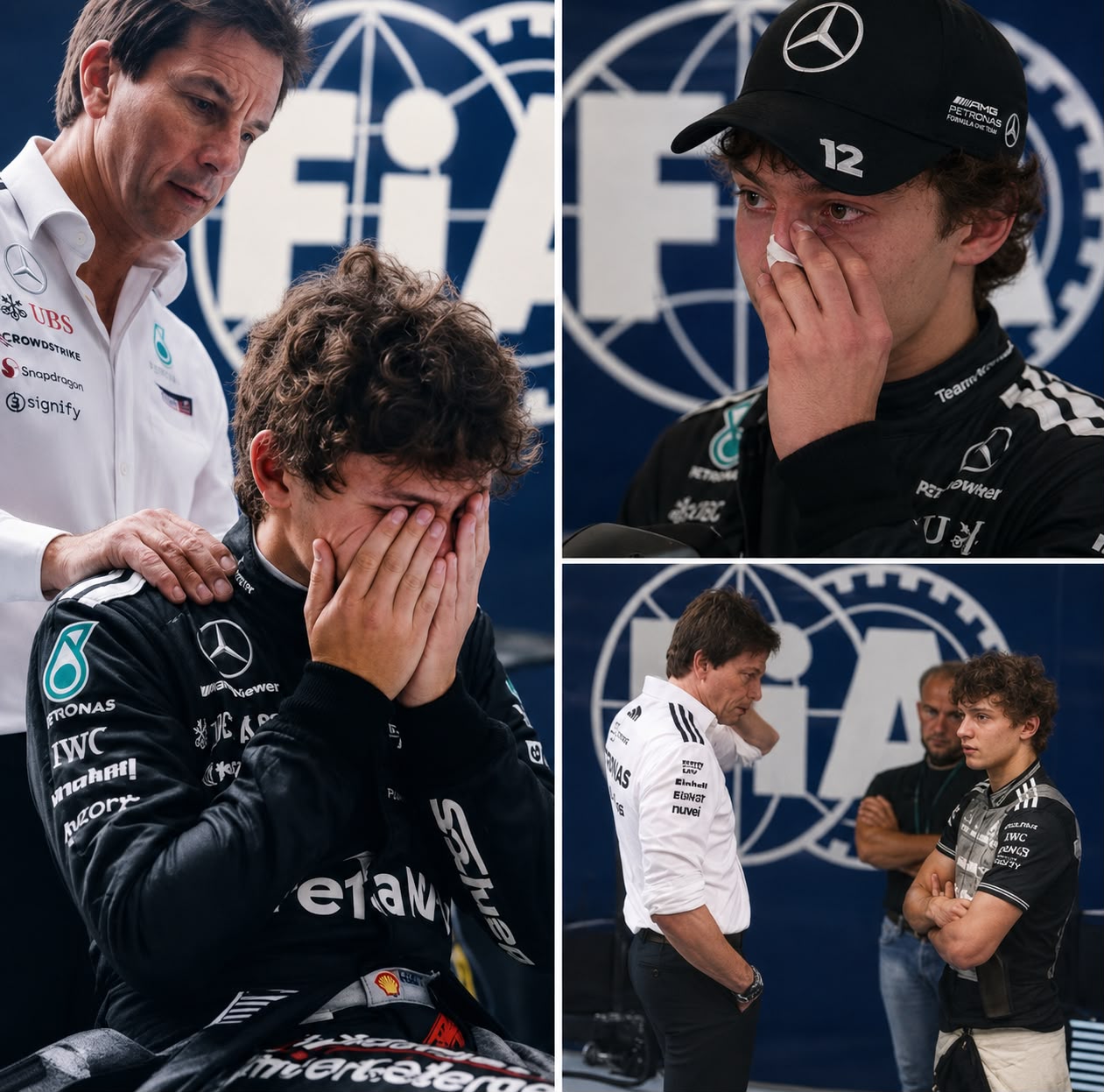
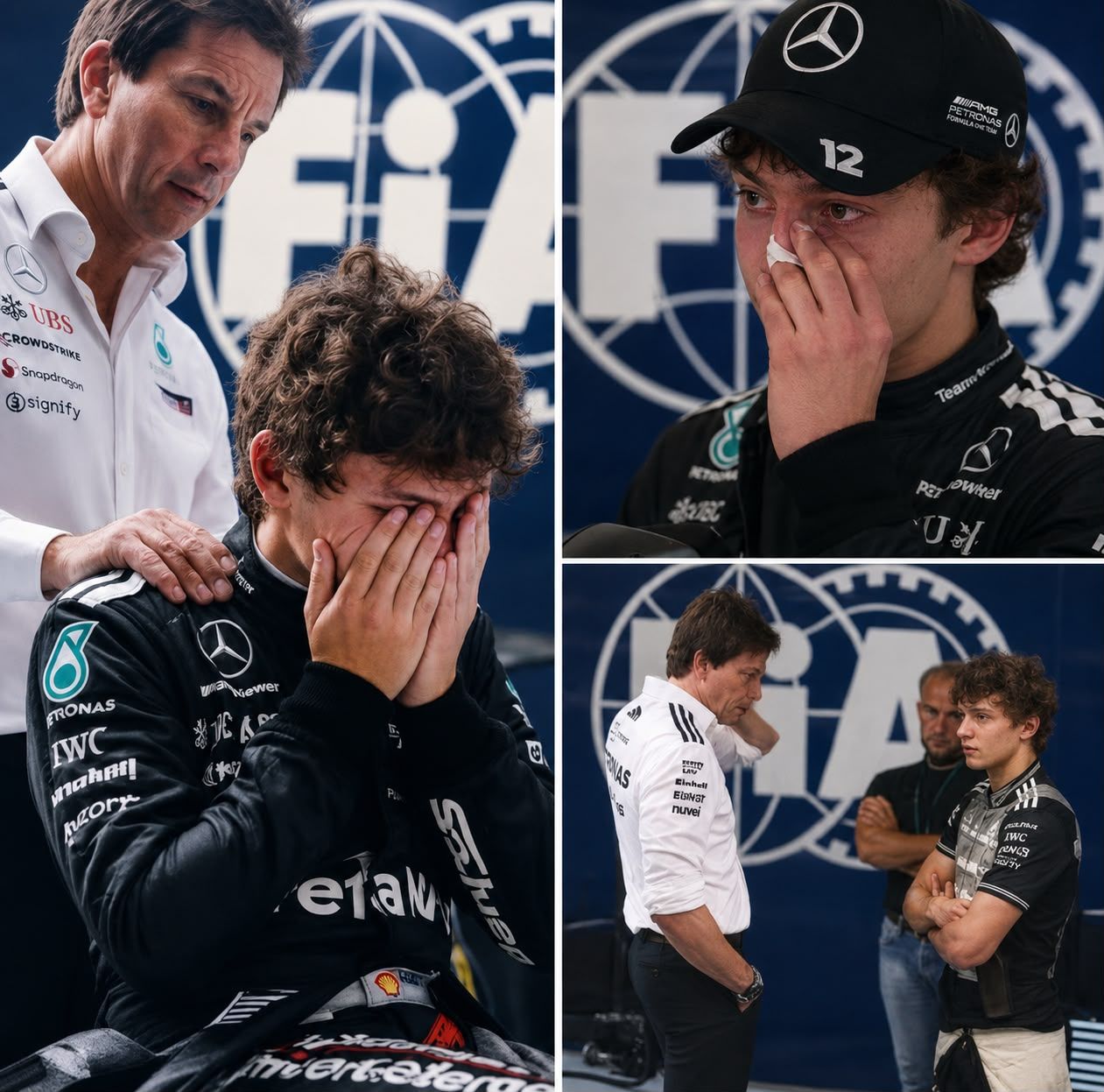
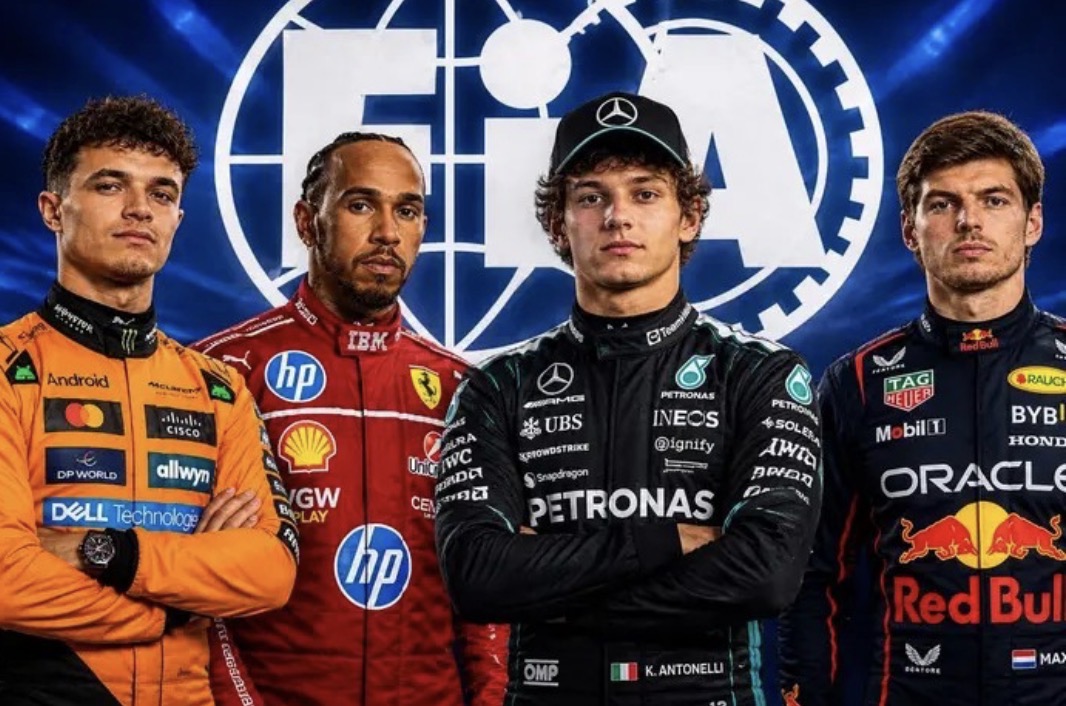
Kimi Antonelli’s Dutch GP Podium Faces FIA Scrutiny After Dramatic Zandvoort Finish
Kimi Antonelli’s impressive second-place finish at the 2026 Dutch Grand Prix has become the subject of heightened attention following the dramatic events that unfolded at Zandvoort. The Mercedes driver crossed the finish line behind Lando Norris and ahead of his teammate George Russell, securing another important podium result in his championship campaign. However, the suggestion of possible FIA scrutiny has created an additional layer of uncertainty around what was otherwise a highly successful weekend for the young Italian.
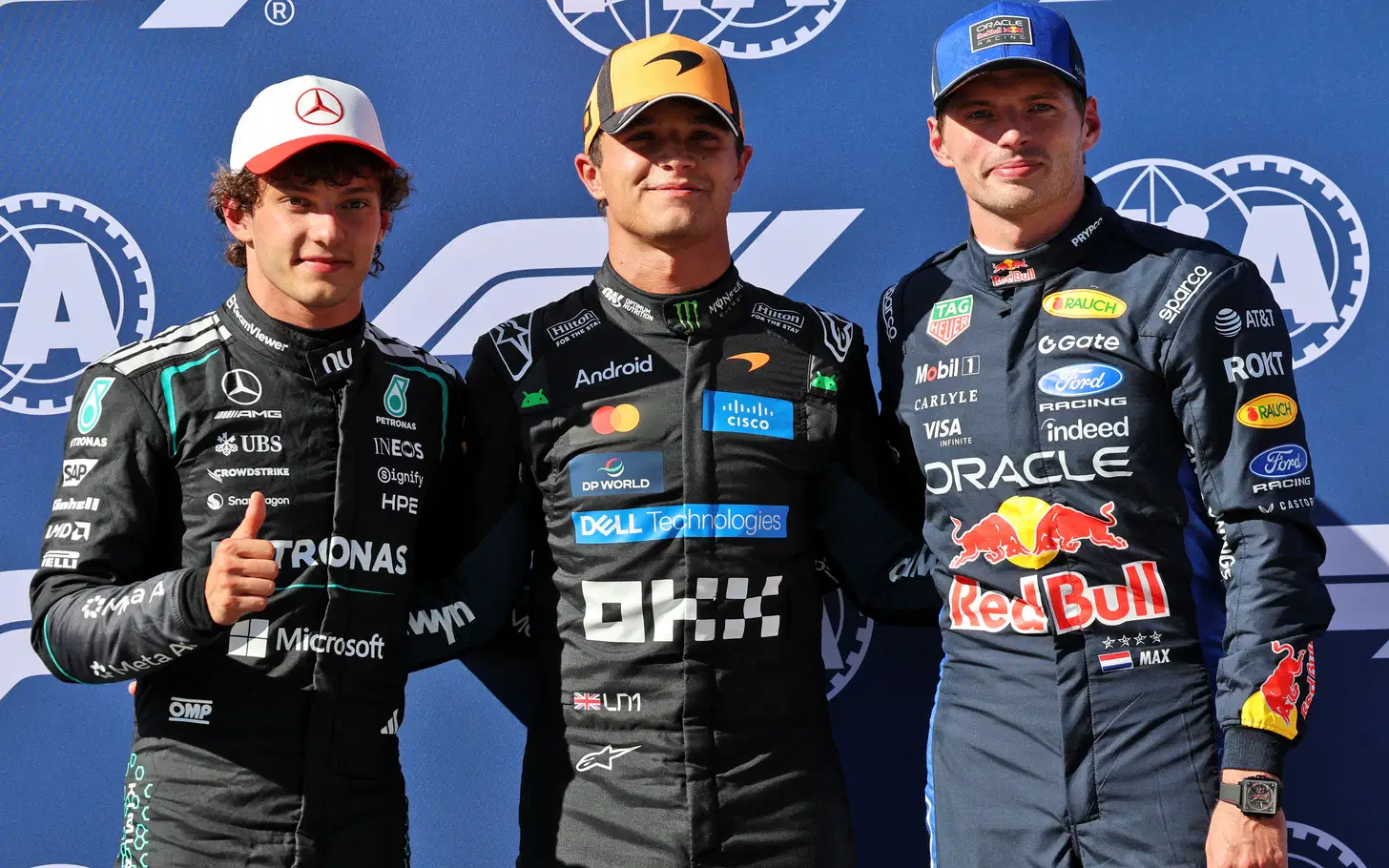
The Dutch Grand Prix produced one of the most eventful races of the season. Lando Norris ultimately claimed victory for McLaren, while Antonelli finished second and Russell completed the podium in third. The result gave Mercedes a double podium and allowed Antonelli to extend his advantage at the top of the Formula 1 drivers’ championship. Current reports confirm that Antonelli remains the championship leader, with his advantage over Russell and Lewis Hamilton standing at 59 points after the Zandvoort race.
Despite the positive result, the circumstances surrounding Mercedes’ decision-making during the race have generated considerable discussion. At one stage, Russell was running ahead of Antonelli, but Mercedes instructed the British driver to allow his teammate through. The decision was linked to the different tyre strategies being used by the two Mercedes cars and Antonelli’s fresher tyres after a Virtual Safety Car pit stop. Russell ultimately followed the instruction, allowing Antonelli to take second place.
The team’s decision was particularly significant because every championship point has become increasingly valuable as the season progresses. Antonelli entered the Dutch weekend as the driver leading the championship and was determined to maximize his advantage. Although Norris was able to beat him to victory, second place represented another strong points haul for Mercedes’ young star.
The race itself was far from straightforward. Norris started from pole position, while Mercedes drivers George Russell and Kimi Antonelli began immediately behind him. Qualifying had already demonstrated how close the competition was, with Norris beating Russell by just 0.102 seconds and Antonelli by 0.133 seconds. Antonelli had therefore entered the race with genuine hopes of fighting for victory.
Earlier in the weekend, Antonelli had already experienced several difficult moments. During Sprint Qualifying, the Mercedes driver ran wide and went through the gravel, damaging the floor of his car. He later explained that the incident resulted in a substantial loss of downforce, reportedly around 25 points, which compromised his performance. He eventually finished fourth in the sprint after starting further down the order.
Antonelli then faced another setback during Grand Prix qualifying. The championship leader admitted that he made a mistake at Turn 1 during his final qualifying attempt. That error cost him valuable time and prevented him from challenging Norris for pole position. The FIA’s own post-qualifying transcript records Antonelli acknowledging that he had made a mistake at Turn 1 and lost several tenths of a second.
The young Mercedes driver nevertheless showed considerable resilience during the main race. After the start, the order was disrupted by Max Verstappen’s heavy crash, which brought out an early interruption to the race. Verstappen, competing in his final Dutch Grand Prix at Zandvoort, lost control on the damp circuit and was forced to retire. Reports confirmed that the Red Bull driver emerged from the crash without serious injury.
The incident transformed the complexion of the race and gave the leading drivers another opportunity to fight for victory. Antonelli found himself in a strong position and briefly looked capable of challenging Norris. Mercedes subsequently had to make several strategic decisions as the race developed, particularly concerning tyre choices and the positions of its two drivers.
Norris eventually regained control of the race and produced a decisive late-race move to take the lead. With fresher tyres and a strong pace advantage, the McLaren driver managed to get past Antonelli and pull clear. Norris went on to claim victory, while Antonelli settled for second. Russell followed in third after Mercedes’ controversial but ultimately successful team-order decision.
For Antonelli, however, second place was still an extremely valuable result. The podium strengthened his position at the top of the championship and ensured that Mercedes left Zandvoort with a significant haul of points. The team also increased its advantage in the constructors’ championship following the double podium.
The reported FIA angle is therefore particularly important because any post-race investigation involving a podium finisher can potentially affect the final classification. Formula 1 has repeatedly demonstrated that results are not always completely secure immediately after the chequered flag. Technical inspections, steward investigations and possible penalties can sometimes change finishing positions hours after a race has ended.
That said, it is important to distinguish between a potential investigation and an actual disqualification. At the time of the latest confirmed race reports, Antonelli was officially classified second at the Dutch Grand Prix. Formula 1’s official coverage also lists Antonelli as the second-place finisher behind Norris, with Russell third.
Consequently, claims that Antonelli has already lost his podium should be treated cautiously unless an official FIA steward decision confirms such a change. The FIA remains the authority responsible for issuing penalties and changing official classifications where necessary.
The situation is especially important because Antonelli’s championship campaign has reached a critical stage. The 19-year-old has already established himself as one of the leading figures of the 2026 Formula 1 season. His consistency and race-winning performances have placed him at the center of the title battle, and every additional point could prove decisive when the championship reaches its conclusion.
Interestingly, Antonelli’s strong championship position comes despite a difficult Dutch weekend. Before the race, he admitted that the mistakes he had made during the weekend represented a warning that he needed to remain focused. He described the experience as a “wake-up call,” emphasizing the importance of delivering when opportunities arise.
His response on Sunday demonstrated why Mercedes continues to place so much confidence in him. Despite starting third, facing pressure from Norris and dealing with complicated strategy decisions, Antonelli managed to secure second place. His performance also demonstrated his ability to recover from setbacks rather than allowing mistakes earlier in the weekend to dictate his final result.
Mercedes team principal Toto Wolff defended the team’s decision to reverse the positions of Russell and Antonelli. The explanation centered on restoring the order that Mercedes believed would have existed had the two drivers made comparable strategic choices. Russell, meanwhile, said he understood the team’s reasoning and accepted the decision.
The double podium was therefore a major positive for Mercedes, even though Norris denied the team victory. It also highlighted the strength of the internal battle between Antonelli and Russell. Both drivers are capable of competing at the front, but the championship situation means Mercedes may increasingly have to make strategic choices that favor its leading title contender.
For Antonelli, the most important fact remains that he left Zandvoort with second place and an enlarged championship advantage. The result also adds to his growing list of strong performances during his breakthrough season.
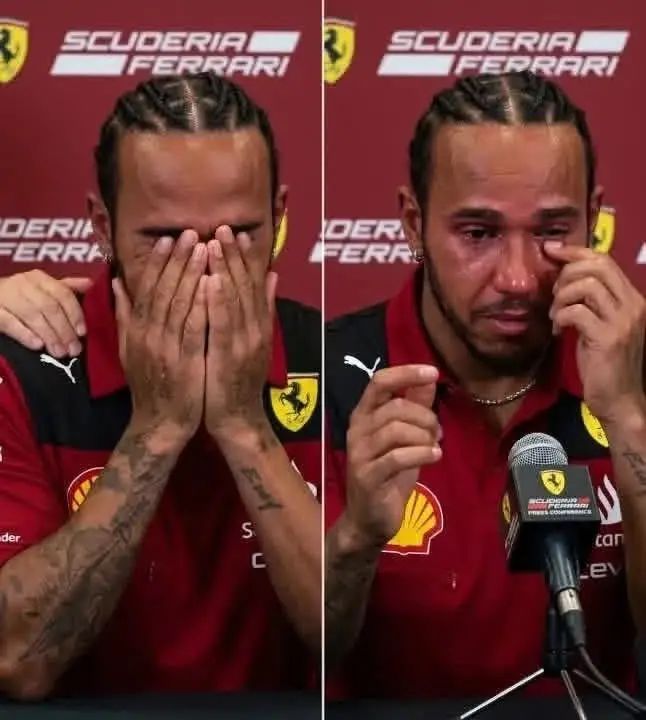
The Dutch Grand Prix itself will be remembered for several major storylines: Norris’ victory, Verstappen’s dramatic home-race retirement, Mercedes’ team orders, Hamilton’s fourth-place finish and Antonelli’s continued championship leadership. Norris’ win also marked another important step in his title challenge, although Antonelli still holds a commanding advantage in the standings.
If an FIA investigation does emerge concerning Antonelli’s car or the circumstances surrounding the race, Mercedes and the driver would have to wait for the stewards’ official decision before knowing whether his result is completely secure. Until such a ruling is issued, however, the confirmed classification remains Norris first, Antonelli second and Russell third.
The controversy therefore adds suspense to what was already a dramatic Dutch Grand Prix. Antonelli may have missed out on victory, but his second-place finish keeps him firmly in control of the championship. The young Italian now heads toward the next phase of the season knowing that his rivals are still chasing him—and that every point will matter.
For Mercedes, the priority will be to maintain its momentum while ensuring that Antonelli avoids the mistakes that troubled him earlier in the Zandvoort weekend. For Antonelli, the objective is even clearer: remain consistent, capitalize on strong opportunities and protect his championship lead.
The Dutch Grand Prix ultimately provided another reminder of how quickly Formula 1 can change. A driver can celebrate on the podium one moment and face questions over the validity of that result the next. But based on the latest confirmed information, Antonelli remains the official second-place finisher at Zandvoort and continues to lead the 2026 Formula 1 championship.